
By Dr. Marcie Poole and Nicole Anderson
Improving outcomes for all students is not additional work. It is the work; and it must be embedded into how the organization functions every day.
Reimagining student success invites us to slow down and intentionally examine how change manifests in our schools and systems. Often, our response is to add something new: a program, an initiative, a strategy, hoping it will move outcomes forward. Over time, that layering can leave systems busy and exhausted, yet misaligned and uncertain about what is truly making a difference or impactful in closing student outcome gaps.
When underlying system conditions are unchanged, results tend to remain unchanged as well. Outcomes are not achieved by chance. They are shaped by the conditions that surround daily practice and the routines we rely on, the relationships we build, the decisions we prioritize, as well as the beliefs we hold about students and learning.
This calls for a systems approach to improvement. Rather than asking people to work harder within the same design, system leaders must examine how the system itself is organized and what it is set up to produce. Without that examination, even well-intentioned efforts risk reinforcing the very patterns that sustain predictable gaps in student outcomes.
Reimagining student success, then, is less about doing more and more about designing conditions so that better outcomes become the natural result of how the work gets done every day.
Student Success Is a System Output
Systems produce the outcomes they are designed to produce – no more and no less. When results are inconsistent or misaligned with stated goals, it is rarely a matter of effort or commitment. It is feedback that signals how the system is currently designed to function. This is evident in the history of public education that dates back to the 1600’s, where the system was not designed to serve the various needs and learning styles of students, resulting in predictable gaps in student outcomes.
When outcomes fall short, the common response is to push harder: add urgency, increase oversight, or introduce another initiative intended to “fix” the problem. While these responses are understandable, pressure alone rarely changes outcomes. Systems change when their design changes.
Sustainable improvement comes from examining how work actually flows across the organization: how priorities show up in calendars and budgets, how decisions are made when trade-offs are real, and how learning is embedded into daily routines. These design choices shape behavior far more powerfully than isolated strategies or short-term interventions.
When improving outcomes is treated as an initiative, it must compete for time, attention, and resources. It often lives in planning documents but struggles to take root in daily practice. Responsibility becomes concentrated in a few roles, and the work is vulnerable when new demands emerge.
When improving outcomes is treated as the way the system works, it shows up everywhere. It shapes how leaders spend their time, what questions guide meetings, which data are surfaced for learning, and how success is defined and revisited. Improvement becomes part of how the system functions, not something layered on top of it.
This is the shift from working harder within the same design to redesigning the system so that better outcomes are the natural result of how the work gets done every day.
From Initiatives to Conditions
To redesign systems for better outcomes, leaders must look beneath surface-level activity and examine the conditions shaping results. One useful lens for this work comes from the Water of Systems Change framework, which focuses attention not just on what is visible, but on the underlying forces that quietly do the work beneath the surface, sustaining current patterns.
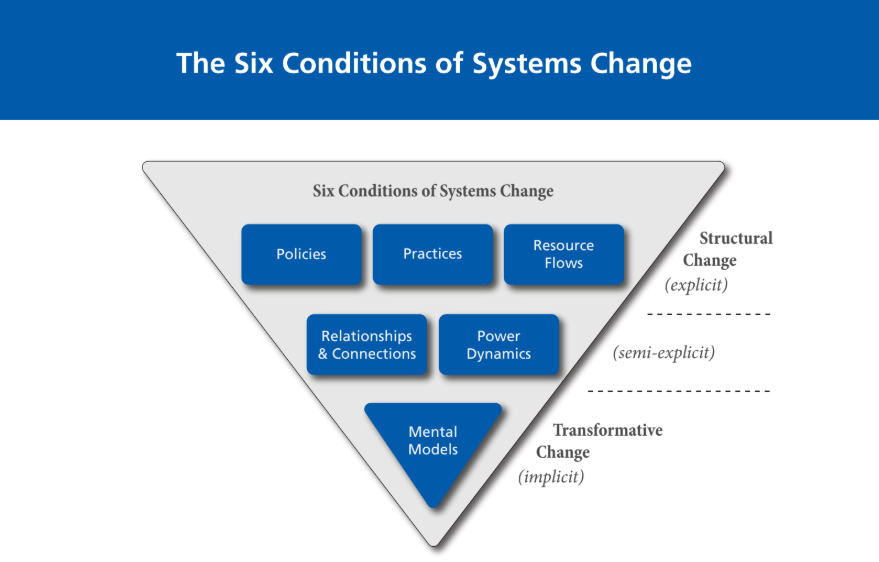
The Water of Systems Change article presents a systems-change framework for examining six conditions in complex systems to develop strategic, intentional actions that drive sustainable change. Rather than treating improvement as a series of disconnected initiatives, it encourages leaders to engage in root-cause analysis that strategically surfaces the system’s internal and external conditions that reinforce current outcomes and those that must shift to support lasting change.
At its core, it points to three areas leaders influence every day, often without naming them.
Structural conditions include the policies, roles, routines, and resource allocations that signal what the system prioritizes. These choices signal where time, attention, and energy are directed.
Relational conditions reflect how trust, collaboration, power, and accountability operate across the system for various stakeholders. These dynamics often determine whether strategies translate into action or stall in implementation.
Transformational conditions include the beliefs, assumptions, and shared meaning that shape how students, learning, and success are understood. Though less visible, these conditions influence every other part of the system.
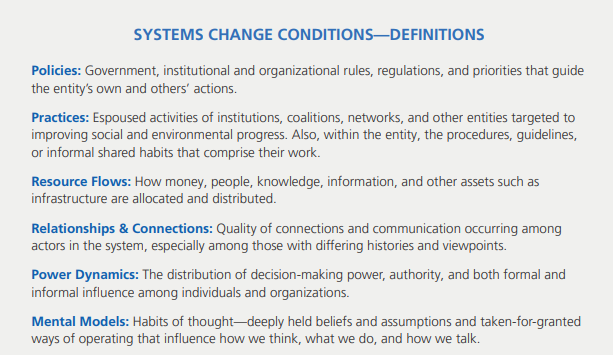
Sustainable improvement requires intentional alignment across all three. When conditions reinforce one another, improvement efforts gain coherence. When they are misaligned, even well-designed strategies fragment the work and lose impact.
The Role of Language in System Coherence
Language is a powerful system condition. The words organizations use signal priorities, shape behavior, and influence decision-making across the system. When language is unclear or inconsistent, it creates confusion about what matters most and how improvement is expected to happen.
In complex systems, language is rarely neutral or universally understood. Terms often carry different meanings depending on role, experiences, perspectives, and context. Without shared meaning, well-intended strategies can be interpreted differently across classrooms, schools, and departments, leading to misalignment and fragmented implementation. Furthermore, a lack of common language can lead to cultural conflict, confusion, and disconnection, resulting in incoherence and an inability to shift conditions within a system.
Intentional language alignment helps create coherence. When leaders co-develop common definitions, clarify how terms are used in practice, and revisit language as learning occurs, they strengthen shared understanding, buy-in, and trust. This work supports more consistent decision-making and reduces reliance on individual interpretation, shifting mental models, relationships, and power dynamics. These conditions often are the foundation for influencing structural shifts in policy, practice, and resources.
When language is inconsistent or initiative-driven, it creates confusion and dilution. Disciplined, shared language becomes a lever for improvement. It aligns strategy, implementation, and learning by clarifying goals, focusing attention, and supporting productive use of data. Rather than serving compliance or messaging alone, language becomes a practical tool that guides daily action. For example, the equity-driven initiative of 2020 triggered a shift in policies, practices, and resources in public education, resulting in intentional support for historically marginalized students. However, within this initiative, educators struggled to intentionally engage in developing common language with all educational partners to develop a shift in values and culture that would sustain the political shift and narratives about equity and DEI work. This has caused confusion and division amongst various educational partners, resulting in the elimination of equity-driven initiatives and funding. While equity work has proven impactful for all students, the term “equity” has become the focus of a new movement that undermines efforts to address student needs.
When language is aligned across planning documents, meetings, data conversations, and routines, systems are better able to sustain focus over time. Coherence grows not through slogans, but through consistent use of language that reflects how the work actually gets done.
In this way, language either accelerates improvement or quietly undermines it.
Leader Diagnostic: Examining System Conditions for Student Success
To move from add-ons to system redesign, leaders must pause long enough to examine how their system is currently producing results.
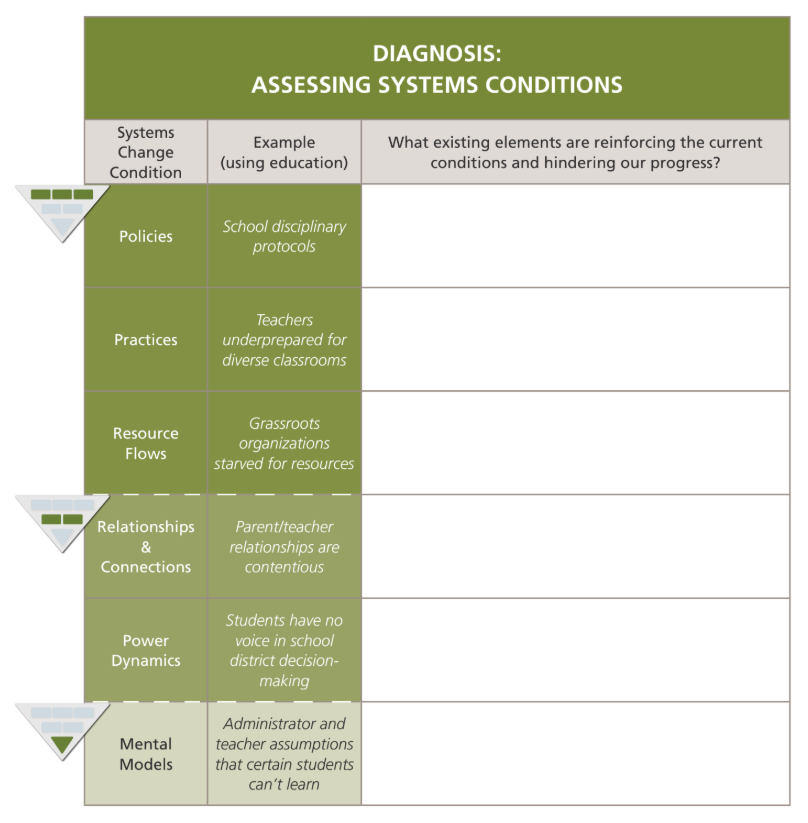
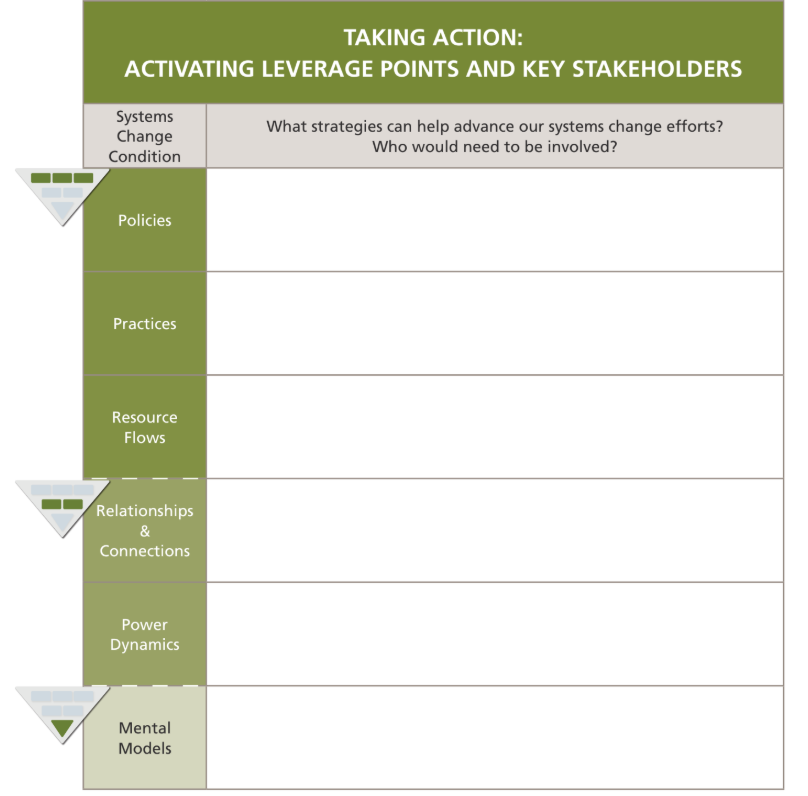
The questions below are designed to surface whether improvement is embedded in system design or dependent on isolated efforts; helping us to identify what matters most: not what we say we value, but what the system actually rewards and reinforces.
Clarifying the Focus
- How is student success currently defined in observable terms?
- Which outcomes are improving, and which remain predictable over time?
- Where do gaps persist despite multiple initiatives or interventions?
Examining Structural Conditions
- How do schedules, roles, and routines prioritize student success?
- Where do time, funding, and staffing decisions reinforce or dilute focus?
- Which decisions are made centrally, and which are left to individual interpretation?
Examining Relational Conditions
- How do collaboration and trust function across departments and schools?
- Where does influence sit when trade-offs are required?
- How is accountability experienced: as learning, compliance, or avoidance?
Examining Transformational Conditions
- What beliefs about students and learning show up in daily practice?
- How consistently is language used across strategy, data, and instruction?
- Where do assumptions go unexamined or unchallenged?
Using Data for Learning
- What quantitative data show patterns that require system-level attention?
- What qualitative data illuminate the lived experience of students and staff?
- What data are missing that would clarify root causes?
Designing for Action
- Which system conditions most directly sustain current outcomes?
- What shifts in policy, practice, or routines would have the greatest impact?
- How will the system learn, adjust, and monitor progress over time?
Reimagining student success begins with clarity. When a system clearly defines what student success means and aligns its structures, language, and routines to that definition, action follows naturally.
Without clarity, even good intentions lose direction. With it, priorities are aligned, decisions become sharper, and improvement becomes part of daily practice rather than an added task.
The challenge ahead is not to add more initiatives, but to clarify what matters most and intentionally design the system to serve that purpose.
Call to Action: Design the System for Student Success
The next phase of improvement work is not about adding more initiatives. It is about strengthening the conditions that drive results.
Start with a few high-leverage moves:
- Define student success in observable terms: Clarify what success looks like in practice and ensure that definition guides decisions, not just planning documents.
- Audit where influence actually sits: Examine how time, resources, and decision-making authority are allocated, and whether they reinforce or dilute focus on student success.
- Align language to daily work: Ensure that the language used in strategy, meetings, data conversations, and routines reflects shared meaning and consistent priorities.
- Build learning into system routines: Design regular opportunities for reflection, adjustment, and monitoring so improvement is continuous rather than episodic.
When student success is embedded in structures, decision-making, and shared language, equitable outcomes become predictable rather than aspirational. That is how systems change and how results shift.
Resources
Water of Systems Change article
Water of Systems Change action plan