Category: NEWS & EVENTS
Development and Delivery of Resources and Services to Support the Community Engagement Initiative (CEI)

DESCRIPTION
The Community Engagement Initiative (“CEI”) was established by the California State Legislature and the Governor on June 27, 2018 (Section 140 of Assembly Bill No. 1808 (“AB 1808”), Chapter 32 of the Statutes of 2018).
The CCEE is seeking proposals to enhance multifaceted professional learning plans and resources aimed at deepening pupil, family, and community engagement. These plans should increase the knowledge and capabilities of local communities, educational agencies, and school staff. Proposals should address one or more of the following content areas, which may include but are not limited to:
- Training on how to discuss complex topics such as race, language, and disability, recognizing community expertise, and sharing power.
- Involving local educational agencies and school staff in these trainings to enhance their knowledge, skills, and dedication to improving engagement with pupils, families, and communities.
- Prioritizing the perspectives of pupils, families, and communities in decision-making processes.
- Using metrics to assess the effectiveness of community engagement within communities and school districts.
- Developing collaborations with community-based organizations.
CCEE is issuing this RFP to invite applicants to respond to one or more of the Content Areas and Methods of Delivery described above.
The selected Respondent will be expected to work closely with, and under the supervision of, assigned CCEE project staff to complete each of the activities outlined above, including the identification, review, development, and delivery of the professional learning resources, services and programs.
Proposals Accepted Through: Monday, September 2, 2024, at 4:00p.m. PST
REQUEST FOR PROPOSALS (RFP)
QUESTIONS FROM RESPONDENTS (Due By: Friday, June 7, 2024, at 4:00 p.m. PST)
NOTIFICATION TO THE PUBLIC (Post Date: )
Point of Contact: Jasmine Hennessy ([email protected])
Last Updated: Wednesday, May 29, 2024
Friday Feature – Spotlight on San Bernardino County Superintendent of Schools (SBCSS)
Friday Feature – Advancing Rural Math Education
Friday Feature – Inspiring Practices in Education
CCEE Connection (April 2024)

News & Announcements
Open Door Sessions
CCEE, in collaboration with LEAs and partner organizations, is hosting “Open Door” sessions to share best practices, tools/resources, and strategies to support student learning. These sessions provide opportunities for county office and/or district staff to listen and learn from other LEAs across the state.
Click on the links below to register for upcoming Open Door sessions.
- 4/9/24 at 3pm (TODAY!)- The Power of Data Partnerships: District Data Sharing Through the Local Assessment Project
- 4/26/24 at 2pm – Schools and Climate Impact Disasters
- 4/30/24 at 3pm – Strengthening Coherence Across Initiatives: A Whole-Child Lens
Missed a session? Below are links to archived materials from past Open Door Sessions:
Please check our Events Calendar or follow CCEE on Twitter and LinkedIn to stay up-to-date on all our offerings.
LEA Spotlights
The Spotlights Project aims to celebrate some of the innovative, inclusive, and shareable practices that LEA teams have implemented to improve outcomes for students across our state. Each Spotlight organizes the successes, challenges, and lessons learned in a way that calls attention to emerging practices, reproducible strategies, and applicable resources, in hopes of introducing accessible points of conversation for other LEAs looking to resolve similar issues.
Below are three recently published Spotlights. Click on the links below to learn more about the innovative practices taking place in these LEAs.
Miwok Middle School, located in Sacramento City USD, harnessed the power of student survey data to cultivate a culture of belonging and connectedness — with an explicit focus on equity.
Lost Hills UESD leveraged community schools as a catalyst for collaboration among neighboring small districts, focusing on shared learning and resource pooling to enhance student outcomes.

Los Angeles USD launched its Black Student Achievement Plan, a comprehensive initiative that aims to address the need for culturally responsive curriculum and instruction, community-based partnerships within the Black community, and increased staffing to support the academic and social-emotional needs of Black students.
2024-25 Leadership Institute
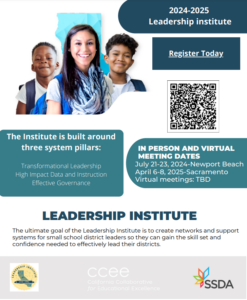
Register for the 2024-2025 Leadership Institute! The Leadership Institute will kick off in person on July 21, 2024 in Newport Beach, CA.
The ultimate goal of the Leadership Institute is to create networks and support systems for small school district leaders so they can gain the skill set and confidence needed to effectively lead their districts.
Click here for a flyer.
21csla research-practice webinar
Mark your calendars for the upcoming 21CSLA webinar scheduled for May 15th from 3:30-4:30 PM PT via Zoom. Join us as we welcome Professor Tyrone Howard from UCLA School of Education & Information Studies. Dr. Howard will delve into the themes of his recent publication, ‘Equity Now,‘ providing invaluable insights on fostering equity and inclusivity in educational settings. Register for the webinar today!
About the I3 Center
The Innovation, Instruction, and Impact (I3) Center implements a statewide approach to improving LEA capacity by collaboratively developing, delivering, sharing, and spotlighting practices that have demonstrated the power to improve outcomes for students.
About the CCEE
The California Collaborative for Educational Excellence is a statewide leader delivering on California’s promise of a quality, equitable education for every student.
Executive Director’s Corner
By Matt J. Navo, Executive Director

Learning is the cornerstone of growth and progress in education, shaping individuals, communities, and organizations alike. Within our Innovation, Instruction, and Impact (I3) Center’s learning networks, leaders from local educational agencies (LEAs) share invaluable insights on the transformative power of learning.
From collaborative intelligence to hands-on experiences, they emphasize the profound impact of continuous learning. Partners echo this sentiment, emphasizing the crucial role of education in fostering climate sustainability. Spotlighting institutions like Miwok Middle School, Lost Hills UESD, and Los Angeles USD underscores the tangible results of prioritizing learning initiatives. As we anticipate upcoming Open Door sessions and reflect on past ones, we’re reminded of the ever-evolving journey of knowledge acquisition and its endless possibilities for improvement and innovation.
Harnessing the Power of Collective Learning to Foster a Culture of Inquiry and Innovative Change
Most educators, if not all, have come into this profession because they recognize the value of learning. Whether they’re teaching in bustling classrooms or engaging in virtual learning spaces for their own professional growth, educators are continuously enriched by the collective knowledge and experiences of their students, colleagues, and the many voices shaping their educational journey. Through CCEE’s learning networks, we strive to create intentional learning communities where these educational leaders can lean into the power of learning as active learners who are committed to improving the practices, programs, and systems in their local educational agencies (LEAs). District and county office leaders learn with and from one another, as they embrace each other’s diverse perspectives and experiences to shape innovative solutions that continue to be refined through data-driven iterative processes.
We asked LEA leaders in each of our learning networks to reflect on their own journeys of learning and leading to ultimately improve outcomes for students. They share their thoughts below.
African American Student Success (AASS) Network
By Tracy Thompson, Executive Director of Juvenile Court and Community Schools, San Diego COE
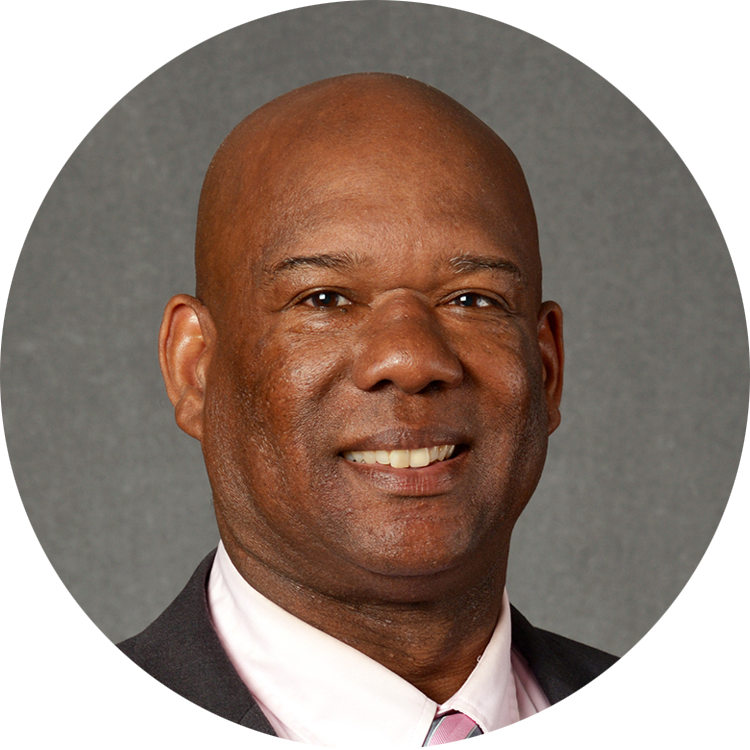
I’m delighted to announce that the partnership between the San Diego County Office of Education, Juvenile Court and Community Schools (JCCS) team, and the California Collaborative for Educational Excellence (CCEE) has proven immensely valuable to our organization, particularly in our efforts with the county’s most marginalized students. This enriching journey has highlighted the critical need to not only analyze and discuss data but to also utilize these insights to create meaningful change. Participation in this network and collaboration with local educational agencies (LEAs) statewide have provided our team with vital support, leadership, and encouragement from colleagues facing similar challenges and sharing the same goals. While we recognize the importance and tremendous opportunity presented by this partnership, we also understand the struggle, especially when progress is slower than anticipated, necessitating pivot and persistence. We’ve discovered this partnership to be a safe environment for honesty, courage, and continual growth, benefiting our students and society as a whole. While acknowledging that change takes time, we’re reassured that we’re not alone, and meaningful progress relies on our collective action.
Data Research Learning Network (DRLN)
By Kit Bragg, Director of Assessment, Research, & Evaluation, San Ramon Valley USD

Participating in the Data Research Learning Network (DRLN) has been incredibly rewarding. The focused and action-oriented process by which the CCEE/DRLN conducts research is evidence-based and results-driven. My work was pushed so much further under the guidance of the network team. Beyond that, the collaboration across the network elicited new thinking and new direction in my action plan. The opportunity to collaborate and present with team members further broadened my own research and affirmed the efforts driven by our plan. I most enjoyed learning from my colleagues about data literacy tools created within the network. My focus was wholly on dashboarding for the purpose of intervention tracking. Seeing the tools developed by my colleagues to increase data literacy pushed my thinking and allowed me to design some staff professional development differently.
Universal Design for Learning (UDL) Network
By Tim Reid, Director of Pupil Services, Nevada Joint UHSD

Being part of the UDL network reinforced the value of collaborative support among leaders, emphasizing the need for a collective effort in driving effective change. This has been a pivotal lesson in understanding the multifaceted nature of educational leadership and the importance of shared experiences and strategies among peers. My key takeaway is the realization that there’s no singular method to effectuate significant change. The diversity of approaches, enriched by the collective wisdom and creativity of the network, underscores the dynamic nature of educational leadership. This collaboration offers a unique opportunity for mutual support, allowing us to share insights and challenges. Moreover, it prompts us to ask targeted questions that lead to the refinement and improvement of our practices.
As LEAs engage in our learning networks, we are curating tools, resources, and artifacts that come out of their projects, in hopes that it can be a jumping off point for other LEAs hoping to embark on their own learning journeys. We updated the Learning Networks Resource Hub with new additions so make sure to check it out!
Is Your School Climate Ready?
By Ingrid Roberson, Assistant Director of Research Learning

As Earth Day this April 22nd reminds us of our rapidly changing climate, CCEE has partnered with UndauntedK12 and Ten Strands, two organizations dedicated to assisting K-12 public schools in acting on climate adaptation, mitigation, and education. UndauntedK12 and Ten Strands are currently conducting a statewide survey to gather model tools and resources aimed at supporting school infrastructure, climate resilience, adaptation, and decarbonization.
The initiative will kick off with the first of three Open Doors sessions scheduled on April 26th, focusing on “Schools and Climate Impact Emergencies” (registration link). Additionally, for the upcoming 2024-2025 school year, CCEE, UndauntedK12, and Ten Strands plan to share stories and resources from school communities across California. These tools will aim to empower schools, districts, and counties to drive action towards climate adaptation, mitigation, and education. A policy and practice brief will accompany the toolkit, featuring a summary of findings, resource links, spotlight stories, and policy recommendations.
Friday Feature – Unlocking California’s Education Code For TK/K Providers
Friday Feature – Innovating Education: Open the Door to New Ideas!
Friday Feature – ELO-P & UPK: Play-Based Learning Essentials
CCEE Connection (March 2024)
News & Announcements
Interested in Joining the community engagement initiative (CEI)?
Applications to join the Cohort V of the Community Engagement Initiative are due March 15, 2024. This peer-led initiative brings together LEAs from every corner of the state to learn together about community engagement strategies and practices that strengthen relationships that affect student outcomes. Interested LEAs can find more information and apply here.
In Case You Missed It
project arise free professional development opportunity
Project ARISE partners have developed a series of self-paced online courses that offer a whole-child approach to literacy instruction. Engage in content addressing executive functions, research informed best practices for reading instruction, and a process for intensive intervention. This professional learning opportunity is free to all California educators. Project ARISE is led by Contra Costa County Office of Education and supported by California Department of Education. Enroll for courses here.
Equity leadership now! a new podcast by the 21Csla state center
Tune in to Equity Leadership Now!, hosted by 21CSLA, where we engage in conversations with leaders committed to equity in education, spanning from PreK to university settings. We explore their innovative ideas and compelling work to realize individual, social, and environmental justice at the intersection of research, policy, and practice — because our democracy depends on it.
Listen today to “Orchestrating a Community of Diverse Educational Equity Leaders” featuring Rebecca Cheung, Assistant Dean of the Berkeley School of Education and Director of 21CSLA State Center. In this episode, Dr. Cheung delves into her leadership journey and discusses the crucial intersection of equity, leadership, and public education with Professor and 21CSLA Chair Jabari Mahiri. Listen to ELN! now on Spotify, Apple Podcasts, Amazon Music, and more.
CCEE “OPEN DOOR” sessions
Join our “open door” sessions where educational practitioners share innovative ideas and best practices from the Whole Child Design Framework. Connect with peers across the state, and explore opportunities for further engagement. Visit our site to watch recordings of past sessions or click the events calendar button in the navigation for upcoming sessions.
Looking AHEAD
UPCOMING CCEE OPEN DOOR SESSIONS
3/14: Increasing Intervention Efficacy Using Data Dashboards
A data dashboard can be a powerful tool when considering how to track the effectiveness of program implementation and efficacy. There are a myriad of factors to consider when deciding what dashboarding can provide your LEA. In this Open Door session, San Ramon Valley USD will share how to link data dashboarding with progress monitoring to increase intervention efficacy. Click here to register.
3/26: Balanced Assessment Systems in Action: Fostering Formative Assessment Practices With Mathematical Learning Progressions
This Open Door session explores the implementation of Balanced Assessment Systems, particularly Formative Assessments in mathematics, through Rincon Valley Union School District’s journey leveraging mathematical learning progressions from the Ongoing Assessment Project (OGAP) and utilizing progress monitoring tools such as teacher and student surveys and classroom walk-throughs to foster inclusive mathematical instruction. Click here to register.
register for the ’24-’25 Leadership institute
Register for the ‘24-’25 Leadership Institute. The Leadership Institute will kick off in person July 21, 2024 in Newport Beach, CA.
The ultimate goal of the Leadership Institute is to create networks and support systems for small school district leaders so they can gain the skill set and confidence needed to effectively lead their districts.
Project arise spring workshop series
Project ARISE, led by Contra Costa County Office of Education, invites California educators to our Spring Workshop series. These virtual professional learning sessions will include:
- For Executive Functions, Context Matters from the Center for Whole-Child Education
- Effective Foundational Skills Instruction from TNTP
- Intensifying Interventions for Students from the National Center on Intensive Intervention
See Workshop Flier.
March Resources
About the CCEE
The California Collaborative for Educational Excellence is a statewide leader delivering on California’s promise of a quality, equitable education for every student.
About the Transformative Systems for Equitable educational outcomes center (tSEE)
The Center for Transformative Systems facilitates a common integrated vision for the Statewide System of Support for the development of coordinated, equitable, educational student outcomes.
EXECUTIVE DIRECTOR’S CORNER
New Beginnings: What can happen when we imagine something new?
By Matt J. Navo, Executive Director, CCEE
Our state has invested millions of dollars into our schools and statewide systems over the last 4 years. The investments were pursued in hopes of building innovative approaches to improving educational outcomes for our students.
In addition to all the investments that create new ideas, sometimes doing something new involves simply a new approach or even reducing ideas to focus on a few key opportunities.
The Center for Transformative Systems for Equitable Educational Outcomes (TSEE) did just that on February 20, 2024. For the first time in California’s history, every state-funded initiative with statewide impact was brought together in hopes of establishing a new way of coordinating, collaborating, and integrating services and supports across the state.
This newsletter takes advantage of the opportunity to highlight new beginnings in state transformation.
Statewide System of Support (SSOS) is beginning to build the Interagency Collaboration envisioned by the State
By Chris Hartley, Ed.D., Deputy Executive Director, CCEE

As we celebrate and embrace new beginnings and the energy the Spring season brings all our educators throughout the state of California, the Center for Transformative Systems for Equitable Educational Outcomes (TSEE) is excited to bring you this newsletter. Together, we can harness the symbolism of Spring to cultivate a brighter, more interconnected future for all students.
This narrative directly aligns with our most recent event involving all lead agencies in the SSOS. For the first time, all state-funded initiatives that have a statewide impact were assembled in the collective pursuit of building interagency collaboration and integration of services and support statewide.
The Statewide System of Support Collaboration Convening, with over 110 participants making up over 25 state initiatives, was an opportunity to learn, grow, and share unique expertise and resources.
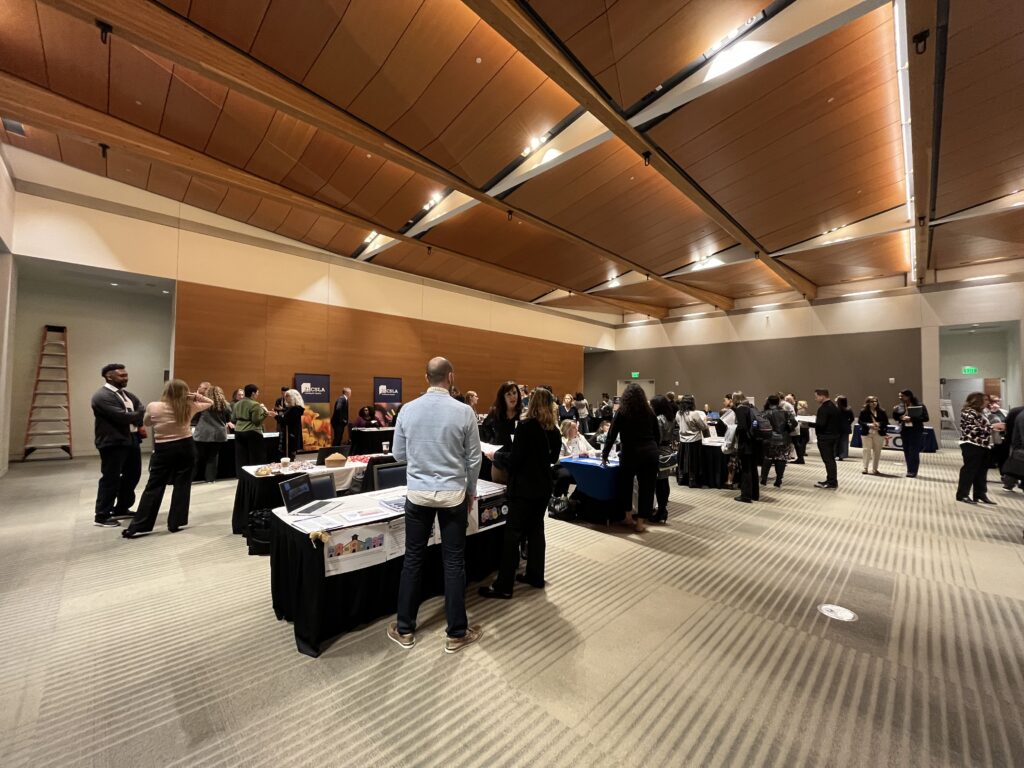
State agency partners pulled together to organize and facilitate the event. Big thanks to CCEE Board President, Dr. Cynthia Glover-Woods and CCEE Executive Director, Matt Navo for the excellent opening day remarks and to all the presenters who made this an outstanding event.
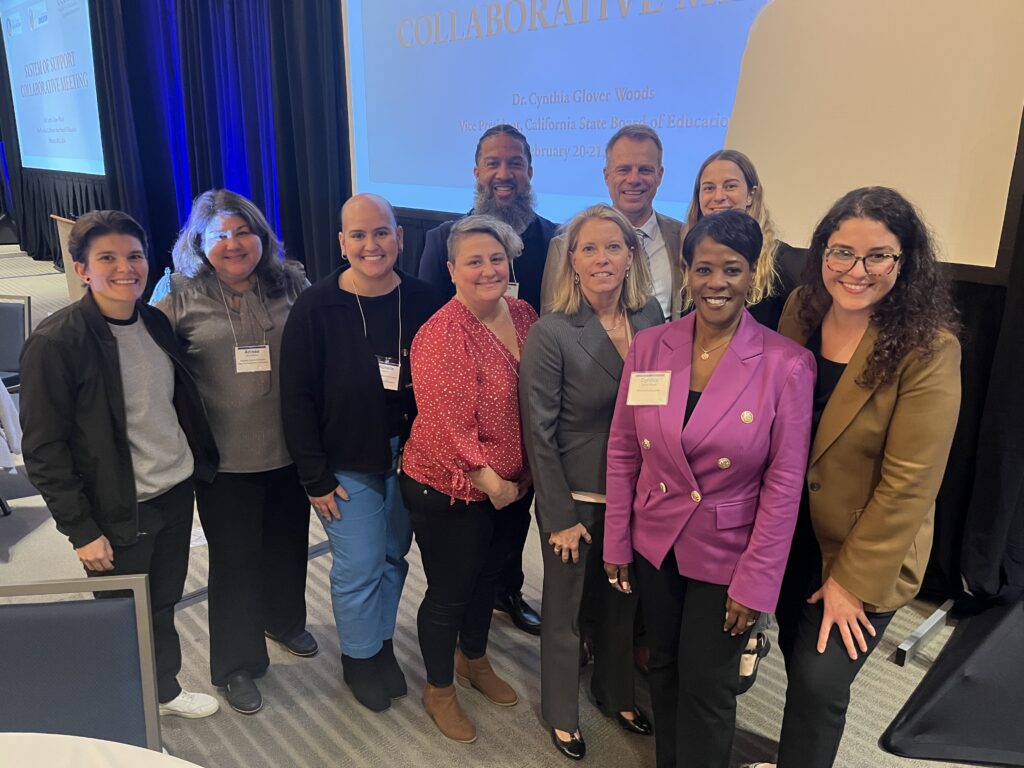
Just as Spring encapsulates the possibility of transformation, so do the efforts and dedication of educators throughout the state.
Embracing New Opportunities to Learn and Grow: Ensuring Equity in Access with the Statewide System of Support (SSOS) Online Tools
By Mindy Fattig, Senior Advisor, Statewide System of Support, CCEE
How do we ensure equity in access to all of the state funded resources, supports, and services across the state so educators know where to go and how to access resources without solely relying on who they may know in the system? This is a question that CCEE has been working on with our educational partners in the field over the past few years. As a result, goals with very specific strategic actions were identified to create tools that provide ease of access to all of the SSOS state funded resources available to educators that are designed to support improving outcomes for students.
These are just two of the many tools created which you can access with the links or QR codes below.

The Levers for System Change tool is designed for LEAs to assess the quality of their educational infrastructure in order to improve outcomes for ALL students, inclusive of serving students with disabilities. LEA teams evaluate, document, and progress monitor the status of implementation of the six fundamental components necessary for a successful LEA.
CCEE Statewide System of Support Resource Hub

Discover a wealth of universal resources aimed at enhancing student outcomes and supporting educators! With over 30 statewide projects, grants, and initiatives, there is a new one-stop website designed to provide equity in access to valuable tools for educators. There are 130+ universal resources aimed at supporting districts, county offices, and charter schools, and this number will continue to grow! From webinars, to toolkits, to self-assessment frameworks, all resources are aimed to help educational partners improve outcomes for students.
To learn more about the various online tools the System of Support has to offer, see the document below, or click here. We hope these tools will help educators across the state, to learn and grow together.
Revised CSTP Provides CEI with New Opportunities to Develop Teacher Capacity
Brittany Mabe, Ed.D., District Advisor, Community Engagement, San Diego County Office of Education

Take a moment to think about the last fifteen years and all that has transpired in the world of education and beyond. From technology advances to global pandemics to AI, the classrooms of today look vastly different from those of fifteen years ago. Knowing this, it is exciting that revised and updated California Standards for the Teaching Profession, CSTP, were approved by the California Commission on Teacher Credentialing (CTC) in February. The prior version of the CSTP, used by public school teachers K-12 statewide, were approved in 2009 and have been used to guide professional development, evaluation, and teacher induction programs for the last fifteen years. The goal of these revised standards, as outlined in the Information/Action Item presented to the CTC (2024), is to “enable teachers to meet the needs of all learners (collective), each learner (individual), and every learner, including but not limited to specifically historically and persistently underserved students.”
These new standards bring about many new opportunities. While the overarching six domains of the standards remain the same, included among the changes to the standards themselves is a stronger focus on family and community engagement and developing “positive and reciprocal family and community connections” (CTC Information/Action Item 4B, 2024). The new standards address the goals of the family and the community and ask teachers to implement evidence-based principles of engaging families to best meet the needs of all learners. One way that districts and charters across the state of California can deepen their community engagement practices and their understanding of these principles is through participation in the Community Engagement Initiative (CEI), a component of the Statewide System of Support charged with building peer-to-peer partnerships and deepening an understanding of authentic engagement. The revised standards provide the CEI an opportunity to collaboratively support educators in the classroom, ultimately strengthening community engagement and improving student outcomes.