Leveraging Relationships to Reengage Students

Author

Tom Armelino, CCEE Executive Director

With the passage of Assembly Bill 86, school districts will once again feel the pressure to speedily match students’ needs with the appropriate level of intervention and learning supports to accelerate learning. Although the question of how schools will address the large-scale learning acceleration of students is complex, we know that students need to first feel safe and secure to learn. This will require an initial assessment—in an intentional and formative manner—of the personal well-being of not only the students, but also the adults. In this past year, students and adults alike have been “battered by difficult emotions stemming from not only the pandemic, but also the economic recession and ongoing civil rights protests” (Prothero, 2021). Data on student and adult experiences will serve as the ultimate truth teller to help understand where they are and how we can move forward in addressing the necessary protective factors to engage our students academically. 

CCEE invited Dr. Peter Senge, co-founder of the Center for Systems Awareness and author of The Fifth Discipline, to be a part of the Leading Forward 2021 initiative. In his keynote session, Dr. Senge shared a conversation he had with a group of educators about the scar tissue left on our learners and adults after the pandemic.

“They talked about scar tissue. It’s one of the first images that was used. The damage has been done, and healing is actually more important in a way than learning in the traditional sense. Without healing, without recognizing and attending to the deep social, emotional traumas that students have gone through, we can think we’re focusing on learning and we can think we’re making up ground, but we won’t make much.”

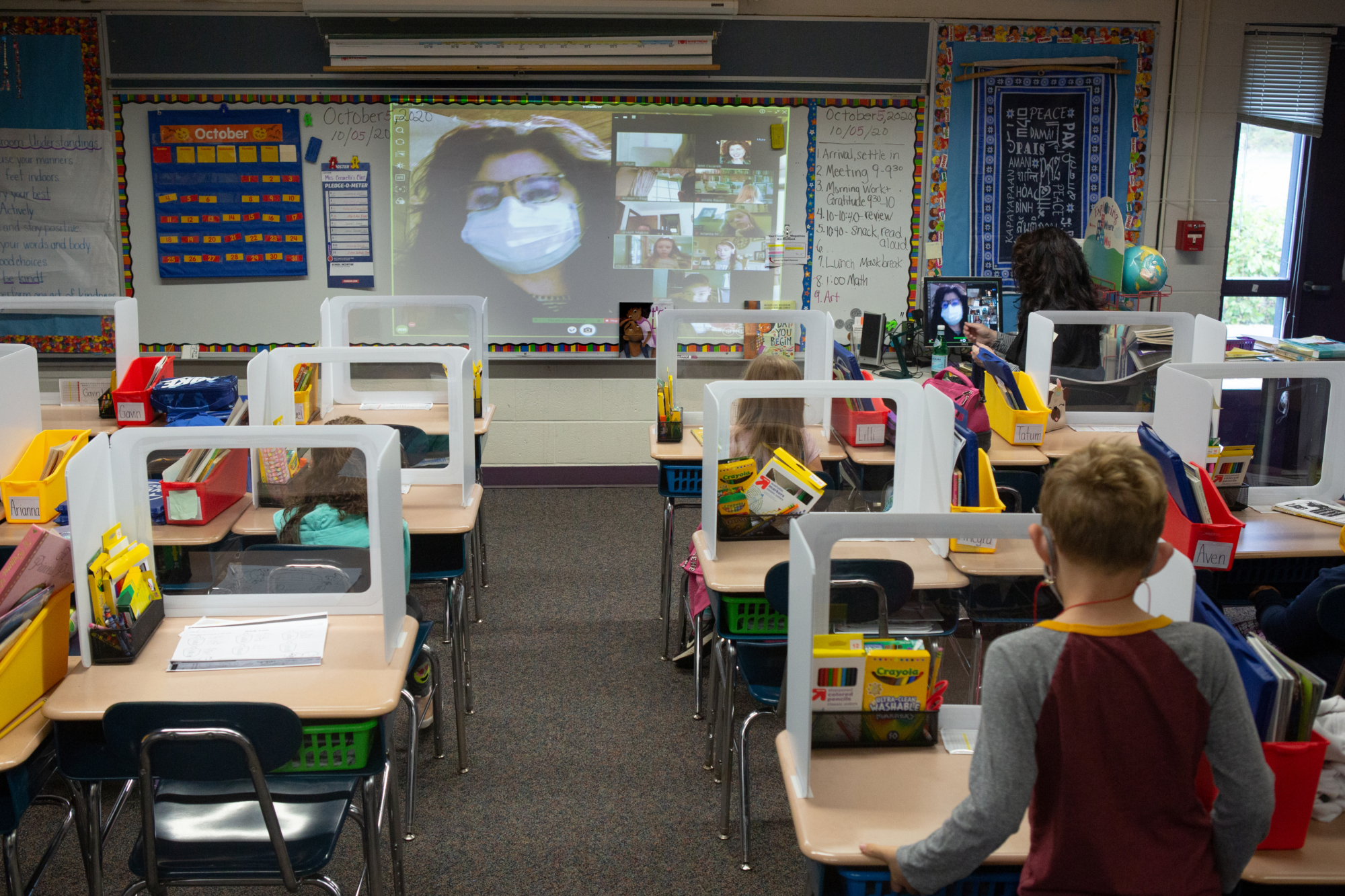
As schools prepare to reopen, we must be prepared to address the reengagement of students and what that means in our current context. This begins with building or rebuilding staff-student, staff-staff, student-student, and staff-family relationships, which are fundamental in supporting the social, emotional, and academic needs of students. Consider the following strategies to strengthen these relationships:

Staff-student: Map out relationships so each student is assigned a staff member who develops and maintains a relationship with the student through regular scheduled check-ins. Greet students at the door, organize fishbowl discussions, and design activities for students to have fun and show school spirit, focusing on strategies that strengthen relationships and build trust. 

Staff-staff: While resources and attention, appropriately, are front and center in supporting students, less focus is paid to assessing and addressing the mental health of educators who have also struggled to find balance and safety during the pandemic. Conscious efforts should be made to leverage staff-staff relationships by promoting relationship-building and peer-to-peer support through “wellness committees,” mentors, professional counselors, social workers, school psychologists, or other trained professionals.

Student-student: Facilitate the process of creating a shared agreement for classroom norms, set the expectation that every voice matters, and provide opportunities for students to develop individual relationships and build a class community (e.g., “mix and mingle” activities, “glows and grows,” team projects) – virtually and face-to-face (as deemed safe).

Staff-family: Staff-family relationships have probably never been more important. Using culturally and linguistically responsive approaches, regularly communicate with families to schedule individual check-ins and distribute climate and culture surveys. Listen to what worked and didn’t work for them during the pandemic and use these opportunities to understand the needs of their children. Additional trauma-informed trainings or resources can support families in approaching difficult conversations with their children to help them cope with changes and prepare for the transition back to school.

As schools bring more students back for in-person instruction, we must create psychologically safe learning environments to accelerate learning, while advancing equity for our vulnerable student groups. The March edition of the CCEE newsletter will feature tools, strategies, and resources focused on reengaging students and building relationships, to ensure we are addressing the whole child. 

Compassionate Systems and the Path to Leading Forward in Education with Dr. Peter Senge

DESCRIPTION

Dr. Peter Senge is a co-founder of the Center for Systems Awareness, focusing on promoting shared understanding of complex issues and shared leadership for healthier human systems.

Listen to Dr. Senge speak about the critical point our classrooms, schools, and society have reached and the role we all must play as leaders in facilitating a systems change that takes the whole child and whole community into account. Access his transcription here. A link to the British Columbia Ministry of Education’s Report on Mental Health Strategy and Well-being can be found here.

PRESENTER
Dr. Peter Senge, Co-founder, Center for Systems Awareness

KEYNOTE

LEADING FORWARD 2021

First Months of School: What Have We Learned?

Hot TopicsResponsive Teaching & Learning

Our educational system is in the most extreme re-envisioning and retooling process in history. For many, school is no longer a building, but a dedicated URL, a screen, and a new toolbox of online instructional strategies. So, what has been learned since mid-March that has informed the first months of school?

Focus. Address the most urgent needs first. Successful schools and districts focus on the basics. They concentrate on infrastructure, attendance, and maintaining system coherence. Then they turn to curriculum, instruction, and assessment and the specific needs of students at risk of sustaining deep learning losses. Teachers focus in similar ways by reaching the child first, then bridging to the content. They master the tools of Zoom chat boxes to check for understanding, breakout rooms for small group work, Google Jamboards for students to chart and collaborate, and office hours for one-on-one conferencing.

Engagement. At the heart of engagement are relationships. Educators have always understood the challenges of school engagement but never with this sense of immediacy. Fortunately, in this two-dimensional world we inhabit, the fundamental understanding that school, in whatever way it manifests, is based in relationships has remained constant. Teachers and staff also need engagement opportunities that focus on wellness and managing the stress of our changing educational context. Teachers are still the most impactful factor in student learning and cannot effectively function without the expertise and support of their leaders. Engagement and connection reveal themselves in our new world to be both conceptual and literal, vital to students and adults alike. This includes your wellness!

Basics. What was always important is even more so now. The pandemic has exponentially increased the need for professional learning, especially for teachers to successfully shift to online learning. However, stay focused on the basics of teaching and learning. Remind educators of the importance of building relationships with students, structures, clarity of the outcome and demonstration of student learning. Making connections to what prior instructional focus areas that the district or school has been implementing is the right direction to go.

For ideas and resources to support you, please go to the CCEE website and CCEE Continuity of Learning Playbook.

CCEE Measure of Impact – Pilot Partnership

DESCRIPTION

This infographic summarizes CCEE’s Pilot Partnership student performance using data from the California School Dashboard. During this initiative from 2017-2019, support was provided to help 12 LEAs improve student outcomes and enhance equity through continuous improvement. The infographic supports the final report that provides an overview of the activities, outcomes, lessons learned, and successes. In addition, the report outlines how the initiative is informing CCEE’s support to LEAs through direct technical assistance.

PRESENTER

CCEE

INFOGRAPHIC

LAUNCH INFOGRAPHIC 

Resource Type

Reports & Publications

Type of Audience

Systems Leadership

Topic Area

Continuous Improvement, Equity, LCAP

KEYWORDS

Pilot Partnership

Key Strategies to Prevent Learning Loss as Schools Go to Distance Learning

AUTHOR

Tom Armelino

One does not have to look hard to find evidence that when you close schools due to a pandemic, students’ social, emotional and academic needs are affected.

Despite heroic efforts to quickly shift to distance learning, achievement and equity gaps remain, and in most cases, are exacerbated. To address loss of learning and widening of achievement gaps, I recommend considering the following five key areas to assure schools are prepared to assess and address these gaps of inequity and subsequent impacts on student learning.

Address students’ social and emotional well-being first

Whether in school classrooms or at home, students need to feel emotionally safe, valued and cared for. Although eager to determine loss of learning, schools must first prioritize the measurement of school climate, leveraging social and emotional learning to build important foundations for learning.

With social and emotional learning at the forefront, educators should focus their efforts on strengthening relationships with every student and building community within the classroom through trauma-informed practices and re-engagement strategies.

Develop plans that include comprehensive approaches to formative assessments

With deep levels of attention focused on identifying the social and emotional needs of students as the foundation for learning, plans that include comprehensive approaches to formative assessments, which help teachers understand how well their students are learning on an ongoing basis, will be necessary to guide instructional decisions and resource allocations. School leaders will likely feel pressure to use “off-the-shelf” assessments, such as Star Reading, Star MATH and DORA (Diagnostic Online Reading Assessment).

Yet, the focus should be on the use of assessments that already exist and are aligned with the adopted instructional materials and text to provide stability for students and staff, and to help determine learning gaps in content knowledge and skill.

For example, as CDE Guidance on Diagnostic and Formative Assessments recommends, “teachers can use tools such as rubrics to clarify expectations and to provide feedback; journals, quick writes and discussions to see what students are thinking; pre-tests and exit tickets to see where they are at the beginning and end of class; strategic questioning and performance tasks during the lesson; observations of students working in small groups; student work samples and a variety of others.”

Further, the value of teacher knowledge should not be underestimated. It is essential that school leaders provide teachers with opportunities to collaborate and discuss concepts not taught or reinforced during the pandemic.

Prior to reopening, it will be important to assess a broad set of indicators, such as student access to technology, connectivity and high-quality curricula, in addition to student attendance and engagement in remote learning, and experience with trauma and/or food or housing insecurity. Parents should also be surveyed to triangulate vital information regarding their child’s social, emotional and academic needs experienced during distance learning in the spring.

Address individual student skills and re-teach concepts not taught in the prior year

Schools should be wary of focusing on remediation, and instead should focus on improving the quality of core instruction in different learning scenarios. Lessons learned after Hurricane Katrina found students in the elementary grades did best when efforts were made to support the skills and concepts needed to learn grade-level content.

Students in the upper grades had the most success with “spiraling” techniques, where topics such as math and science that are traditionally taught in blocks, chapters or units of study over a short period of time are instead introduced in smaller chunks, spread out over a longer period of time and teachers come back to the topic multiple times over the duration of the grade or course and going deeper each time.

Invest in high-quality professional learning and instructional materials

School and district budgets will be compromised and the costs to create safe and well-maintained learning environments will be significant. Investing in high-quality professional learning and instructional materials to support teachers and paraeducators will be key to the success of students when they return in the fall.

Resources such as the TNTP Learning Acceleration Guide, the CCEE Continuity of Learning Playbooks and other references such as Learning as We Go: Principles for Effective Assessment During the COVID-19 Pandemic from The Evidence Project and What Post-Katrina New Orleans Can Teach Schools About COVID-19 Learning Loss from CRPE (Center on Reinventing Public Education) can provide research, tools and practical solutions to prepare schools and districts to reopen in the fall.

Be active and transparent in communicating with families and the community

While plans are still in development and it will be difficult to predict what will happen in the coming months, schools must be intentional in their actions to communicate with staff, families and the community in an active and transparent way. This requires honest two-way communication providing opportunities for parent and community feedback.

Efforts should be made to clearly articulate plans to protect the wellbeing and safety of students and staff, in conjunction with addressing the social, emotional and academic needs of their children. Open and transparent communication efforts show empathy, build trust, instill and maintain confidence to demonstrate a long-term view that schools are prepared to address and assess the needs of students despite the challenges of the Covid-19 pandemic.

These are complex times. Having plans in place to identify and support student needs will best prepare schools to navigate these new challenges as they arise. We must get this right — students and families are counting on us.

TNTP Learning Acceleration Guide

DESCRIPTION

As district and school leaders plan to launch a very different school year, they must plan to address students’ unfinished learning and accelerate learning amid the continued uncertainty brought on by the pandemic.

We know typical remediation won’t come close to catching students up and likely compound the problem. Instead, schools need a fundamentally different approach to put every student on a fast track back to grade level.

CCEE has invited TNTP to walk through their Learning Acceleration Guide to help leaders bring the recommendations to life.

PRESENTER

Susan Marks, TNTP

Resource Type

Media, Professional Learning

Type of Audience

Site Administrator / Instructional Coach, Systems Leadership, Teacher

Topic Area

LCAP, Responsive Teaching & Learning

KEYWORDS

Learning Acceleration, TNTP

ARCHIVED VIDEO

SLIDES

LAUNCH SLIDES 

REFERENCES

TNTP LEARNING ACCELERATION GUIDE 

Focusing on Foster Youth: Alliance for Children’s Rights PLN Impact Report

DESCRIPTION

Sponsored by the CCEE, the Alliance for Children’s Rights invited six districts in east Los Angeles County to participate in the Foster Youth Learning Network in 2017. The network’s focus was to build more thoughtful district-level systems for foster youth. This report includes the PLN’s focus, structure, barriers and challenges, evidence of impact, and lessons learned.

PRESENTER

CCEE and Alliance for Children’s Rights

ARCHIVED VIDEO

REPORT

RESOURCE TYPE

Media, Reports & Publications

TYPE OF AUDIENCE

Systems Leadership

TOPIC AREA

Continuous Improvement, English Learners, Unduplicated Student Groups

KEYWORDS

Foster Youth, Professional Learning Network (PLN)

INFOGRAPHIC

CAAASA’s Professional Learning Network Impact Report

DESCRIPTION

Sponsored by the CCEE, the California Association of African American Superintendents and Administrators (CAAASA) formed a network comprised of four districts and three county offices of education. This report details the network’s two-year study identifying barriers and evidence-based solutions to improve African American achievement in California. The report also outlines 13 recommendations for state policymakers and educational leaders to consider.

PRESENTER

CCEE and CAAASA

ARCHIVED VIDEO

REPORTS

RESOURCE TYPE

Media, Reports & Publications

TYPE OF AUDIENCE

Board, Systems Leadership

TOPIC AREA

Continuous Improvement, Equity, Social-Emotional Well-being

KEYWORDS

CAAASA, Professional Learning Network (PLN)

CCEE 2019 Pilot Partnership Report

DESCRIPTION

This report summarizes CCEE’s Pilot Partnership initiative (2017-2019) which aimed to help 12 LEAs improve student outcomes and enhance equity through continuous improvement. The report also provides an overview of the activities, outcomes, lessons learned, and successes. In addition, the report outlines how the initiative is informing CCEE’s support to LEAs through direct technical assistance.

AUTHOR

CCEE and Pilot Partnership LEAs

REPORT

RESOURCE TYPE

Reports & Publications

TYPE OF AUDIENCE

Board, Systems Leadership

TOPIC AREA

Continuous Improvement, Governance

KEYWORDS

Pilot Partnership