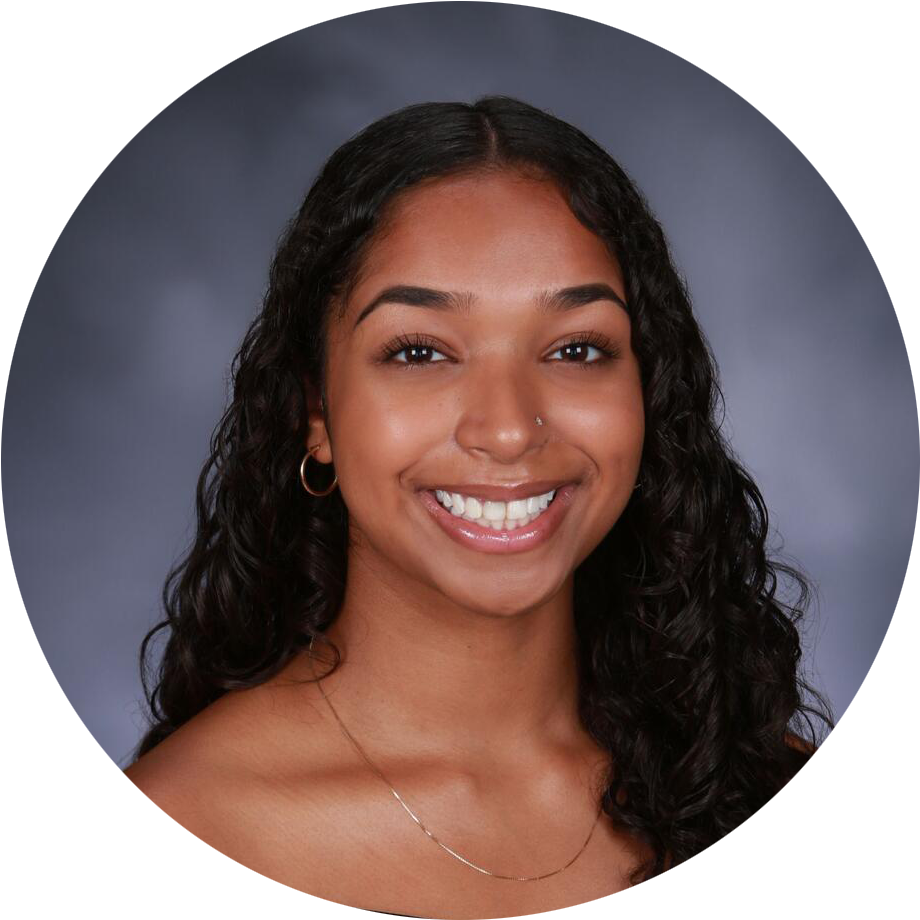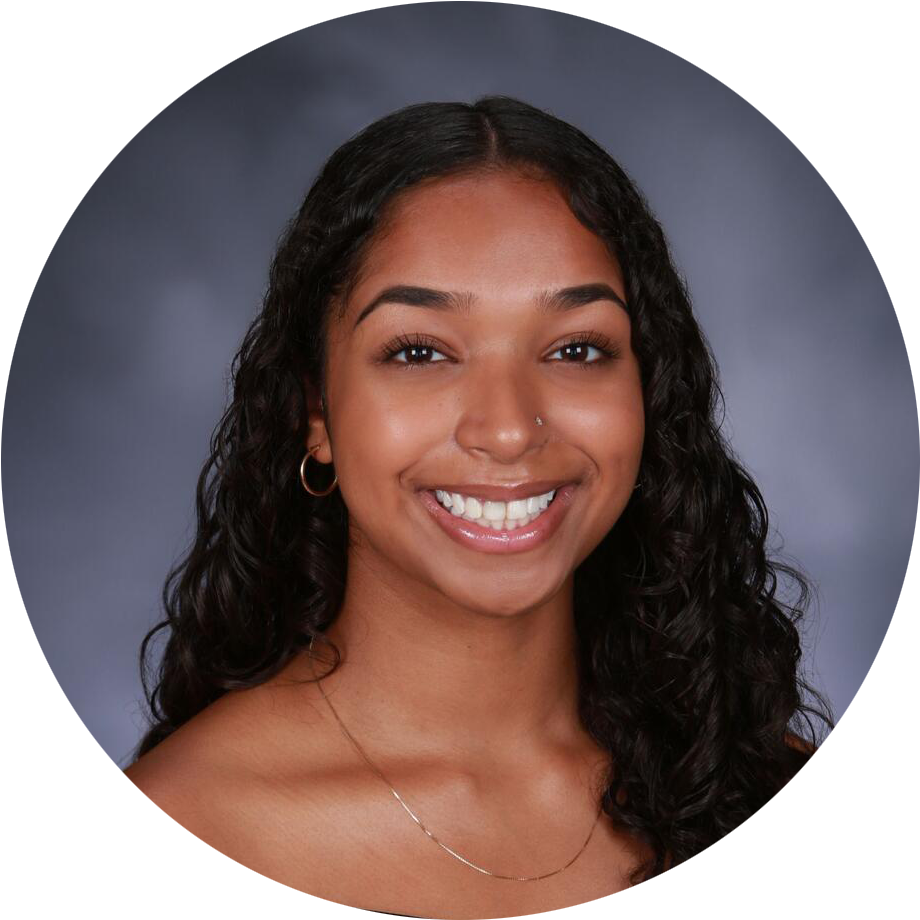
Note: During CCEE’s Governing Board Meeting on December 2, 2021, Kaleena Fowler, who currently serves as a student board member in Mt. Diablo USD, shared her voice and thoughts on the road ahead for students. CCEE has been providing technical assistance support to Mt. Diablo USD since 2020.
This article was featured as part of the December 2021 edition of the CCEE Connection.
Could you introduce yourself?
Hi, my name is Kaleena Fowler. I am a senior at College Park High School and also the student board member for the Mount Diablo Unified School District this year (MDUSD). I am the president of the Black Student Union (BSU) at College Park for about two years now, and have worked with the Boys and Girls of Contra Costa County and the Yellow Heart Committee, both great non-profit organizations. I am also an active member of the California Student Board Member Association (CSBMA) serving as the Director of Partnerships on the Executive Board. CSBMA is a student-led association of school district Student Board Members from across California that works together to better represent their constituents, allow for statewide youth advocacy, and provide support in the effort to expand Student Board Members across the state. My passion is advocating and speaking up for underserved and underrepresented communities.
My role as the student board member is to represent all 30,000 students in the district. I speak for all the elementary, middle and high school students. I am at every board meeting, I sit with all the other governing members, and I stay as late as they do. My voting status is preferential, meaning my vote does not influence the outcome of policies being passed, but it does influence the other governing members’ votes. I think that having the student board member position being created last year was extremely beneficial because almost everything the board passes is for the students. Having a student voice on the committee to give that perspective that none of the other board members have is extremely crucial. For instance, I remember when the new technology plan, Chromebooks, were being implemented for all middle and high schools. I asked, “Where are the middle schoolers going to put their Chromebooks, since they do not have a locker? How are we going to ensure the integrity of the Chromebooks will stay safe?”
Could you share some of your experiences as a student board member?
As the student board member, I have got the Student Advisory Committee (SAC) up and running with the help of Cherise Khaund, the President of the MDUSD Governing Board. The SAC is basically a group of pupils, from each individual school, on their student site council. We come together once a month, and bring policies, solutions, input, and more to the board. I should also mention middle school students are a part of the committee as well, which is amazing! It’s great to hear their perspectives. The topics we are discussing this year are the availability of COVID vaccination sites, a district-wide event for each big club (BSU, GSA, Latino Club, Interact, etc.), diversifying the English curriculum and novels, and more.
Within the BSU, Dr. Clark, the superintendent of the district, has come to meetings. One last year, one this year. The previous meeting he came to, he talked about the Coordinated Early Intervening Services (CEIS) program in the district. He pointed out that this policy was made because the homeless, foster, and African American/Latinx population were being underserved in the district. He talked about the stakeholders meeting he had with the African American parents, and students in the BSU were beyond happy to hear this plan. During and after the meeting, many students expressed how grateful they are to have this plan in place.
I am also working with district representatives to diversify the novel list for the English curriculum. I want the students of color to connect with what they are learning in school, and I feel like we do not have enough of that in the district.
What do think students need the most right now?
In September, I had the opportunity to speak at the capitol, on behalf of the Boys and Girls Club and the Yellow Heart Committee, regarding how COVID-19 has impacted students’ mental health. It was a nerve-racking, but amazing experience. In my speech, I highlighted what students need right now is accommodation. Since they spent a whole year confined to little black boxes on a screen, they have forgotten how to sit in a classroom for hours. No one knows how to compromise with others anymore.
That is why the social emotional learning concept is so important during these times. Social-emotional learning (SEL) is a methodology that helps students of all ages to better comprehend their emotions, to feel those emotions fully, and demonstrate empathy for others.
MDUSD created a survey designed to address social-emotional areas of development for self-awareness, self-management, social awareness, relationship skills, and decision-making. The survey is based on the CASEL (core competence areas and settings for learning) framework and is constructed from adapted survey items from peer-reviewed social and emotional research studies. All students in grades kindergarten and transitional kindergarten through grade twelve take the Social-Emotional Learning Survey. The survey is administered three times during the school year.
The suicide prevention workshops, school and community service, the social emotional education collaborative, mental health workshops, etc. are all amazing aspects of MDUSD.
What are your plans for the future?
In the future, I intend to go straight to a four-year college. I applied to a couple of Historically Black Colleges on the east coast, and many colleges in California. I will be studying political science, and then going to law school. I hope to become a human rights lawyer. Thank you so much for giving me this opportunity to share my experience. If you would like to contact me, my email is [email protected].
AUTHOR
Kaleena Fowler, Student Board Member, Mt. Diablo Unified School District