21CSLA Bay Area Regional Academy (BARA), in collaboration with Principal Investigator Rebecca Cheung, connected Dr. Sean Darling-Hammond’s research with the Bay Area Geographic Leads Consortium to host the Improvement in Action: African American/Black Student Success Networked Improvement Community (NIC) series throughout 2025–26.
Learning and Improving Together
The NIC engaged five districts: one each in Contra Costa, San Mateo, Alameda, and Santa Clara counties, along with San Francisco Unified School District (SFUSD). From September 2025 to March 2026, ten improvement teams from these districts participated in six network sessions. Teams included district and school administrators, coordinators, coaches, and teacher leaders.
Each district or school team implemented a change idea during the 2025–26 school year. Seven of the ten sites reported reductions in African American/Black student suspension rates, with the average rate decreasing from 17% to 11%.
In the final session, teams agreed that further investigation into contributing factors would help clarify where to focus future iterations of the work, since the data examined reflected only part of the academic year.
Building on the Learning
The evaluation report summarizes results and reflections on lessons learned from the intensive work with the improvement teams.
A new cohort has already launched for 2026–27, with Dr. Darling-Hammond and Principal Investigator Cheung reprising their roles in collaboration with Santa Clara County Office of Education (SCCOE) leadership.
Despite years of focused efforts on addressing gaps in academic access and outcomes for African American students, Dashboard data continues to show a significant gap across all key measures. In 2025, for example, Black students met grade-level standards at two-thirds the rate of the State average in English Language Arts (ELA) and almost half the rate of the State average in Math (2024-25 CAASPP). Black students are also more than twice as likely to be suspended than other students, and lag behind all other student groups in graduation rates. These persistent disparities underscore the need for sustained, system-level efforts to improve outcomes for Black students.
The African American Student Success Network is a community of practice facilitated by the California Collaborative for Educational Excellence (CCEE), in partnership with the California Association of African American Superintendents and Administrators (CAAASA) that is tackling these disparities. District and county office teams convene monthly to share updates, best practices, and identify next steps for inquiry in their work to address systemic inequities in outcomes for African American students in their school systems.
How Districts Are Tackling This Work
The current cohort of this Network comprises teams from 11 districts and county offices who have been engaged in continuous improvement processes over the past several years to tackle a pervasive academic outcome gap for Black students in their school systems. These areas of focus are determined by the local educational agency (LEA) teams through an examination of district, school, grade-level, and student group data, complemented by systems analyses and input from students and families through surveys and focus groups. Together, these efforts help teams better understand the nature of the achievement gap and identify a single change idea to implement and measure. Areas of focus vary across the Network, including addressing disproportionality in Special Education identification rates, examining teaching and learning in middle school mathematics, and reducing the number of non-passing grades in high school core classes.
Once Network teams identified their problems of practice and implemented their change ideas, they focused on collecting and analyzing data to understand whether their strategies were having the impact on student outcomes they had hoped for, for whom, and to what extent. Through this work, the teams uncovered and worked to address additional systemic challenges that hindered their ability to collect, analyze, visualize, and communicate their data.
For example, several LEA teams developed more robust survey tools and processes to gather additional input from students and families about their awareness of and access to available support services and programs. One district re-envisioned their classroom observation protocols to emphasize their updated expectations that embed culturally responsive principles of instructional practice. Another district invested a year in deep professional learning around their data systems, focusing on integrating data across their various data sources, and created an internal dashboard highlighting progress on their local data indicators. Across the Network, all districts also spent the year strengthening approaches for reflection, as well as creating a greater sense of belonging and inclusion for all students in their schools, with the understanding that this work would shape the ways adults at all levels of the school system interact with students.
What We Are Beginning To See Change
While this work is still in its early stages, and each district is focused on a problem of practice that is particular to their own community needs and goals, aggregated analyses of data are showing substantial and promising effects across the Network. Compared with African American students in the rest of the state, African American students in participating districts saw greater improvement over the past two years in both ELA and Math, as measured by increases in the percentage of students meeting or exceeding standards and decreases in distance from standard (DFS).
African American students in participating districts also experienced greater decreases in chronic absenteeism and suspension rates than African American students in the rest of the state.
Looking Ahead
This is still early data, and there are deeper questions that Network participants will be exploring in the coming year. Each district focused on a problem of practice tackling an aspect of broader access and achievement gaps identified in their school systems. The exciting news is that even focusing on improving outcomes for a smaller group of students can have a broader impact across the district. These initial data analyses suggest that something distinct and different is happening for African American students in these districts than for African American students in the rest of the state. The question for us this year is how to expand this work–not just for students in participating districts, but for students throughout the state. We will share more as we learn more. In the meantime, please stay connected with us!
CCEE Communications In partnership with Lompoc Unified School District.
For Lompoc Unified School District (LUSD), implementing Universal Design for Learning (UDL) across more than 500 educators required more than professional learning. In collaboration with Statewide System of Support partner, Open Access, district leaders wanted to build a sustainable approach that supported their broader commitment to student equity and inclusion.
LUSD joined the UDL Network to learn alongside other districts facing similar opportunities and challenges. Through that collaboration, the district hoped to identify barriers, strengthen its use of data, and develop a systems approach that could support UDL implementation across schools.
“Our objective was clear: to successfully implement Universal Design for Learning at scale, empowering over 500 educators. The shared expertise of the network helped us identify hidden barriers and build a data-informed systems approach to ensure our UDL implementation thrives.”
Creating Space to Reflect and Learn
For LUSD, one of the most valuable aspects of participating in the network has been having dedicated time to reflect on its implementation.
Guiding questions from CCEE helped district leaders look more closely at their progress and consider where adjustments were needed. Network convenings also created opportunities to learn from peer districts and bring new ideas back to Lompoc.
One on one coaching with CCEE and Open Access provided another layer of support, helping the district stay focused on its action items, communication strategies, and overall direction.
Throughout the process, Lompoc also focused on building capacity from within. The district began with early adopters, developed teacher leaders, and provided ongoing professional learning and coaching as the work expanded. This approach helped create local ownership rather than treating UDL as a separate initiative.
Slowing Down to Strengthen the Work
One of LUSD’s most important shifts was recognizing that scaling UDL did not necessarily mean moving faster.
Instead, the district intentionally slowed its implementation to give educators more time to examine classroom data and reflect on their practice. This helped LUSD move away from a one size fits all approach to professional learning and develop opportunities that better reflected the priorities of individual school sites.
Student perception data also became an important part of the process. By considering student feedback alongside educator reflection, district leaders gained a more complete picture of what was happening across schools and could use that information to guide future decisions.
Looking at Progress from Multiple Angles
LUSD is using several measures to understand how implementation is progressing.
One early indicator is participation in professional learning. While attendance has historically declined after the district’s first professional development day, participation remained considerably stronger throughout 2025 to 2026. Attendance increased from 69.8% to 85% on the second professional development day and from 73.6% to 87.3% on the third.
The district is also looking at broader student and staff indicators. Compared with the previous school year, LUSD reported:
A 2.6% increase in staff attendance during instructional days
A 5% increase in students with disabilities spending 80% or more of their day in general education classrooms
A 2.5% increase in student attendance, with increases across every significant subgroup
An 18% decrease in referrals for classroom concerns
These measures are influenced by many factors across a school system, but they provide LUSD with important information to consider as the district continues to monitor and refine its UDL implementation.
Building Ownership Across the System
Open Access observed that one of Lompoc’s strengths has been the way leaders at multiple levels have taken ownership of the work. District leaders, site leaders, and teacher leaders each have a role in supporting implementation, creating greater consistency as UDL expands across the system.
“Throughout Lompoc Unified’s UDL journey, leaders owned the work at every level. UDL wasn’t treated as an isolated initiative; district leaders, site leaders, and teacher leaders each had clear roles and served as champions for the work. Their shared commitment to administrator learning, coaching, walkthroughs, and site based ownership helped create consistency and sustain UDL implementation across the system.”
Laurie Balsano Wright
Director, Facilitated Improvement and Support
Educational Innovation and Support
Open Access
A Lesson for Other LEAs
Lompoc’s experience highlights an important lesson for other districts working to implement UDL at scale. Sustainable implementation is not simply about providing more training. It requires time to reflect, consistent communication, opportunities to learn from others, and a willingness to adjust based on what the data and people closest to the work are saying.
It also requires building the capacity of the people who will carry the work forward. By developing teacher leaders, investing in administrator learning, using coaching and walkthroughs, and giving individual sites ownership of implementation, LUSD is creating structures that can help sustain the work over time.
Resources to Explore
For educators and leaders interested in exploring UDL or strengthening their own implementation, these resources can help support the work:
CCEE Student Perception Survey: A resource for incorporating student voice and experience into implementation and continuous improvement.
CCEE UDL Data Toolkit: A resource designed to help teams examine UDL related data, identify patterns, and use evidence to guide implementation and continuous improvement.
CCEE UDL Journey Guide: A practical guide that helps LEAs reflect on where they are in their UDL journey, identify next steps, and plan for sustainable implementation over time.
CAST UDL Guidelines:A foundational resource for understanding and applying the UDL framework.
CCEE Student Perception Survey: A resource for incorporating student voice and experience into implementation and continuous improvement.
Open Access UDL Lesson Planning Toolkit: A practical resource designed to help educators reflect on lesson design and identify opportunities to strengthen UDL practices.
Open Access Walkthrough Tool: UDL Evidence Form: A resource for observing learning environments, reflecting on current practices, and identifying opportunities for continued growth.
Lompoc CCEE Open Door Session: An opportunity to learn more about Lompoc’s implementation journey and its approach to developing internal capacity, teacher leadership, professional learning, coaching, and gradual scaling.
By Dr. Erin M. Simon, Superintendent, Bellflower Unified School District
Leadership isn’t always about finding the right answers. Sometimes it’s about asking better questions. Dr. Erin Simon reflects on how her first year as superintendent transformed not only the way she leads, but the leader she is becoming.
I Thought I Needed to Prove Myself
For much of my first year as superintendent, I found myself asking one question:
How can I prove that I belong?
I wanted to build strong systems, earn trust, and produce meaningful results for students. I believed those would be the measures of success.
Over time, however, I realized I had been asking the wrong question.
The better question became:
What truly serves our children?
That shift changed far more than how I led. It changed who I was becoming as a leader.
The Leadership Challenge No One Prepared Me For
Like many first-year superintendents, I experienced both the excitement and the weight that come with leading an entire school district. Every day brought important decisions, high expectations, and a deep responsibility to serve students, staff, and the community well.
Along the way, I began noticing patterns in myself. I often over-explained my decisions. I over-accommodated others. I carried responsibilities that weren’t mine because I wanted people to know I cared.
Those habits came from a sincere desire to lead well, but they also revealed opportunities for growth. I realized that caring deeply didn’t mean carrying everything.
The Gift of Reflection
One of the greatest gifts I received during this season was permission to slow down and reflect.
Through my participation in the Transcendent Leader Institute, I found something I didn’t realize I needed: space.
Space to think.
Space to listen.
Space to examine not only the work in front of me, but the leader I was becoming.
Working alongside mentors such as Dr. Paul Gothold, Dr. Judy White, Dr. Francisco Escobedo, and fellow education leaders, I found language for experiences I was already living. Their guidance helped me realize that leadership development isn’t simply about acquiring new strategies. It is also about allowing the work to transform the leader within.
That insight changed everything.
I became more intentional about creating clarity, establishing healthy boundaries, communicating with honesty, and discerning when to act quickly and when to pause. Instead of trying to solve every problem myself, I began focusing on creating the conditions where accountability, alignment, and shared ownership could flourish.
From Loving Hard to Loving Clear
One realization has stayed with me more than any other.
For much of my career, I believed I was leading by loving hard. I cared deeply, gave deeply, and often carried more than I needed to.
Through reflection, I realized that loving hard can quietly become over-functioning. It can mean absorbing challenges that aren’t yours to carry.
Today, I try to lead by loving clear instead.
For me, loving clear means telling the truth with compassion, naming difficult problems, creating accountability, setting healthy boundaries, and believing people are capable of rising to meet high expectations.
That shift transformed not only my leadership, but also my understanding of what compassion truly looks like.
What Changed
As I changed, my leadership changed.
Urgency no longer feels synonymous with effectiveness. Emotional labor no longer feels like the measure of my commitment.
Instead, I strive to remain calm under pressure, communicate openly, and make decisions that align with our values rather than seeking approval.
Perhaps the biggest shift is this:
I no longer ask,
“How can I prove myself?”
Instead, I ask,
“What truly serves our children?”
That question now guides every important decision we make as a district.
I’m especially grateful to see that commitment reflected in Bellflower Unified’s inaugural Strategic Plan and Learner Profile, both shaped alongside students, staff, families, and our community.
My Advice to Other Superintendents
If there’s one lesson I would share, it’s this:
Reflection is not separate from system improvement.
It is the foundation of it.
As educational leaders, we spend so much time investing in strategic plans, budgets, governance, and instructional improvement. Those things matter immensely.
But leadership also requires investing in ourselves.
Whether it’s through the Transcendent Leader Institute or another meaningful leadership development experience, I encourage every superintendent to seek opportunities that create intentional space for reflection. The strongest systems are built by leaders who continue learning, growing, and examining not only what they are doing, but who they are becoming.
Clarity, discernment, healthy boundaries, and steadiness aren’t secondary leadership skills.
They are essential to building healthy systems that consistently center students.
Looking Back
Today, I still believe leadership is about building strong systems and creating meaningful opportunities for students.
But I’ve learned those systems are only as healthy as the leaders who build them.
My first year wasn’t about proving that I belonged.
It was about becoming the leader my district needed, and continuing that journey every day.
CCEE Perspective
Dr. Erin Simon’s reflections illustrate how personal leadership development can shape systemwide improvement.
Bellflower Unified School District is also participating in CCEE’s Direct Technical Assistance (DTA) process, where the district is working to strengthen alignment and coherence across its educational system. As part of this work, Bellflower Unified is bringing together general education and special education under a shared vision of service to all students, ensuring that plans, investments, and actions remain focused on improving student outcomes.
Dr. Simon’s emphasis on reflection, clarity, and purposeful leadership reflects the mindset that supports this work. By modeling the behaviors she hopes to cultivate across the system, she is helping create the conditions for sustainable improvement that centers students.
By Krystal Lomanto, San Benito County Superintendent of Schools
As a County Superintendent, I have learned that when districts face significant challenges, improvement happens most effectively when support is clear, coordinated, and focused on building capacity rather than assigning blame. At the heart of this work are students. Every decision we make about support, intervention, and accountability ultimately affects their opportunities, experiences, and outcomes.
Over the years, I have seen districts make progress when they receive the right support at the right time. I have also seen how uncertainty about roles, responsibilities, and decision-making can create confusion and delay action when urgency is needed most. When students are struggling academically, experiencing chronic absenteeism, or not receiving the services they need, we cannot afford a system that lacks clarity.
A System Built on Shared Responsibility
California’s Statewide System of Support was built on the principle of shared responsibility. County Offices of Education, Geographic Leads, the California Collaborative for Educational Excellence, the California Department of Education, and local districts all have important roles to play. For the system to function as intended, everyone must understand how decisions are made, when support should be intensified, and who is responsible for delivering that support.
Strengthening Support Before Challenges Escalate
Recent statewide investments in universal and targeted assistance have strengthened our ability to support districts earlier and more effectively. Counties now have additional opportunities to work alongside districts, using Dashboard data, local indicators, LCAP implementation, and whole-child strategies to identify challenges before they become a crisis.
Early support matters because the longer problems persist, the greater impact on students. Every year a student spends in an underperforming system is a year of opportunity that cannot be regained. This helps counties identify needs before challenges intensify and ensure escalation decisions are based on a clear record of support, engagement, and impact.
Flexibility with Accountability
In my experience, districts do not always enter improvement efforts through the same door. Some readily embrace additional support, while others engage more effectively through an existing planning process, peer network, or trusted regional partner. A strong county support structure can create multiple entry points for collaboration while still maintaining clear expectations for evidence, progress, and results.
Flexibility in approach should not mean ambiguity in accountability.
Clear Expectations and Transparent Decisions
To better serve students, California should establish clear statewide criteria for escalation, continuation, de-escalation, and reassignment of support responsibilities. This would help ensure consistency across California. Decisions that affect district governance or intervention levels should be grounded in documented evidence, including implementation progress, improvement planning efforts, support quality reviews, and the results of systemic reviews.
When expectations are clear and transparent, everyone can focus on the work of improvement rather than debating the process
Building Trust Through Transparency
Transparency is equally important for maintaining trust. District leaders should have clear avenues to raise concerns about support quality, decision-making processes, or the application of escalation criteria. That trust is critical because meaningful improvement requires strong partnerships among districts, counties, state agencies, families, and communities.
Formal review, complaint, and appeal processes can help ensure that decisions are not only fair, but also perceived as fair by the communities they affect.
Continuous Improvement for the System
At the same time, the system itself must be designed to learn and improve. Feedback from districts, County Offices of Education, and support providers can offer valuable insight into what is working, where barriers exist, and how assistance can be strengthened over time. Continuous improvement should apply not only to districts, but also to the support system itself.
Defining Success
For me, success is when district leaders understand who is responsible for providing support, when County Offices and state partners have clarity about their roles, and when districts can quickly access the expertise, resources, and coordination they need.
Most importantly, success will be reflected in a system where escalation decisions are viewed as transparent, evidence-based, and centered on improving outcomes for students, not as punitive actions or compliance exercises.
Looking Ahead
California’s Statewide System of Support was built on shared responsibility. Stronger county-led universal and targeted supports can help identify needs earlier, coordinate expertise more effectively, and provide a clearer continuum of assistance before more intensive intervention becomes necessary.
If we remain focused on transparency, collaboration, and continuous improvement, we can build a system that not only supports districts, but ultimately delivers better outcomes for students who depend on us every day.
CCEE Communications In partnership with Morongo Unified School District and Open Access.
When Morongo Unified School District joined the California Collaborative for Educational Excellence’s (CCEE) Universal Design for Learning (UDL) Network, district leaders were looking for more than professional development, they were looking for a community of educators tackling similar challenges.
As a small rural district, Morongo faced many of the same barriers experienced by districts across California. They wanted to learn from others, share ideas, and build a sustainable approach to implementing Universal Design for Learning that would benefit every student.
“Our team wanted to connect with other districts that were implementing UDL,” said Eric Smith, Program Specialist. “We wanted to learn from their successes and struggles. Although we are a small rural district, we have many of the same barriers that other districts have.”
Building Capacity Through Partnership
The UDL Network is facilitated by the California Collaborative for Educational Excellence (CCEE) in partnership with the California Coalition for Inclusive Learning (CCIL), Supporting Inclusive Practices (SIP), and Open Access. Together, these organizations demonstrate the success of the Statewide System of Support (SSOS), by bringing complementary expertise to help districts strengthen inclusive instructional practices through coaching, collaboration, and continuous improvement.
For Morongo Unified, one of the most important shifts came from reframing UDL as an instructional framework for all learners rather than a special education initiative.
“One of the most valuable aspects of participating in the network was the support in shifting UDL from a SELPA-led initiative to one led through Instructional Services,” Eric shared. “We have been intentional about recognizing that UDL is designed to support all students, not just students receiving special education services.”
According to Leah Padilla of Open Access, that shift represented an important milestone in Morongo’s implementation journey.
“The district’s instructional leadership is clearly communicating that UDL is a framework for designing instruction that benefits every learner,” she explained. “Instructional Services and SELPA are now sharing the work and strengthening Tier 1 instruction together.”
From One-Time Training to Continuous Learning
Rather than relying on isolated professional development sessions, Morongo adopted a continuous improvement approach to implementation.
When Open Access began supporting the district in early 2024, district leaders already understood that meaningful implementation would require more than a one- or two-day workshop. After joining the CCEE UDL Network later that year, Twentynine Palms Junior High formalized a plan for monthly professional learning focused on UDL implementation.
These recurring learning opportunities allowed educators to focus on one strategy at a time, apply it in their classrooms, reflect on their practice, and receive coaching before moving to the next step.
“Instead of feeling overwhelmed by trying to implement everything at once,” Leah noted, “educators were able to experiment, learn from one another, and gradually build both confidence and capacity in implementing UDL.”
Today, UDL has become part of Morongo Unified’s districtwide communication and instructional improvement efforts. Schools continue to receive ongoing training and coaching as implementation expands across the district.
Seeing the Difference
For Eric, the most meaningful evidence of progress doesn’t come from a spreadsheet, it comes from students.
He recalls hearing from students who transferred to other schools and spoke about what they missed most: the opportunities to collaborate with classmates and the flexibility to demonstrate their learning using tools and materials that helped them succeed.
The district has also found that implementing UDL through ongoing coaching and monthly learning sessions has resulted in greater adoption than traditional one-time trainings.
“UDL is simply too broad to deliver in a one- or two-day training,” Eric explained. “We found more teachers implemented at least one UDL principle when we provided one hour of learning or coaching each month. It also gave teachers opportunities to ask for guidance as they tried new approaches to lesson planning.”
Looking Ahead
Morongo Unified’s journey demonstrates that lasting instructional change is built over time through collaboration, coaching, and continuous improvement.
By participating in the UDL Network, the district has strengthened its instructional systems while contributing to a statewide community of educators committed to expanding access and opportunity for every learner.
As districts across California continue to implement Universal Design for Learning, Morongo’s experience offers a simple but powerful reminder: meaningful change doesn’t happen through a single training, it happens through sustained partnership, shared learning, and a commitment to continuous improvement.
Across California, Local Educational Agencies (LEAs) are increasingly recognizing that supporting student success requires more than what schools alone can provide. An ecosystem of care (ESOC) represents a collaborative, cross-agency approach designed to improve outcomes for children and families by aligning education, health, and community resources. This work reflects a shared commitment among educators, county agencies, and community partners to address the broader conditions that influence student success. By centering prevention, coordination, and collective impact, an ESOC offers a promising pathway for supporting the whole child in a coordinated effort and alleviating what may be overwhelming for families trying to navigate complicated systems one by one.
Understanding an Ecosystem of Care: A Whole-Child Approach
Who:
Cross-sector partners including LEAs, county agencies, community-based organizations, and family-serving systems.
What: While rooted in mental health system frameworks, ESOCs have evolved to encompass a broader focus on prevention and early intervention—supporting all children, not just those already engaged in specialized systems.
Why it matters: Research highlights the measurable benefits of implementing an ecosystem of care approach. Communities engaged in ESOC efforts have seen:
A 10% increase in school attendance
A 32% reduction in school expulsions
A 42% decrease in inpatient hospital admissions
A 38% reduction in costs associated with juvenile arrests
When agencies work together, they can address root causes of inequities and create more sustainable systems. ESOCs help LEAs move beyond siloed efforts, increasing their capacity to meet the academic, social, and emotional needs of students. This alignment strengthens outcomes tied to attendance, engagement, and overall well-being. These results demonstrate that when agencies align resources and strategies, they not only improve student outcomes but also reduce strain on broader public systems. For LEAs, this translates into stronger learning environments and more equitable access to support.
Who: Developed with input from over 30 ESOC workgroup members across California, including participants in AB 2083 initiatives, county, community, and state agency partners.
What: To support agencies in building and sustaining coherence in the system, the ESOC Toolkit provides an interactive, structured, step-by-step approach. It is designed to help ESOCs establish effective workgroups, define shared goals, and identify the specific actions that ESOC members will take to actualize those goals.
Step 1 focuses on creating the conditions that are necessary to build trust between partners and incentivize change. Step 2 defines steps and provides tools for building ESOC workgroups. Step 3 helps ESOCs identify shared goals by evaluating existing data and conducting a needs assessment. Step 4offers tools for identifying and measuring concrete, attainable goals.
Step 5 outlines steps to ensure that each agency owns the responsibility for taking specific actions toward the ESOC’s shared goals.
Every step in the toolkit includes templates, examples, and additional information that ESOCs can use to help organize, understand, and implement recommendations. The resources are found in “Resource Boxes.” Each step also includes “Tip Boxes” with background context, helpful suggestions, or shared wisdom from interviews with ESOC workgroup members. Finally, several of the steps in the toolkit include “Tool Boxes” that link to tools ESOC teams can use to guide them through the processes and activities described in each step. The tools can be downloaded as an interactive Google document and shared, allowing for real-time collaboration between ESOC members.
Why it matters:
The toolkit provides a clear roadmap for LEAs and partners to move from intention to implementation. By offering actionable steps and shared tools, it helps teams build sustainable systems that can evolve based on data and community needs.
An ecosystem of care exemplifies the power of collective action in advancing the whole-child vision in California. By fostering collaboration across agencies and centering prevention, ESOCs help LEAs create more equitable, responsive systems that support student success. As this work continues to grow, we invite you to explore the toolkit, connect with partners, and share your own stories of cross-agency collaboration to strengthen outcomes for children and families.
By Nicole Anderson In collaboration with Dr. Marcie Poole
As we continue our conversations about unpacking the system of public education and reimagining student success, I find myself reflecting deeply on my own journey as an educator and on what it truly takes to create meaningful systems change.
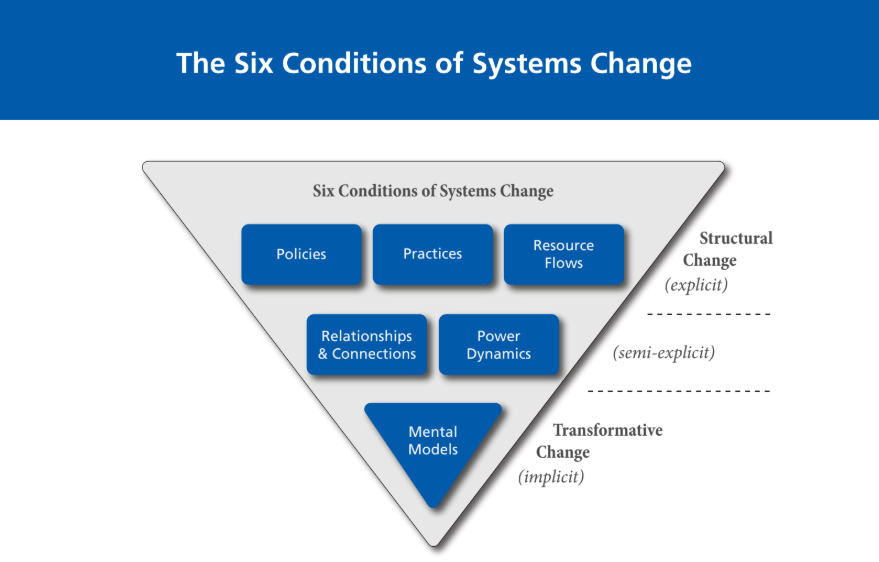
For many of us, we have existed within a system without always being aware of the conditions shaping it. There was a time when I didn’t fully recognize how policies, practices, and the ways we allocate resources did not benefit all students. Even more difficult to admit, I was at times, unintentionally perpetuating inequities within a system designed in ways that did not serve the very students I cared most about.
A fish swims by another fish and asks, “How’s the water?” The second fish responds, “What’s water?”
This analogy resonates deeply. As educators, many of us have spent our entire lives in this system as students, then professionals, without ever being taught to see it clearly. Seeing the system clearly is where transformation begins.
Seeing the System for the First Time
I grew up in the education system from early childhood through higher education and later returned as a teacher, a principal, and an educational leader across California. It wasn’t until I was serving as an assistant principal, reviewing a historical timeline of public education shared by the National Equity Project, that I experienced a profound shift in my thinking.
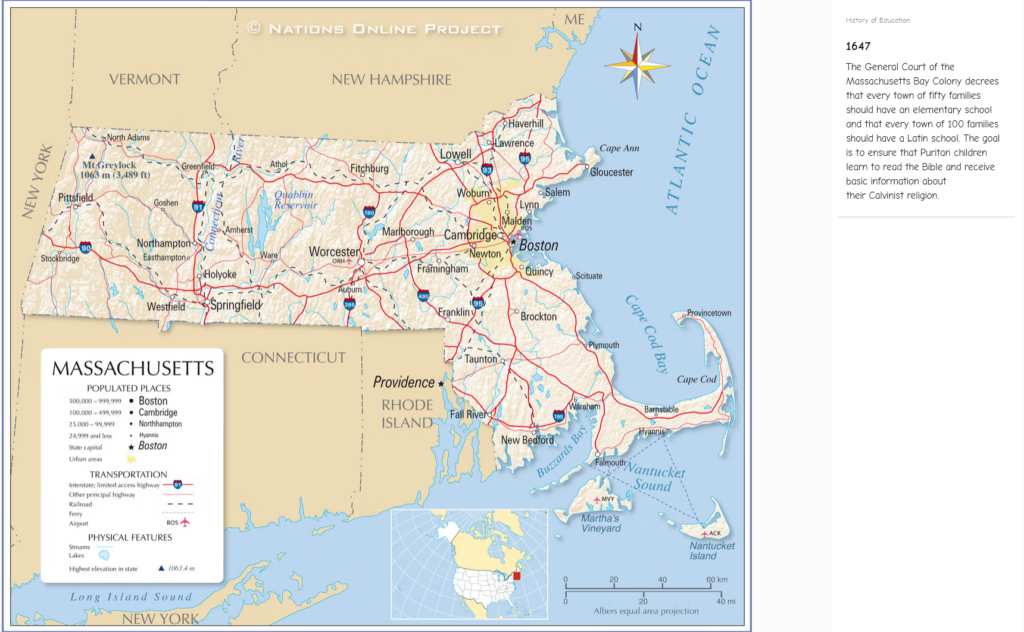
I began to understand that the U.S. public education system, rooted in the early 1600s, was never designed for the diverse students we serve today.
At the same time, I hold deep gratitude. Because of policy shifts, advocacy, and the sacrifices of those who came before me, I understand that I have benefited from increased access and opportunity. I stand on the shoulders of those who fought for progress.
Yet one truth continues to surface in this work: policy can change faster than belief systems.
Research and improvement efforts across California’s Statewide System of Support continue to reinforce the reality that sustainable improvement requires more than compliance or technical fixes. Real transformation requires shifts in mindset, stronger relationships, clearer roles, collaborative coherence, and the internal capacity of systems to continuously improve.
When Technical Fixes Aren’t Enough
One of the most important lessons I’ve learned is that educational improvement is not simply a technical challenge, it is an adaptive one.
We can implement new initiatives, adopt new policies, and create strategic plans, but if underlying beliefs about students remain unchanged, outcomes often remain unchanged too.
Educators have been conditioned by systems built on inequitable assumptions about intelligence, behavior, culture, language, and potential. Unlearning those assumptions requires ongoing reflection and courage. A powerful example of this for me came through discipline practices. As an administrator, I believed I was upholding structures that ensured safety and accountability. Yet over time, I realized many of these policies were not designed to meet the needs of all students. I also came to understand that I had more discretion than I initially recognized and more opportunities to respond in ways that supported growth rather than simply enforced compliance.
There was a moment of reckoning when I recognized that suspending students and coordinating with probation officers or law enforcement could contribute to the school-to-prison pipeline. That realization stayed with me. And when I looked back, I could see there were other pathways available – approaches rooted in relationship, restoration, belonging, and understanding that could have supported students while still maintaining high expectations.
The Power of Relationships and Systemic Support
What I have learned over time aligns with what improvement research continues to show across California: meaningful change happens when systems prioritize relationships, coherence, and collective responsibility for students.
Districts and schools that improve outcomes do not rely solely on isolated programs or individual heroics. They build systems where:
relationships matter,
collaboration is intentional,
data is used with an equity lens,
supports are coordinated,
and adults share responsibility for student success.
Research from California’s improvement efforts highlights that lasting change occurs when systems build internal efficacy, not simply when they add more meetings, mandates, or disconnected initiatives. That distinction matters deeply. Because too often in education, we mistake activity for transformation.
Holding the Line Between Love and Accountability
Throughout my career, I encountered many students in moments of struggle, students who sat in my office because they didn’t meet expectations or follow school rules. And yet, one thing I know to be true: I never gave up on them. I may have been firm. I may have been direct. But I always tried to balance that with love, belief, and an unwavering expectation that they would succeed.
Today, I run into those same students now business owners, parents, coaches, and leaders in their communities. They are thriving.
And it makes me wonder: Did our system truly measure their brilliance when they were sitting in our classrooms?
Rethinking How We Define Success
The metrics we often use in schools don’t always capture the full picture of a student’s potential or future success.
Reimagining student success requires us to think beyond test scores and compliance. It requires us to:
Build meaningful relationships
Connect learning to students’ lived experiences
Honor culture and identity
Maintain rigorous expectations while meeting students where they are
Rigor is not about rigidity. True rigor means refusing to let students fail while supporting them every step of the way toward their goals. And system transformation requires more than isolated interventions. It requires coherence across leadership, instruction, support systems, and adult learning.
Starting Beneath the Surface
The Waters of Systems Change framework reminds us that transformation begins beneath the surface with our mental models, beliefs, and assumptions. If we want to interrupt inequitable systems, we must first become aware of the water we are swimming in.
That awareness allows us to move:
from unconscious participation to intentional action,
from fragmented efforts to coherent systems,
and from compliance-driven improvement to equity-centered transformation.
This work is not about blame. It is about awareness, responsibility, and collective growth.
A Call to Do Better
As Maya Angelou so powerfully said:
“Do the best you can until you know better. Then when you know better, do better.”
This is the work before us:
To know better.
To reflect honestly.
To strengthen our systems, not just our programs.
To build coherence instead of fragmentation.
To center relationships alongside results.
And to reimagine a system that truly supports the success of all students, not just some.
Reflection Questions:
What inequities within our system have we normalized without questioning, and how are they showing up in our outcomes?
How do our beliefs about students, especially those who struggle show up in our daily decisions and actions?
In what ways might our current policies and discipline practices be contributing to exclusion rather than student growth?
Who is not being fully seen or valued by our current definition of student success, and how do we know?
What is one system, practice, or belief we are willing to actively change right now to better serve all students?
How do we ensure every student experiences both deep care and consistently high expectations in our system?
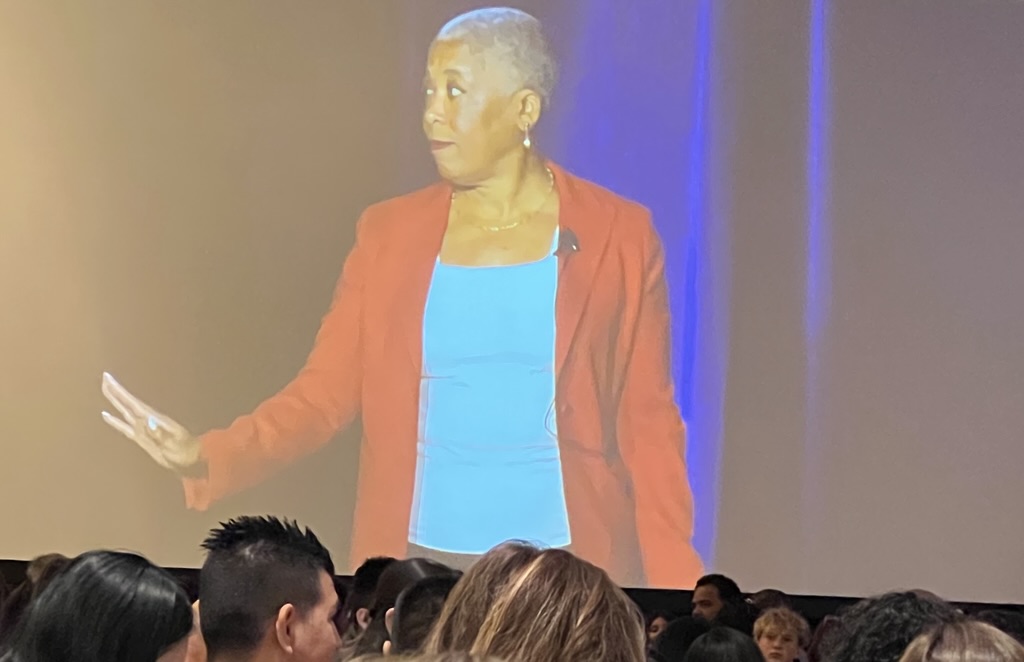
At the recent Community Engagement Initiative (CEI) PLLN, one message grounded the learning from start to finish: Engagement is not the goal, it is the strategy. Delivered during the keynote by Dr. Karen Mapp of the Harvard Graduate School of Education, this idea challenged participants to rethink how schools approach engagement. Not as a separate initiative, but as a core strategy for improving outcomes for students, families, and communities.
Throughout the convening, that message came to life through the voices, experiences, and leadership of students and families.
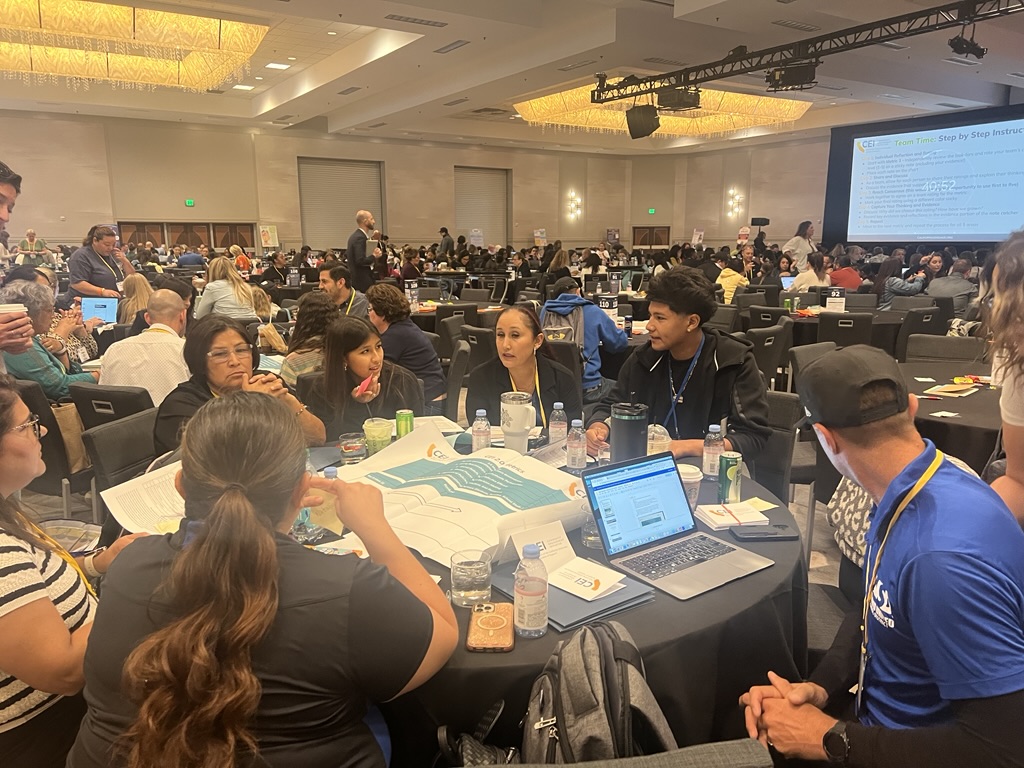
The two-day convening brought together educational partners from across California to strengthen community engagement practices, reflect on progress, and learn from one another through student leadership sessions, peer learning opportunities, and collaborative activities.
From Involvement to Partnership
During her keynote, Dr. Mapp emphasized the distinction between involvement and authentic engagement.
Meaningful engagement, she explained, is rooted in partnership. It prioritizes two-way communication, values the experiences and expertise of families and students, and creates relationships that are collaborative rather than transactional. This shift from simply involving educational partners to truly partnering with them was reflected throughout the convening.
Participants explored how strong relationships, shared leadership, and mutual trust create the conditions for meaningful and lasting change.
Students Leading Through Positive Social Norms Campaigns
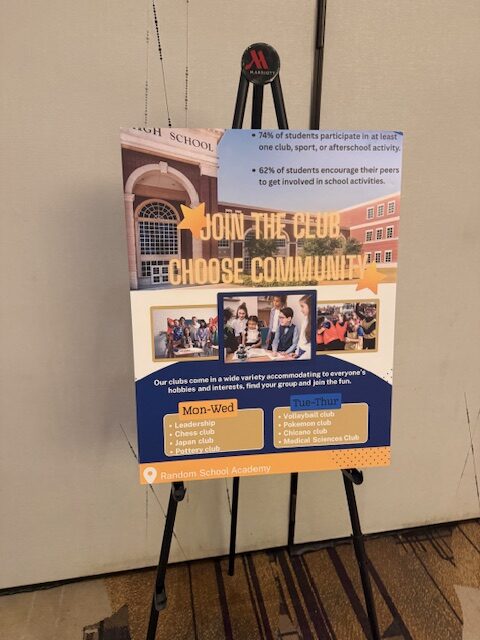
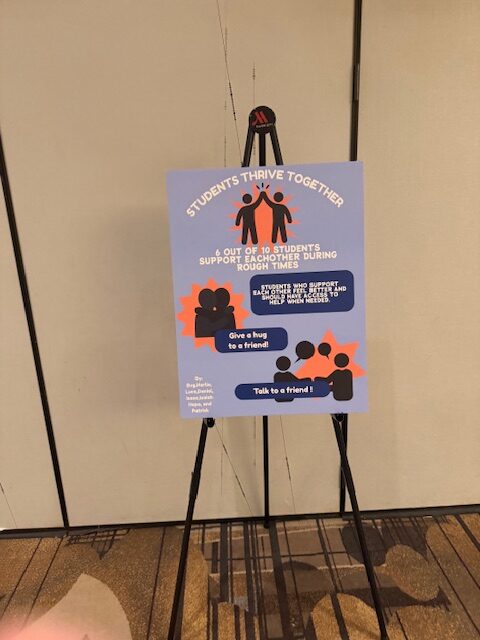
One powerful example of student leadership emerged during presentations of Positive Social Norms campaigns. Students courageously shared campaigns they developed to address real challenges and experiences within their school communities. Through thoughtful messaging and peer-centered strategies, students demonstrated not only creativity and leadership, but also a strong commitment to fostering more positive and inclusive school environments.
Their presentations highlighted the importance of creating intentional opportunities for students to lead, contribute, and shape school culture.
More importantly, students spoke with honesty and confidence about the realities they see every day, modeling what authentic student voice can look like when schools create space for it.
Practicing Courage Through the CEI 2.0 Metrics Activity
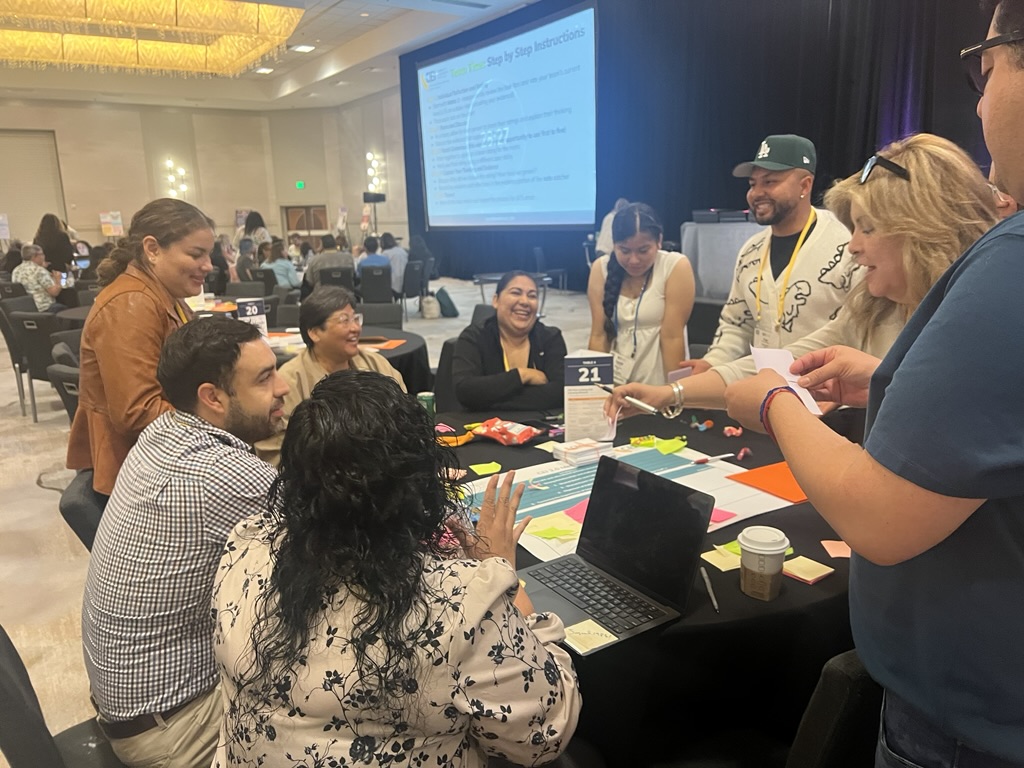
Another impactful moment came during a separate CEI 2.0 Metrics activity, where students and families engaged directly with district and site staff in reflection and dialogue around engagement practices and systems.
participants explored what meaningful engagement looks like across areas such as:
strong relationships and authentic partnerships,
shared beliefs and collective efficacy,
shared power and decision-making,
alignment of systems and resources, and
centering the experiences of educational partners
What stood out most during this activity was the courage students and families demonstrated in the space.
They:
Asked clarifying questions,
Pushed for deeper understanding,
Offered direct and honest feedback to district and site staff,
Named strengths while also identifying areas for growth.
These conversations reflected what authentic engagement requires: trust, vulnerability, and a willingness to listen and learn together.
Rather than positioning students and families as passive participants, the activity created space for them to actively shape the conversation and provide feedback grounded in lived experience.
In many ways, this moment embodied one of the convening’s central themes: meaningful engagement happens when educational partners are not only invited into the room, but are trusted as collaborators in improvement efforts.
Building the Conditions for Belonging
Dr. Mapp’s keynote reinforced that authentic partnership begins with beliefs.
She shared several foundational ideas that drive meaningful family and community engagement, including:
All families want the best for their children,
All families have the capacity to support learning,
Families and school staff should function as equal partners.
These beliefs were visible throughout the convening, not only in formal sessions, but in the relationships and conversations taking place across teams and cohorts.
Participants worked collaboratively to reflect on current practices, exchange ideas, and consider how systems can become more relational, responsive, and inclusive.
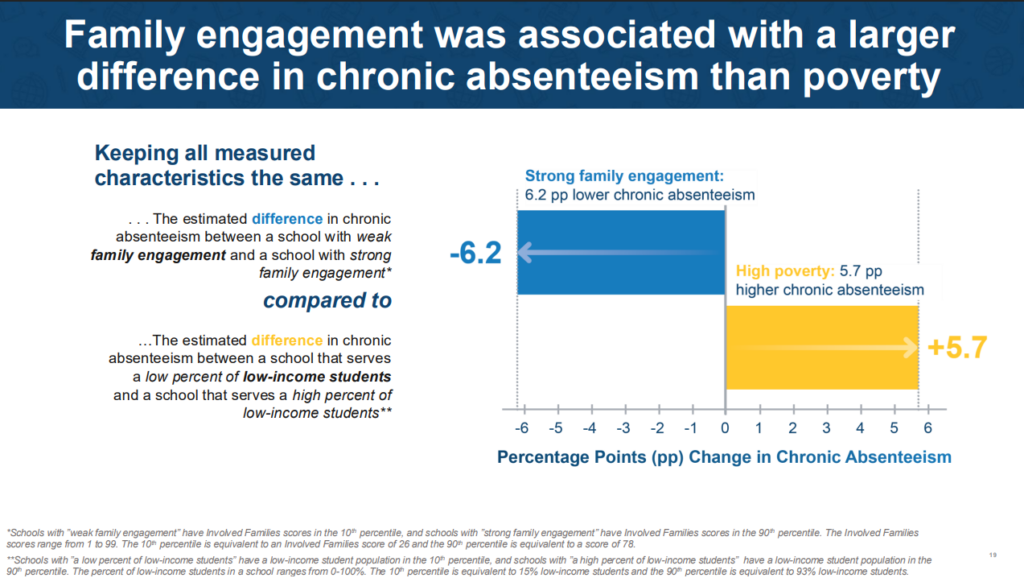
The convening also reinforced that engagement is not an “extra” initiative competing for attention. Instead, engagement serves as a foundational strategy for improving attendance, achievement, belonging, and overall student success.
A Reminder of What Is Possible
Perhaps the most powerful takeaway from the convening was the reminder that meaningful change happens when students, families, educators, and communities work together.
Whether through student-led campaigns, courageous conversations during the 2.0 Metrics activity, or reflections sparked by the keynote, participants experienced what authentic partnership can look and feel like in practice.
As one message from the keynote powerfully stated: “You’re actually changing someone’s life.”
That change begins when schools move beyond engagement as an activity and embrace it as a strategy for transformation. And as this convening demonstrated, when we partner— everyone wins.
As the CEI community continues to grow, educators, students, families, and community partners interested in future cohort opportunities can stay connected by signing up for notifications through the CEI website. CEI also offers a series of in-depth learning modules on meaningful pupil, family, and community engagement to support continued professional learning and deeper expertise in engagement practices.
California’s new Attendance Recovery policy gives districts the opportunity to recoup lost attendance dollars in non-school hours. Given the negative impact of persistently high absentee rates in districts, the policy is sparking a lot of interest across the state.
Beyond money, Attendance Recovery is an opportunity to increase student learning time and engagement – a much bigger win in the long run. The key to success is partnering with your district’s existing afterschool infrastructure to leverage the relationships, infrastructure and environments that research shows have a positive lasting impact on student attendance. Afterschool and summer programs already provide more than 120 additional learning days per year. Attendance Recovery can enhance this time.
What is Attendance Recovery (AR)? Here are some of the basic guidelines:
AR provides students in TK/K-12 more opportunities to learn during non-school hours.
It allows school districts to recoup ADA funding lost due to absences.
It is voluntary for districts and non-compulsory/non-punitive for students.
It must be led by a certificated teacher and applies only to in-person instruction.
It requires activities and content to be “aligned to grade level standards that are substantially equivalent to the pupils’ regular instructional program” as defined by the school district.
Attendance Recovery is a complicated and nuanced policy that is raising a lot of questions for districts. To support the field, the Partnership for Children & Youth (PCY) conducted focus groups and interviews with LEAs that are early-adopters of the policy. Based on their experience, they had some practical strategies and suggestions for their peers that are captured in a memo Emerging Practices for Attendance Recovery, and in a webinar featuring some of the districts profiled in the memo.
As a preview, here are some key ideas from our pioneering districts:
What should happen first?
Find out what’s already happening in your expanded learning program that might be a good starting place for Attendance Recovery. For example, many LEAs already have certificated teachers teaching clubs after school. How could these clubs be re-imagined to meet AR requirements and still be fun for both students and teachers?
How can we meet AR requirements, while making it engaging?
Define how content is “aligned to grade level standards that are substantially equivalent to the pupils’ regular instructional program” per Ed Code.. Some LEAs are creating simple systems that allow teachers to design activities and choose content standards that are exciting for them to teach and spark students’ interest in learning. How can you tap into teachers’ passions to offer activities that align with grade-level standards?
How does AR fit with other expanded learning programs?
Use the expanded learning infrastructure to organize and manage your Attendance Recovery classes, including, for example, the registration process, snacks, parent communication, parent pick up procedures, etc. How can you leverage this well-developed infrastructure to implement Attendance Recovery efficiently and in ways that are already familiar to families enrolled in expanded learning?
How can we encourage teachers to do AR?
Partner with the teachers’ union to set ELO-P/AR rates for teachers. In many schools, teachers report that they love building relationships with their students in non-school hours and sharing topics and skills that they are passionate about. How can you leverage the relationship with your teachers’ union to incentivize teachers’ participation in AR?
These are just a few of the practical ideas and strategies that LEAs shared in our Attendance Recovery memo and webinar. Take a look for more detailed guidance.
While Attendance Recovery offers an opportunity, it could also lead to negative, unintended consequences. Implemented poorly – for example, with repetitive worksheets and dispassionate teachers – Attendance Recovery could become another reason young people don’t want to come to school and don’t care about learning. Innovative districts, like the ones we interviewed, are going for real impact by building on their existing expanded learning assets to inspire student learning and engagement in the long run.