Hot Topics: A Research-Grounded Approach to Supporting California’s Most Challenged Districts

California’s chronically underperforming districts face a compounding problem: the pressure to improve is real, but generic technical assistance rarely moves the needle. CCEE’s Direct Technical Assistance (DTA) team set out to change that by grounding its approach in the research on what actually drives improvement in complex, high-need systems.

The result is a research-to-practice crosswalk that defines four evidence-based behaviors at the center of high-quality DTA. It is designed for DTA Leads, COE partners, and district leadership teams who want a principled framework to improve student academic outcomes.

“High-quality DTA should leave behind stronger routines, clearer roles, and greater internal efficacy, not merely a set of completed meetings or added services.”

Four behaviors. One integrated framework.

The crosswalk anchors each behavior in a primary research base and draws a direct line to the DTA design. Together, they form a continuous improvement cycle, not four separate activities.

The Three C’s as a cross-cutting condition

Running through all four behaviors is a practical partnership structure built on Collaboration, Clarity, and Courage. These are not aspirational values, they are operational expectations that define how LEA, COE/Geo Leads, and CCEE work together in embedded DTA. The research crosswalk explains how each C shows up differently depending on which behavior is in focus.

The crosswalk also includes an implementation lens, the Four Quadrants of School Transformation, to help DTA Leads diagnose whether a school or district is primarily constrained by will, skill, or both, and plan support accordingly.

Read the full crosswalk. The full paper includes the research rationale for each behavior, implications for DTA design, LCAP review guidance, and a complete reference list. It is intended as a working document for teams planning and delivering direct technical assistance to California’s most challenged LEAs.

For additional updates, visit the CCEE website, events calendar, Resource Center, and the Statewide System of Support Website.
Hot Topics: Introducing the New Frontline Voices Podcast

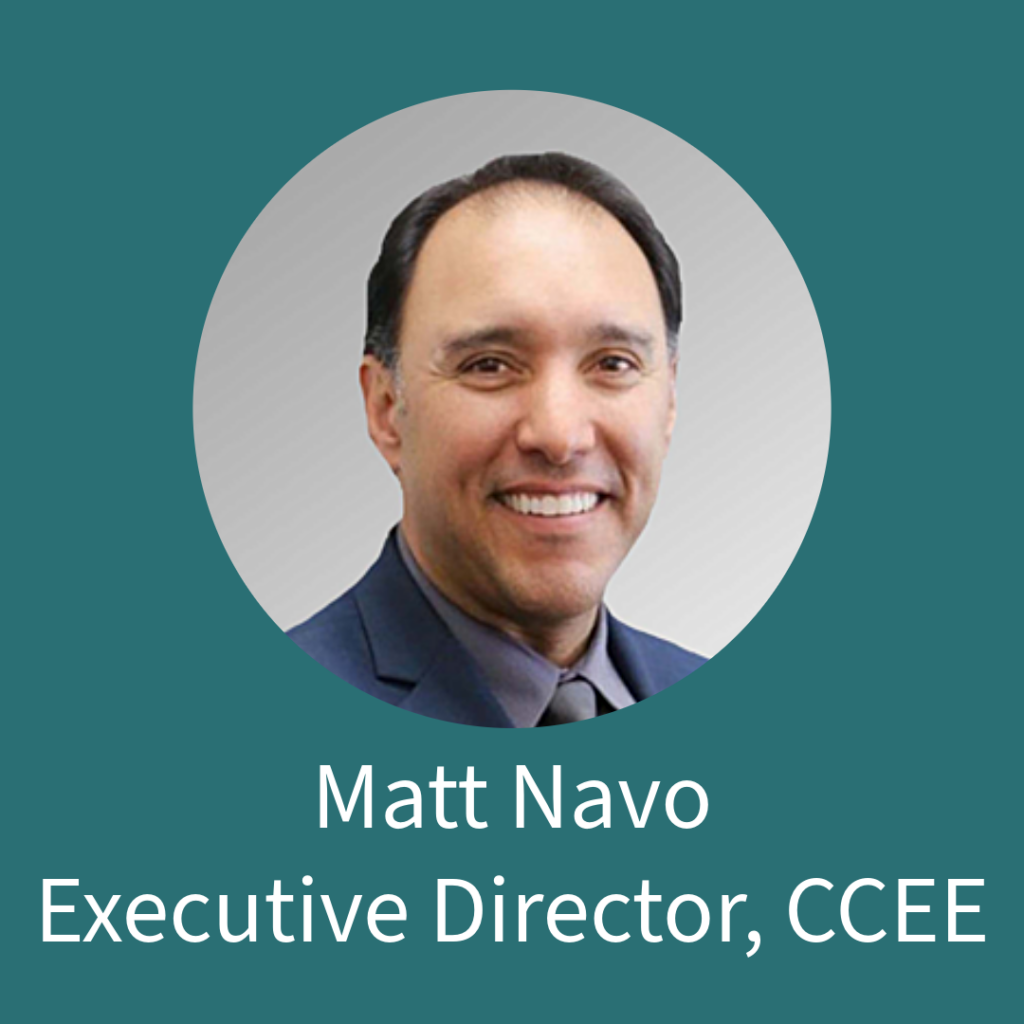
As CCEE launches the Frontline Voices Podcast, this Hot Topic introduces a conversation grounded in a clear message: improving outcomes for all students is not additional work, it is the work. Featuring insights from Dr. Marcie Poole and Nicole Anderson, the launch highlights how meaningful improvement depends on examining the conditions that shape daily practice, including relationships, language, beliefs, and structures, so systems are designed to support stronger outcomes for every student.

Read the blog and listen to the first Frontline Voices conversation to explore how a systems approach can help education leaders move beyond initiative fatigue and toward more intentional, lasting improvement.

Related Resources:

Curious what we’re up to? Get the newest updates on the CCEE website, events calendar, statewide maps and initiatives.

Hot Topics: The PLC Shift That Delivers

H.W. Harkness Elementary returns to Rising From the Margins with something to celebrate, what their PLC work has made possible for students and staff. In the most recent episode, educators from H.W. Harkness (Sacramento City Unified) share how a deep commitment to professional learning communities transformed their school culture from isolation and blame into shared responsibility, reflection, and real collaboration. The result: recognition as a PLC Promising Practices School, grounded in both stronger collaborative structures and improved student outcomes.

You’ll hear teachers describe what changed day to day, weekly PLC time that’s purposeful and structured, honest conversations about what’s working (and what isn’t), and a mindset shift toward “what can we control as adults?” Most powerfully, the episode connects that adult shift to student impact, including reported gains like +7% ELA proficiency, a 20% reduction in students reading far below grade level, and a 4% decrease in suspensions. If you’re looking for a hopeful, practical story about how schools can get better, this episode is for you.

Related Resources:

Curious what we’re up to? Get the newest updates on the CCEE website, events calendar, statewide maps and initiatives.

Hot Topics: Launching the Ecosystem of Care Toolkit

Across California, county offices of education, health and human services, and community partners share the same goal: ensuring children and youth have what they need to learn, thrive, and stay well. Yet too often, the services intended to support young people operate in parallel, each with its own timelines, data systems, and decision-making structures. The result is a patchwork that can be difficult for families to navigate and difficult for agencies to align.

That’s why the CA Statewide System of Support is launching the Ecosystem of Care (ESOC) Toolkit, an interactive, intuitive set of resources designed to help local agencies coordinate and integrate services for youth, with a strong emphasis on prevention and sustained cross-agency collaboration. The toolkit was initially informed by discussions with the California Department of Education staff and further developed through extensive interviews with more than thirty ESOC workgroup members from diverse agencies and regions across California. Many of these partners are connected to AB 2083 implementation and other interagency collaborations. Thank you to our many partners who helped inform this toolkit, for a list of partners, click here. For technology assistance or to request support, contact Dr. Kristin Brooks, CCEE Strategist at [email protected].

Ways to get more engaged

1) Join the Open Door Learning Session
We invite county offices of education, health departments, and partners to learn more about the Ecosystem of Care Toolkit during our Open Door session on Wednesday, March 11, 2026, from 3:00–4:00 PM, featuring Dr. Kristin Brooks, Strategist, CCEE, Amanda Dickey, Executive Director, Complete Consulting California, Kristin Wright, Executive Director, Sacramento County Office of Education, and Elizabeth Estes, Founder and Director, Breaking Barriers. Registration: https://bit.ly/4hmOEnL

2) Explore the toolkit with your cross-agency partners
Use it as a shared workspace: start with Step 1 to build trust and norms, then move into steps 2-5 that clarify governance, mission, goals, metrics, and action planning.

3) Watch for the upcoming Frontline Voices series
A more in-depth series will soon follow in Frontline Voices, offering practical examples and deeper dives into key challenges local leaders surfaced during development.

Curious what we’re up to? Get the newest updates on the CCEE website, events calendar, statewide maps and initiatives.

Hot Topics: Finding Bright Spots in Early Literacy Across California Schools

Curious whether your school is beating the odds in third-grade reading?

The interactive map, developed by the 74million.com, compares each school’s third-grade reading proficiency with its poverty level. A red trend line shows the typical relationship between poverty and reading outcomes in each state. Schools above the line are performing better than expected given their poverty level, while schools below the line are performing worse than expected.

What you’ll notice varies by state. In some places, dots cluster tightly around the line, suggesting a stronger link between poverty and reading outcomes. In others, dots are more scattered, suggesting the relationship is weaker and that schools may have more variation in results.

Explore California schools

In California, you can:

  • Review schools within districts across the state
  • Toggle between charter and non-charter schools
  • Identify “bright spot” schools that are outperforming expectations and schools that may need targeted support

This view can help leaders and educators ask practical questions: What’s different about schools that are beating the odds? What supports are missing where outcomes lag? And where can we share strategies that are working?

Support for strengthening reading instruction

To help schools translate insights into action, the CA Statewide System of Support is offering the following sessions through the remainder of the year:

DateTimeSession / TopicSSOS Lead PartnerRegistration / Link
Jan 29, 20263:30 PM–5:00 PMPart 2: Highlighting Strategies to Support Equitable Practices in Literacy: California’s Commitment to Black Student SuccessCDEhttps://us02web.zoom.us/webinar/register/WN_sAUTsCmXQ_amvKM5N839HQ 
Jan 29, 20268:00 AM–5:00 PMCalifornia Collaborative for Learning Acceleration (CCLA) Summit — Day 1LASG-CCLAhttps://ccee-ca.org/event/4th-annual-ccla-summit/ 
Jan 30, 20268:00 AM–5:00 PMCalifornia Collaborative for Learning Acceleration (CCLA) Summit — Day 2LASG-CCLAhttps://ccee-ca.org/event/4th-annual-ccla-summit/ 
Feb 9, 20261:30 PM–3:00 PMMoving the Needle through High Impact TutoringCDEhttps://us02web.zoom.us/webinar/register/WN_05tQY2VHQF25C5rnYcOtgw#/registration 
Feb 11, 20263:30 PM–4:30 PMAccessibility Resources: From Classroom to AssessmentsCDEhttps://us02web.zoom.us/webinar/register/WN_fyDEyyujQxenhdbblCAkmw 
March 12, 2026 3:45 PM–4:45 PMStructured Conversations that Promote Deeper ThinkingLASG-CCLAhttps://ccee-ca.org/event/structured-conversations-that-promote-deeper-thinking/
February 2026 Cohort Project CLEAR (grant-funded): Paraeducator training; Asynchronous Literacy Training; Reading Recovery; Literacy Lessons; Descubriendo la Lectura (DLL) certificate trainingLASG-Project Clearhttps://www.sdcoe.net/educators/curriculum-instruction/project-clear

You can also access asynchronous literacy resources anytime on the SSOS Resource Hub:

Reference:

These Schools Are Beating the Odds in Teaching Kids to Read

Curious what we’re up to? Get the newest updates on the CCEE website, events calendar, statewide maps and initiatives.

Hot Topics: Open Door on Victor Valley’s Equity Systems

Looking for concrete, scalable ways to improve outcomes for foster youth and Black students without adding “one more initiative” that disappears next year? Join our Open Door webinar, “Intentional Systems for Creating Equitable Outcomes for Foster and Black Students,” on February 4, 2026.

Victor Valley Union High School District, recently exiting Direct Technical Assistance, will share how they built durable, student-centered supports that other districts can adapt right away.

What you’ll learn (and why it matters)

This session goes beyond inspiration. Victor Valley will walk through two anchored, system-building approaches:

  • THRIVE (Foster + housing-insecure students): A year-long A–G elective and first-period support class that blends academic monitoring, mental health supports, self-advocacy, and coordinated connections to social workers, attorneys, and school staff, plus basic-needs supports when needed.

You’ll also see how THRIVE is structured across grade spans (high school and middle school) and built on “shared ownership” across campus.

Heritage (Black students, grades 10–12): A district-wide equity initiative focused on A–G completion, college access, and cultural affirmation, grounded in transcript analysis, early identification of need, and systemic practice changes.

The session also highlights a practical classification model (Levels 1–4) used to guide targeted support.

You’ll leave with tools you can use

The agenda includes Victor Valley’s journey, tools/resources, and live Q&A so you can translate lessons into next steps for your own context.

Register now and bring your team, especially counseling, MTSS, equity, foster youth liaisons, and site administrators. Recording and slides will be posted to CCEE’s website after the session.

Curious what we’re up to? Get the newest updates on the CCEE website, events calendar, statewide maps and initiatives.

Hot Topics: Three New Papers, One Timely Opportunity

As the Governor’s budget elevates governance reforms to strengthen coherence and accountability, these new briefs point to practical, evidence informed strategies that can make California’s TK–12 system easier to navigate and more effective for students.

Below are quick takeaways from each paper, and how they connect to the governance changes proposed in the budget.

Statewide System of Support (SSoS) Core Working Group Report: Recommendations

  • Summary: The report presents a forward looking redesign of the statewide support system by clarifying roles, improving how support is determined, and making assistance a true capacity building partnership for districts.
  • What to watch for: A practical next generation support model that turns fragmented help into a coordinated, high impact approach so districts get the right support at the right time.

TK–12 Education Governance in California: Past, Present, and Future

  • Summary: The paper offers a clear governance blueprint that organizes responsibilities around core functions including policy and funding, implementation and capacity building, and evaluation and accountability.
  • What to watch for: A systems design approach that clarifies authority, reduces conflict, speeds decision making, and helps statewide priorities translate into consistent local results.

Effective Governance: Recommendations from the Field

  • Summary: The paper shows what strong local governance looks like in practice, with boards and superintendents aligned around student outcomes, smart oversight, and deep community trust.
  • What to watch for: Local governance as a high leverage solution, where boards have the tools and practices districts need to move faster, stay focused, and sustain improvement even amid state level changes.

These three new papers offer a practical, solutions-oriented roadmap for strengthening California’s TK–12 governance: clarify roles and accountability, improve the quality and targeting of statewide support, and invest in effective local board governance. Read alongside the upcoming Governor’s proposal to streamline oversight and coordination, these recommendations highlight how structural alignment at the state level can translate into clearer support and better outcomes for students locally.

Related Articles:

Curious what we’re up to? Get the newest updates on the CCEE website, events calendar, statewide maps and initiatives.

Hot Topics: LCAP Mid-Year Review February 28 Deadline & What Leaders Need to Decide Now

As the February 28 deadline for the LCAP Mid-Year Update approaches, LEA (county, district, and charter) leadership teams across California are preparing to present required updates on LCAP outcomes, implementation progress, and expenditures as part of a non-consent board agenda item.

While local boards are not required to adopt the mid-year update, the presentation is a critical moment for public transparency, continuous improvement progress, and strategic course-setting for the remainder of the school year.

To support county offices of education, school districts, and charter schools in meeting this requirement with clarity and purpose, the LCAP Monitoring & Evaluation Tracking Tool, developed by the Riverside County Office of Education, offers a practical way to organize mid-year outcome data and track implementation and expenditures aligned to the current year’s LCAP.

Getting Started with the Tool:

  • Tutorial Video: Watch a comprehensive guide to understand how to utilize the tool’s full capabilities.
  • Download the Tool: Access is available directly on our website, allowing leaders to begin tracking and evaluating their LCAP actions to report what is/is not working and why.
  • Example Application: Review practical examples to see how the tool can be effectively applied.
  • Recorded Webinar: Learn from Lake Elsinore USD experiences using the LCAP Mid-Year tool.

In addition, San Diego County Office of Education has curated a comprehensive set of Mid-Year Update resources, including a recorded webinar, presentation slides, legal references, optional templates, and guidance related to Learning Recovery Block Grant (LREBG) considerations for 2025–26.

  • LCAP Mid-Year Resource Page: Access aligned tools, examples, and training to support transparency, decision-making, and continuous improvement at the mid-year point.
  • Recorded Webinar: Supports leaders in understanding mid-year update requirements and using available data to inform transparency and decision-making.
  • Presentation Slides: Review step-by-step guidance on required mid-year outcome, implementation, and expenditure reporting to support clear board presentations.

As February 28 approaches, these resources help LEA leaders strengthen clarity, transparency, and decision-making at the mid-year point.

If you have any questions about CCEE, please visit our website. Stay tuned for LCAP support resources, through our events calendar and the Statewide System of Support Resource Hub.

Hot Topics: Statewide System of Support Core Working Group Report

California has an opportunity to transform its Statewide System of Support into a coherent, learning-focused network that delivers the right help to districts when they need it most.

This new Core Working Group report outlines a hopeful and practical path to strengthen California’s Statewide System of Support so that every district can access high-quality, coordinated assistance focused on student learning. Grounded in the principles of coherence and reciprocal accountability, the paper outlines six major recommendations, including setting a small number of nonnegotiable statewide goals, clarifying authority across state and county agencies, refining how districts are identified for support, and creating an escalation pathway when improvement stalls.

The paper invites policymakers, county offices, and district leaders to act on these recommendations and consider how they can contribute to building a more coherent, responsive support system for all California students.

For additional updates, visit the CCEE website, events calendar, Resource Center, and the Statewide System of Support Website.