System Improvement Leads: Accelerating Learning for Students with Disabilities

On February 9, 2022, six district teams from across the state came together to focus on their shared aim: accelerating learning for students with disabilities.  These educators from Shasta, San Luis Obispo, West Contra Costa, Sonoma, Irvine, and Clovis are part of a Networked Improvement Community supported by the System Improvement Leads (SIL) team. 

The network launched in September 2021 and spent the first few weeks thoroughly investigating their local contexts: what is working well for students with disabilities and what needs improvement.  Although the team’s contexts are very different (district ADA, urban/rural, single/multidistrict SELPAs), the findings were strikingly similar: inconsistent IEP process, varying understanding of the purpose of the IEP, burdensome data collection practices, and long standing disconnects between special education and general education staff.  Armed with this information, SIL’s  improvement coaches conducted literature reviews to identify evidence-based practices to address the identified challenges and teams set off testing them out in their local contexts.  Research is a critical starting point, but would the ideas work in practice? What would need to be adapted to make sure the changes worked for each team’s unique setting? 

To answer these questions, more than 25 special education teachers contributed to testing out the NIC’s change ideas. Preliminary data is promising: participating case managers have improved the quality of IEP goals, IEP teams are establishing streamlined processes to track student progress on goals, and teams are reframing IEP documents to move away from simple compliance and toward the true purpose of an IEP: to provide a free and appropriate education to each and every child.  Educators involved in the network report that they feel better supported, have access to high quality resources, and deeply value the opportunity to learn with educators around the state.  As Jeremy Sawtelle, Director of Specialized Support, Shasta County Office of Education shared, “Through the SIL NIC, I’m now connected with teachers in San Luis Obispo, administrators in Clovis, and service providers in West Contra Costa.  These are people I never would have met [but] now we analyze data together and give honest feedback.  We share ideas instead of having to invent everything ourselves.  Together, we are learning so much faster than any one of us would be on our own.” 

“It’s about a culture of collaboration and change, it doesn’t matter how many years you’ve done this.  We can always improve.  Other industries do this, why not education?”-Christina Boman, Coordinator of Special Education, West Contra Costa Unified School District

The System Improvement Leads (SIL) are part of California’s Statewide System of Support.  The SIL team provides direct technical assistance to SELPA, COE, and District teams seeking to improve outcomes for students with disabilities by developing high quality resources and tools, training on improvement methodologies, and providing improvement coaching to teams. To learn more about the SIL project, please visit https://systemimprovement.org/ or email us at [email protected]

DEVELOPED IN PARTNERSHIP WITH
System Improvement Leads Project

RESOURCE TYPE

Blog, Hot Topics

TYPE OF AUDIENCE

Site Administrator / Instructional Coach, Systems Leadership

TOPIC AREA

Equity, Special Education

KEYWORDS

Author

Heidi Hata,
Director,
System Improvement Leads Project

Students Soar to New Heights in the Bob Hoover Academy: Unique Partnerships Create Unique Opportunities for Student Success

Note: This article was featured in the February 2022 edition of the CCEE Connection. Read it here!

Monterey County Office of Education’s Alternative Education Program is working to create unique pathways for students that build skill sets that will help students reach their college and career goals. One example is the SAFE Flight Program that enrolls at-promise students that leave the streets to enter the classroom and ultimately into the sky. The SAFE Program is a career technical education program that utilizes the AOPA themed curriculum to teach required coursework. The county office partners with the Bob Hoover Academy (BHA), a non-profit that funds the ground school instructor and the flight instructors that support the students to earn their commercial pilot’s license. The public private partnership has been a strong partnership since 2016. While the program’s theme is aviation, it is not about making pilots. It is about providing the students with inspiration, success, hope and opportunity through flight. 

The program’s academic instructors are funded through the Monterey County Office of Education while flight instructors are funded through the Bob Hoover Academy nonprofit organization. The partner­ship is a great example of the public and private sectors coming together to provide opportunities for students who need them the most. BHA is the brainchild of aviation legend and virtuoso air show performer, Sean D. Tucker, who is best known for his airshow performances in the Oracle Challenger. The aerobatic specialist named the program and his nonprofit after his mentor and aviation great, R. A. “Bob” Hoover, who valued education, humility, dig­nity and optimism.

Students are provided with computers, social and emotional support, internship opportunities, hands-on courses and more. On a typical day, students are provided both traditional coursework in English, math, history and science as well as advanced flight training.  Students hop from a traditional desk to a cockpit in a training simulator.  Once there, aviation mentors demonstrate flight controls and aviation concepts to prepare students for their eventual move into the BHA plane for their flight lessons. With each milestone, students find out more about themselves and what they can achieve with practice and commitment. The program is in the process of expanding to include aviation mechanics where students will learn how to build and repair aircraft.

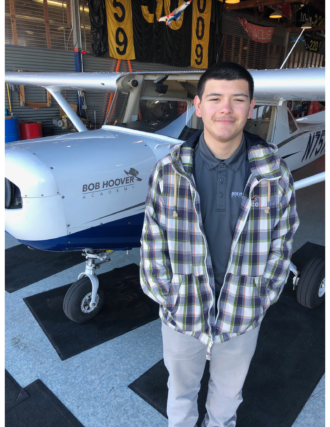
Student poses in front of Bob Hoover aircraft

Students who graduate from the program have the opportunity to continue these pathways at Gavilan College.

AUTHOR

Dr. Deneen GussSuperintendentMonterey County Office of Education

Reflections on Leadership, Systems, and Social & Emotional Learning (SEL)

Note: This article was featured in the January 2022 edition of the CCEE Connection. Read it here!

“The shape of leadership that yields the most productive results when we are facing a complex issue is ‘systemic leadership.’ It is very different from hierarchy or from bringing in consultants who purport to “solve” the issue. This set of leadership practices and approaches is built out of three disciplines: chaos and complexity theory; living systems theory; and the theory/practice of tapping the experiential learning of all those involved in the system or organization (collective intelligence).”

– Excerpt from WindTunneling

Our worldviews are getting disrupted. This is normal of course, as worldviews historically shift over time. Still, disruption is never easy. What I appreciate about the quote above is that it is a succinct summary of years of unearthing I have been doing as a Coordinator of Continuous Improvement at Butte County Office of Education to make sense of the shifts that are happening in education and beyond, surrounding change and improvement efforts.

In rural counties particularly, we wear many hats. One benefit of these multiple hats is that they allow us to make connections among the many initiatives our educational systems are implementing. What’s being revealed currently is a deep synchronicity between social-emotional learning and systems thinking that is able to support an ushering in of a different approach to leadership and change. I will speak to some of those connections below.

An impetus to our shifting worldviews is that we are living in a world of increasing complexity and uncertainty. We have been particularly affected by adversity in Butte County, and not unironically, I have found comfort in learning that there are frameworks for supporting us within that space — a sort of certainty about uncertainty. An internationally lauded sense making framework, Cynefin, is one of them that has been emerging in leadership, equity, improvement, and restorative practice circles these past couple of years and that feels critically important to understand. We are currently exploring a partnership with Sonoma County Office of Education and consultants, Cultivating Leadership, to enhance our “Complexity Fitness” and gain competence with Cynefin.

Along with Cynefin, at a recent presentation regarding Butte’s social-emotional learning (SEL) and mental wellness efforts, I shared a simplified version of a tool, the Two Loops of Systems Change, derived from the Living Systems Theory. I categorized our SEL efforts by how we are stewarding and hospicing (holding and supporting our systems and the people within it) and how we are innovating (pioneering new approaches and connecting via networks and communities of practice). This tool, the Two Loops, and the way we can utilize it to think differently, build awareness, and engage, is a part of new leadership approaches that are emerging. One place we are practicing these as Butte COE, in conjunction with some of our COE and state partners is through the S.L.O.W. Collaborative.

The “how” of many of these emerging leadership practices are being supported from awareness-based or participatory leadership methodologies such as Compassionate Systems and the Art of Hosting. So, what exactly is participatory leadership? This term was new to me a couple of years ago. The Art of Participatory Leadership (AoPL) is deeply rooted in the practice of inquiry. 

“We know that there are answers to be had, but even more important are the questions we ask to arrive at those answers. AoPL does not engage in a predesigned set of exercises around current or historical realities, but rather asks questions to help us create a new future together” (Art of Participatory Leadership Workbook).

Participatory Leadership allows us to see ourselves, others, and systems more clearly, while simultaneously fostering both the conditions for learning and the SEL competencies that we desire. Outcomes of participatory practices can include:

  • Tapping into diverse perspectives
  • Cultivating leaderful communities and collaboratives
  • Creating cultures of equity and inclusion
  • Inspiring deeper levels of trust across partners
  • Hosting conversations for meaningful action
  • Exploring mindsets and norms that are keeping harmful/ineffective systems in place
  • Providing participants with the experience and resources to replicate the practices and tools learned

If this sounds like it is deeply aligned with SEL, equity, systems thinking, and improvement work, it’s because it is. Awareness-based systems methodologies versus traditional, hierarchical, linear, mechanistic interventions are the “how” to complexity or a living system’s “what”. When our worldviews shift, our approaches need to as well.

So let’s talk about the word Transformative and how this connects to systems thinking, complexity, and SEL. I hear the term Transformative a lot and while I understand the desire for something to be “transformative” or leaders to be “transformative”, it has been less clear to me what folks actually mean by that as well as what they are doing that will make something be transformative. So here’s my understanding of it: Transformative change happens when we change ourselves. The current world view shifts are helping us realize we are not standing outside the system and intervening as in a mechanistic model, we are inside it — part of the system; interconnected — as described in complex adaptive or living systems models. Thus, changing ourselves, because of the rich interconnection – changes the system.

 “Once we can see that we are not this enduring, consistent, perfect self that we’ve constructed ourselves to be—that we see all the ways in which we don’t show up aligned with our intentions or who we want to be in the world—we start to have compassion for other people and their challenges in doing so. Once we see our complexity, we can see others’ complexity.”

 Valerie Livesay

When we hear the term Adult SEL, one of four core focus areas as part of CASEL’s Systemic SEL implementation, many educators have some resistance to prioritizing this. I often hear administrators and teachers brush past this aspect of Systemic SEL and say, “I just want practices to help my students”.  Practices to help our students are important, of course, but if we are going to swim “upstream” and change systems in “transformative” ways, we need to look at ourselves. It is evident adults in our society are struggling to cope in healthy ways, to view perspectives outside of their own with equanimity, and to collaborate across boundaries in order to develop solutions to complex challenges. It’s evident adults in our society need to strengthen their SEL competencies. Still, It’s easier, and natural, to think it is them that needs to change, not me or us. And yet we do. We do need time to practice alone and together to see what it is we habitually don’t see – about ourselves, others, our systems. This is why “adult SEL” is vital to all change efforts, regardless of the form of inequity or improvement needed.

We have the ability and power within ourselves to transform our systems through self transformation. According to NHS Horizons, self transformation includes:

  • Openness to new ideas and perspectives – even those that actively challenge their own
  • Ease with complexity, ambiguity and change
  • A resistance to simple answers in complex situations
  • Comfort with chaos and paradox

The realms of learning about these self-transformative capacities currently fall, I believe, within the realms of social-emotional learning and systems thinking.  Systems thinking, to give us the ability to understand and work in complexity, and adult SEL, to give us the tolerance, competence, and capacity to be able to do so.  We need to expand our vertical literacy. To close, I’ll share an excerpt from Joanna Macy’s rendition of the prophecy of the Shambhala Warriors that illuminates the importance of  SEL and systems thinking: This prophecy discusses great warriors fighting for good during a critical “turning” who have training in the use of two weapons, both in the mind — ”one is compassion and the other is insight into the radical interdependence of all phenomena.”

AUTHOR

Sandra Azevedo,
Coordinator of Continuous Improvement,
Butte County Office of Education
Perspective of a Student Board Member

Note: During CCEE’s Governing Board Meeting on December 2, 2021, Kaleena Fowler, who currently serves as a student board member in Mt. Diablo USD, shared her voice and thoughts on the road ahead for students. CCEE has been providing technical assistance support to Mt. Diablo USD since 2020.

This article was featured as part of the December 2021 edition of the CCEE Connection. 

Could you introduce yourself?

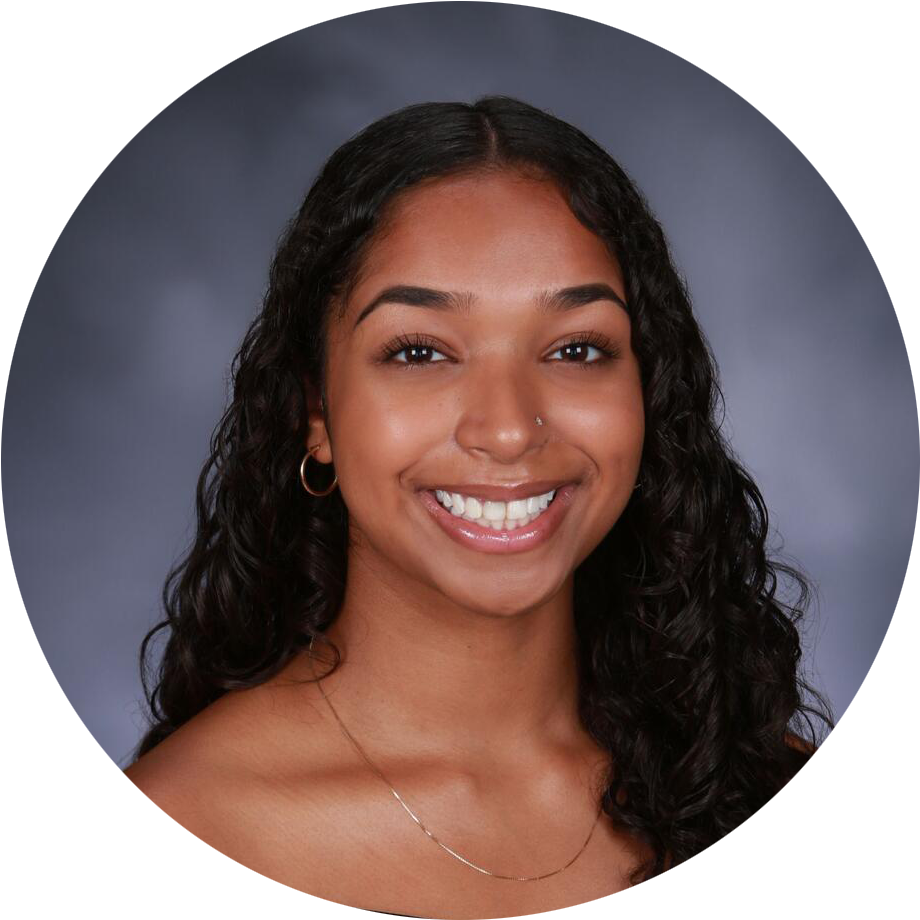
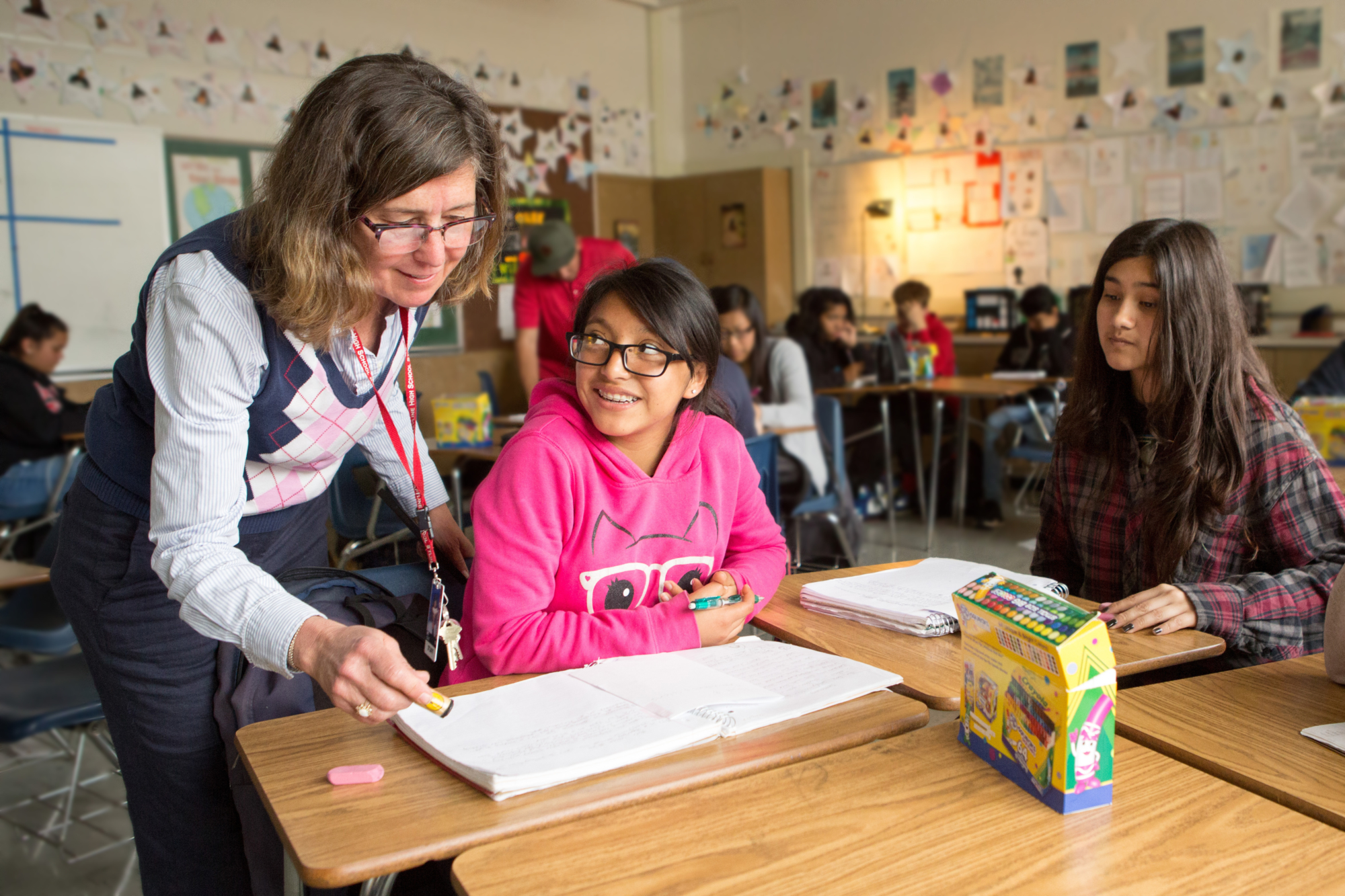
Hi, my name is Kaleena Fowler. I am a senior at College Park High School and also the student board member for the Mount Diablo Unified School District this year (MDUSD). I am the president of the Black Student Union (BSU) at College Park for about two years now, and have worked with the Boys and Girls of Contra Costa County and the Yellow Heart Committee, both great non-profit organizations. I am also an active member of the California Student Board Member Association (CSBMA) serving as the Director of Partnerships on the Executive Board. CSBMA is a student-led association of school district Student Board Members from across California that works together to better represent their constituents, allow for statewide youth advocacy, and provide support in the effort to expand Student Board Members across the state. My passion is advocating and speaking up for underserved and underrepresented communities.

My role as the student board member is to represent all 30,000 students in the district. I speak for all the elementary, middle and high school students. I am at every board meeting, I sit with all the other governing members, and I stay as late as they do. My voting status is preferential, meaning my vote does not influence the outcome of policies being passed, but it does influence the other governing members’ votes. I think that having the student board member position being created last year was extremely beneficial because almost everything the board passes is for the students. Having a student voice on the committee to give that perspective that none of the other board members have is extremely crucial. For instance, I remember when the new technology plan, Chromebooks, were being implemented for all middle and high schools. I asked, “Where are the middle schoolers going to put their Chromebooks, since they do not have a locker? How are we going to ensure the integrity of the Chromebooks will stay safe?”

Could you share some of your experiences as a student board member?

As the student board member, I have got the Student Advisory Committee (SAC) up and running with the help of Cherise Khaund, the President of the MDUSD Governing Board. The SAC is basically a group of pupils, from each individual school, on their student site council. We come together once a month, and bring policies, solutions, input, and more to the board. I should also mention middle school students are a part of the committee as well, which is amazing! It’s great to hear their perspectives. The topics we are discussing this year are the availability of COVID vaccination sites, a district-wide event for each big club (BSU, GSA, Latino Club, Interact, etc.), diversifying the English curriculum and novels, and more.

Within the BSU, Dr. Clark, the superintendent of the district, has come to meetings. One last year, one this year. The previous meeting he came to, he talked about the Coordinated Early Intervening Services (CEIS) program in the district. He pointed out that this policy was made because the homeless, foster, and African American/Latinx population were being underserved in the district. He talked about the stakeholders meeting he had with the African American parents, and students in the BSU were beyond happy to hear this plan. During and after the meeting, many students expressed how grateful they are to have this plan in place.

I am also working with district representatives to diversify the novel list for the English curriculum. I want the students of color to connect with what they are learning in school, and I feel like we do not have enough of that in the district.

What do think students need the most right now?

In September, I had the opportunity to speak at the capitol, on behalf of the Boys and Girls Club and the Yellow Heart Committee, regarding how COVID-19 has impacted students’ mental health. It was a nerve-racking, but amazing experience. In my speech, I highlighted what students need right now is accommodation. Since they spent a whole year confined to little black boxes on a screen, they have forgotten how to sit in a classroom for hours. No one knows how to compromise with others anymore.

That is why the social emotional learning concept is so important during these times. Social-emotional learning (SEL) is a methodology that helps students of all ages to better comprehend their emotions, to feel those emotions fully, and demonstrate empathy for others.

MDUSD created a survey designed to address social-emotional areas of development for self-awareness, self-management, social awareness, relationship skills, and decision-making. The survey is based on the CASEL (core competence areas and settings for learning) framework and is constructed from adapted survey items from peer-reviewed social and emotional research studies. All students in grades kindergarten and transitional kindergarten through grade twelve take the Social-Emotional Learning Survey. The survey is administered three times during the school year.

The suicide prevention workshops, school and community service, the social emotional education collaborative, mental health workshops, etc. are all amazing aspects of MDUSD.

What are your plans for the future?

In the future, I intend to go straight to a four-year college. I applied to a couple of Historically Black Colleges on the east coast, and many colleges in California. I will be studying political science, and then going to law school. I hope to become a human rights lawyer. Thank you so much for giving me this opportunity to share my experience. If you would like to contact me, my email is [email protected].

AUTHOR

Kaleena Fowler, Student Board Member, Mt. Diablo Unified School District

California’s Historic State Budget: Now What?

Extraordinary levels of funding in the 2021-22 state budget require coordinated efforts to build capacity, develop programs, and facilitate communications across various California education systems. CCEE is providing technical assistance to ensure educational leaders have what they need to successfully access funds and implement programs to support all students. Below are a few examples of CCEE’s collaborative support for county offices of education and school districts across the state.

Collaborating with CCEE, Partnership for Children and Youth (PCY) has developed a variety of resources to support school districts as they plan for Summer 2022. Leaders can read about and see best practices for re-engagement, reconnection, and reimagined summer learning from Summer 2021. PCY is also offering a series of webinars to help districts “Make Your Summer Game Plan.” The first Summer Learning Roundtable provided K-12 leaders, educators, and community partners with new technical assistance opportunities, resources, and on-the-spot coaching on pressing challenges to get ready for Summer 2022. Missed it? Click here to access the archived session resources and to register for upcoming workshops!

CCEE is also partnering with Turnaround for Children to offer their Whole Child Design Series. Created using the Whole Child Design Principles, the series of four 2-hour workshops (1/18, 2/1, 2/15, 3/1 from 3:30-5:00pm) includes support to understand and apply strategies to strengthen student engagementdevelop positive relationships, and create supportive environments. Representing a mix of curriculum and instruction, student support services, expanded learning providers, school leadership and teaching roles, district teams of 3 to 10 staff are currently being recruited. Learn with experts, access implementation resources, dialogue with colleagues, and receive two hours of technical assistance and consultation for each team. Interested? Email Katie Brackenridge ([email protected]) now to reserve space for your team!

Finally, CCEE is working with the Small School Districts Association (SSDA) to provide targeted technical assistance for the three largest state initiatives—the Expanded Learning Opportunities Program, Universal Transitional Kindergarten, and the California Community Schools Partnership Program. On December 8, 2021, these initiatives were launched with a webinar, Transforming Education in CA: 2021 Budget Act Investments and Opportunities, which included strategies for how to implement and maximize the opportunities and resources for students, families, and communities in small and rural school agencies. Missed it? Click here to access the archived resources!

AUTHOR

Roni Jones, Ed.D., Assistant Director, System of Support, CCEE

RESOURCES

UPCOMING WEBINARS

Staffing Classrooms in a Time of Shortage

California schools have for years contended with a shortage of fully qualified teachers. While local educational agencies (LEAs) are no strangers to meeting staffing challenges, the pandemic has put more strain on an already stretched workforce. Adding to existing waivers and flexibilities, California has taken extraordinary steps to make it easier to fill substitute vacancies, to create alternatives to high stakes testing that have kept otherwise qualified teachers from completing their credentials, and to provide nearly $1 billion of new investment in the teacher pipeline.

LEAs always have the legal responsibility to staff classrooms with well-prepared, fully credentialed teachers to the full extent possible. As the impacts of the pandemic continue to reverberate through the educator workforce, the following opportunities are available now to help LEAs meet the need for teachers and substitutes.

EXISTING OPTIONS

Short-Term Waivers: Short-Term Waivers allow local agencies to address unanticipated, immediate, short-term (one semester or less) staffing needs by assigning teachers who hold a basic teaching credential in any field to teach outside of their credential authorization, with the teacher’s consent. These waiver types need only be authorized at the local level.

Teaching Permit for Statutory Leave (TPSL): When a teacher takes certain extended statutory leaves of absence, TPSL holders may serve as a temporary teacher of record for the entirety of the leave. When more than one acceptable leave is taken consecutively, a TPSL holder may continue to serve as the interim teacher of record for the entire length of those leaves.

Local Assignment Options (LAO): LEAs that are unable to fill a staffing vacancy with the appropriately credentialed teacher for an assignment have the flexibility to use LAOs. Requirements vary by assignment, but most require the teacher to hold a full teaching credential and to consent to the assignment. LAOs cover general education assignments only.

NEW OPTIONS

Emergency Substitute Permits: To provide continuity in classrooms and reduce the total number of substitute teachers needed, California temporarily extended the length of time a substitute teacher can serve in the same classroom to 60 days. Normally, general education and career technical education substitutes may serve up to 30 days and education specialist substitutes may serve up to 20 days. This flexibility expires on July 1, 2022.

Testing Flexibilities: Looking ahead, California has begun to rethink the how it can reliably assess a teacher’s knowledge, skills, and abilities, and to expand options to recruit and prepare teachers. Recent statutory changes to the subject matter and basic skills requirements now allow credential seekers to meet these requirements through coursework in addition to existing testing options. Similarly, updates to the Reading Institution Competence Assessment (RICA) will phase out the existing exam and replace it with a performance assessment.

Grant Funding: The state is also investing directly in new teachers with nearly $1 billion in new funding for recruitment and retention grants that do not need to be paid back, for educators who commit to working in some of the highest need classrooms in the state. Together, the Golden State Teacher GrantClassified School Employee Teacher Grant, and the Teacher Residency Grant aim to credential over 43,000 new teachers in the next five years.

AUTHOR

Sasha Horwitz, Governmental Relations and Public Affairs Manager, Commission on Teacher Credentialing (CTC)

Professional Development: An Investment in Yourself

California’s System of Support would not be complete without an investment in the professional development (PD) of educators who work directly with the students we serve. In a time when educators may feel lost in a storm of competing initiatives, the California Coalition for Inclusive Literacy (CCIL) provides shelter under the umbrella of the Universal Design for Learning (UDL) framework.

In the same way that the UDL framework provides multiple options to meet the needs of a wide range of learners, the free resources developed by CCIL strive to meet the many needs of educators who, every day, must address a range of demands such as accelerating learning and nurturing the social-emotional resiliency of students. 

“Amazing. I haven’t heard UDL spoken like this ever. You truly understand the struggles we teachers feel daily. Thank you so much for what you are teaching us today.”

With empathy toward these pulls on educators’ stamina and time, CCIL provides Four Ways to Engage with inclusive literacy and UDL in thematically-linked packages every month. 

Got a Minute?

Understanding that time is an educator’s kryptonite, these flexible learning modules offer teachers, coaches, administrators, and staff with options to engage independently or collaboratively during a staff meeting or from the comfort of their home in 10-, 20-, and 45-minute increments.

Monthly Webinar Series: Universal Design for Inclusive Literacy

Literacy is an act of power and freedom. It includes making meaning from text but also encompasses the ability to critique the thinking of others and advocate for oneself. Literacy and content-area knowledge are intertwined and must be fostered in inclusive environments.

This 9-part series is especially relevant as we welcome students back to classrooms. Educators grappling with accelerating learning in the face of pronounced barriers and student variability will find this series timely and relevant. Learn how to support literacy for all students in inclusive and equitable learning environments through the lens of the UDL framework.

Top Tips!

Aligned with the monthly theme, this one-page document offers strategic support at your fingertips. Top Tips is designed to jog thinking, spark conversation, and encourage deeper learning.

Featured Resource from Learning Designed

CAST, Inc.—the creators of UDL—hosts this online community platform, which includes a curated library of more than 500 vetted resources related to universal design. Each month, CCIL highlights a high-leverage, quality resource for educators who are interested in Learning Designed, but might not have the time to peruse or navigate all the resources. Check out this month’s featured resource—The Assessment Playbook!

These supports, provided by the California Department of Education’s (CDE) $4.9M Educator Workforce Investment Grant (EWIG), are a venture and testament to the value of those in the field supporting students. Taking the time to grow yourself is an act of self-care. As teachers nourish the love of learning in students, they must also nourish that love for themselves. We hope you find a source of support in these resources, as described by a recent PD attendee: “Amazing. I haven’t heard UDL spoken like this ever. You truly understand the struggles we teachers feel daily. Thank you so much for what you are teaching us today.”

Click here to contact or learn more about the CCIL Team.

AUTHOR

Elise Yerkey,
Implementation Specialist,
CAST

Shifting Our Efforts from Remediation to Acceleration

All throughout the previous year, we held our collective breaths in hope for a “return to normal,” while recognizing that whatever we returned to would look very different. As school starts this fall, after a year of interrupted learning imposed by the COVID-19 pandemic, our return to school is one that is overshadowed by the learning gaps that our students are experiencing. The stresses and inconsistencies of remote and hybrid learning have increased the demands placed on families and students during the learning process, and our students are returning with greater gaps in learning acquisition than ever.

study released by PACE earlier this year examined learning loss across the state as a result of the pandemic. While students overall experienced a loss of learning when compared with a year of typical in-person learning, the impact on learning is greater in the earlier grades, and for certain student groups, including English learners and low-income students. The disproportionately greater learning loss for students of color and low-income students as a result of COVID are were also found in a national study conducted by McKinsey, which compared actual learning with expected learning gains from full-time, in-person learning. The team found that while white students experienced the equivalent of three months of lost learning in math and four months in reading on average, Latinx and Black students lost between five to six months. The picture for students with low-income backgrounds is even grimmer, with a predicted seven months’ loss of learning.

While summer learning loss is always a factor in our back-to-school planning, this year, it is imperative that we define a concrete plan to assess the needs of our students and identify appropriate strategies to ensure that each child has the supports they need to feel safe and connected, and the skills they need to access grade-level content and learning. As discussed in Restarting and Reinventing School report published by the Learning Policy Institute, we have a deep body of research on the science of learning to help reshape the way that we might structure classrooms and schools to better address the needs of students as they return this fall. To address the learning gaps our students are returning with, we need to first start with the environment they are returning to, focusing on what we know about the best conditions for learning

  • Developing positive relationships and attachments; ensuring that students feel  safe, affirmed, and deeply engaged within a supportive community of learners
  • Creating real-world connections between what children already know and what they are learning
  • Opportunities for physical activity, joy, and opportunities for self-expression
  • Cultivating motivation through confidence; focusing on readiness rather than competition or shame

We also need to build on these conditions and rethink the way in which we support students’ learning recovery as they start school this year. The traditional way we have approached this in schools has been to remediate—focusing on mastery of skills and concepts missed from the prior year(s). But research such as Bellwether’s national study of NAEP performance continue to show that students who start below grade level rarely catch up. Students become stuck in a cycle of remediation—constantly working to catch up to grade level work and often falling further behind. The question we should be asking is, how do we accelerate the pace of learning in order to help our students access grade level content? This doesn’t mean running through all of the missed skills and concepts in less time. Instead, the concept of accelerating learning asks us to identify and support the acquisition of key concepts and skills that are needed to access grade level content.

Educators have always experienced and stepped up to the challenge of how to best tailor instruction to achieve the best possible outcomes for students. With our partners at Copernicus Solutions, CCEE is proud to launch our Playbook for Accelerating Learning (PAL), our latest resource in our series of playbooks to support instructional teams plan for, implement, and refine their strategies to ensure student success in schools. The PAL: 

  • reviews current research on how best to improve student outcomes, 
  • lays out models that practitioners can use to accelerate learning in their systems, 
  • proposes ways in which they can plan with their teams in the pursuit of such goals, 
  • envisions how their efforts may take place during and beyond the school day, and 
  • suggests ways in which LEAs can leverage community-based organizations and engage families as partners in the work. 

By making these resources available in a concise and actionable format, CCEE hopes to assist instructional leaders in California shorten their preparation period for accelerating learning and promoting the joyful and successful future we envision and deem possible for all our students.

LAUNCH CCEE’S PLAYBOOK FOR ACCELERATING LEARNING 

AUTHOR

Sujie Shin, Deputy Executive Director, CCEE

Summer of Creative Possibilities Through Arts Learning

Students, educators, and families alike wish for this summer to be filled with memory-making, joyful arts experiences that offer the foundation needed to reengage students and prepare us for the coming year. By thoughtfully and strategically leveraging available resources, educators can design a student-centered, standards-based approach to arts instruction that equitably attends to social and emotional considerations. The joy of arts learning offers a summer infused with creative possibilities!

Students thrive when learning environments nurture respectful relationships and link learning to the learner. Students engage in the learning process when the content harnesses their curiosity, connects to their lives, and amplifies their voice. These are the environments of arts learning. The arts disciplines (dance, media arts, music, theatre, and visual arts) provide creative opportunities for students to foster positive social-emotional relationships, connect with their teachers and peers, and actively engage in the artistic processes of creating, performing/presenting/producing, responding, and connecting. These cognitive and physical actions of arts learning promote students’ artistic literacy and skill development. Educators’ careful attention to the creative processes, content area standards, learning environments, and students’ needs when planning summer arts instruction sets the foundation for students to thrive.

The statewide network of The California Arts Project (TCAP) supports educators in designing such instruction, summer or year-round. By tapping into these standards-based resources, student interests, and their own imagination, educators are equipped to design a memory-making summer of powerful and transformative arts learning to usher in the new school year.

California has developed guidance resources to support students’ artistic literacy development and advance social-emotional learning. The new 2020 California Arts Education Framework’s core themes of equity, access, and inclusion articulate a contemporary vision for arts learning that conveys the vital role arts education has in students’ artistic literacy, cognitive, social, cultural, and emotional development. The 2019 California Arts Education Standards encompass authentic arts processes and approaches in each arts discipline to promote students’ artistic literacy development and social and emotional growth. These discipline-specific, process-oriented, grade-appropriate, and inquiry-based standards build students’ capacities in developing social and emotional connections, such as setting and achieving positive goals, feeling and showing empathy for others, building relationships, understanding and managing of emotions, and developing ethical responsibility. Educators can find additional social and emotional learning resources on the California Department of Education webpage.

AUTHOR

Kristine Alexander, Executive Director, The California Arts Project

Reversing the “Summer Slide”

study conducted by Johns Hopkins University researchers estimates that as much as two-thirds of the achievement gap in the elementary grades can be directly traced to learning loss in the summer, or what we call the “summer slide.” With the significant loss of in-person learning over the past 14 months, learning gaps have widened even further as evidenced by the findings shared by PACE and NWEA. Summer 2021 is an opportunity for school districts to expand access to summer learning, when the need has never been greater or more important!

As districts plan for the learning that will take place over the summer, they may be faced with pressures and demands to “think outside of the box” or to reimagine schools in the form of new models for learning. In some ways, this creates unrealistic expectations and can distract from what we know has been effective in promoting student success. Quick fixes, such as programs designed to educate children in a simpler way or off-the-shelf curriculum that pledge large gains for students, are unrealistic. Rather, a balanced approach that includes a blend of academics, social interaction, and enrichment is key to engaging students, increasing their sense of belonging, and unlocking their curiosity and passion for learning.

Summer learning provides a renewed opportunity to invite various stakeholders to the table, including teachers, parents, and community partners, to collaborate as key designers of student learning. Student data should serve as a key factor to identify targeted supports to address inequities. To ensure that the learning over the summer is not a one-off, districts will need to align summer learning to what students will be assessed in in the fall when they are back within the confines of a classroom. Consider leveraging the resources and expertise of key partners like the YMCA, county-wide recreation programs, churches, advocacy groups, social services, and other community-based organizations to expand access to both academic and mental health supports available to students. 

Traditional summer school, often enrichment-based, will fall short if academic interventions are not embedded in summer learning opportunities to accelerate learning. Focused on collective efficacy and true collaboration, district teams must design extended learning opportunities that implement high-quality curriculum with fidelity and are aligned to metrics for formative assessments. Highly trained staff with experience and knowledge of the grade-level content must be at the forefront of these summer learning opportunities to accelerate learning and prevent further “summer slide,” as students prepare to return to in-person instruction in the fall. High-dosage tutoring, mental health resources, nutrition programs, high-quality early education, project-based learning, STEM, and research-based credit recovery programs will be key to the success of students this summer. To ensure that these summer learning programs serve students who can most benefit, student outreach will need to be personalized to target and recruit specific groups of students.

Districts will need to take on this new and real challenge, embracing the summer as an opportunity to reengage students, assess their needs, and begin closing the learning gaps that will likely be evident in the new school year. Recognizing that there are no quick fixes, this begins with what we’ve always known works for students – learning and relationships are entwined; advancing student learning begins with grade-level content and support; high expectations and relevant course content increase student engagement; and needs of adults must be addressed to provide safe and supportive learning environments for students. 

To support districts in this ever-challenging opportunity, this month’s newsletter will feature tools, strategies, and resources to design summer learning programs that provide the necessary settings to accelerate learning, while advancing equity for our most vulnerable student groups. 

AUTHOR

Tom Armelino, Executive Director, CCEE