The global pandemic has left in its wake traumatized students, families, and educators and fear has been the dominant emotion. The essence of fearless schools is the building of psychologically safe environments where students and educators can learn together, make mistakes with transparency, learn from those mistakes, and engage in consistent innovation, experimentation, and learning. In this session, participants will 1) learn about the impact of psychological safety on learning and leadership, 2) identify the barriers to psychological safety and fearless schools, 3) evaluate alternative practices that lead to or detract from fearless schools, and 4) apply the learning to their individual contexts.
PRESENTER
Dr. Douglas Reeves, Founder, Creative Leadership Solutions
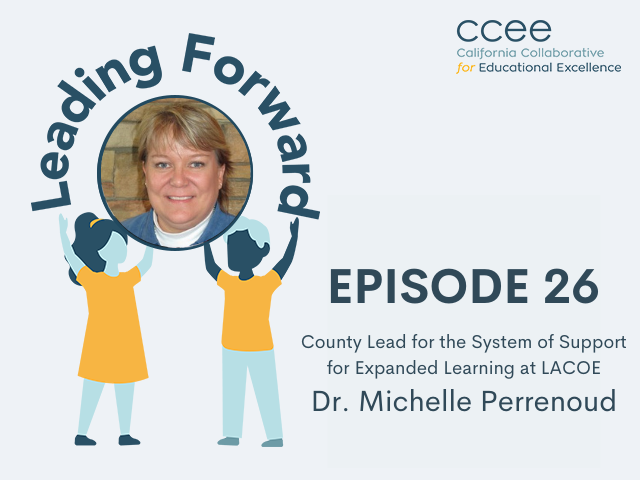
We close our two-part series on systems change through the creation of compassionate systems with Dr. Michelle Perrenoud from Los Angeles County Office of Education. Dr. Perrenoud shares the importance of personal change and the revaluation of existing artifacts and mindsets to facilitate larger systems change.
Click here to watch episode 25 of the Leading Forward Podcast with Dr. Peter Senge.
SPEAKER
Dr. Michelle Perrenoud, Los Angeles County Office of Education
This session includes examples and partial examples from the field to help participants understand what developing systems look like in practice. Participants will hear from district assessment leaders across the country from various size school districts to understand how they are adapting the theory and practice of balanced assessment system development to their contexts. Participants will gain a good understanding of the challenges faced by these various leaders and hear how they are trying to overcome them.
PRESENTERS
Scott Marion, Ph.D., Executive Director, Center for Assessment
Peter Leonard, Director of Assessment, Chicago Public Schools
Kadie Wilson, Assistant Superintendent of Schools, SAU9
Summer attendance and outreach is always difficult, especially among underserved students, and is likely to be even more challenging after a year of distance learning. Districts, schools, and their community partners need to creatively and strategically coordinate outreach to families and students about the benefits and opportunities of participation in summer learning programs.
This is the fifth webinar in Partnership for Children & Youth (PCY)’s Summer Game Plan webinar series.
Interested in how your summer programming can advance racial equity? Join Desiree Carver-Thomas and Larkin Willis of the Learning Policy Institute (LPI) for a fast-paced primer for the recently-released “Districts Advancing Racial Equity” (DARE) Tool. The video presentation provides practical support and tips for applying the tool to planning, implementing, and improving current and future summer programs.
PRESENTERS
Desiree Carver-Thomas, Learning Policy Institute
Larkin Willis, Learning Policy Institute
DISTRICTS ADVANCING RACIAL EQUITY
ADDITIONAL TOOLS & RESOURCES
Build on the DARE foundation with these curated resources and tools designed specifically to support summer programming:
As part of the #LeadingForward2021 initiative, CCEE convened an expert panel to discuss examples of district innovation, staffing solutions, key elements to consider when planning summer programming, and opportunities for district/community-based organization collaboration. Click here for Summer Programming 2021: Game Planning Now for Summer Learning, Fun, and Equity.
Summer learning provides a renewed opportunity to invite stakeholders to the table, including teachers, parents, and community partners, to collaborate as key designers of a balanced approach to student learning. A blend of academics, social interaction, and enrichment is key to engaging students, increasing their sense of belonging, and unlocking their curiosity and passion for learning. Consider leveraging the resources and expertise of key partners like the YMCA, county-wide recreation programs, advocacy groups, social services, and other community-based organizations to expand access to both academic and mental health supports available to students. The need to expand access to summer learning has never been greater or more important!
This webinar will provide an overview of how local educational agencies can partner with community based organizations to provide summer enrichment and learning opportunities for this summer and beyond.
PRESENTERS
Tom Armelino, Executive Director, CCEE
Dr. Linda Darling Hammond, President, State Board of Education
Dr. Nadine Burke Harris, California Surgeon General
Jennifer Siebel Newsom, California First Partner
Ben Chida, Chief Deputy Cabinet Secretary, Office of the Governor
Armando Quintero, Director, California State Parks
Greg Lucas, State Librarian, California State Library
Alfredo Velasco, President & CEO, YMCA of Greater Long Beach
Rob Connolly, President, Boys & Girls Clubs of San Francisco
This session introduces theories of action as a tool for helping district and school leaders identify the problems/issues they are trying to address through the design and implementation of assessment systems. Theories of action provide a comprehensive framework for analysis, evaluation, and continuous improvement. In addition to understanding the usefulness of theories of action, participants will explore several practical tools to help them begin developing theories of action for balanced systems of assessment.
PRESENTERS
Scott Marion, Ph.D., Executive Director, Center for Assessment
Nathan Dadey, Senior Associate, Center for Assessment
Erika Landl, Senior Associate, Center for Assessment
VIDEO
RESOURCE TYPE
Media, Professional Learning
TYPE OF AUDIENCE
Site Administrator / Instructional Coach, Systems Leadership, Teacher
The global pandemic will continue to affect schools long after schools reopen. Changes will be required in schedules, student support, faculty support, state standards, and assessments. In this session, participants will: 1) learn about the new model of change leadership, 2) identify the failures of previous change leadership models, 3) evaluate alternative leadership practices, and 4) apply the new model of change leadership to their individual contexts.
The global pandemic has left in its wake traumatized students, families, and educators and fear has been the dominant emotion. The essence of fearless schools is the building of psychologically safe environments where students and educators can learn together, make mistakes with transparency, learn from those mistakes, and engage in consistent innovation, experimentation, and learning. In this session, participants will 1) learn about the impact of psychological safety on learning and leadership, 2) identify the barriers to psychological safety and fearless schools, 3) evaluate alternative practices that lead to or detract from fearless schools, and 4) apply the learning to their individual contexts.
RESOURCE TYPE
Media, Professional Learning
TYPE OF AUDIENCE
Site Administrator / Instructional Coach, Systems Leadership
Many families chose not to enroll their children in pre-kindergarten and kindergarten in the 2020-21 school year for a variety of reasons, including concerns that distance learning is not well-suited for younger students. How can summer programs meet the needs of younger learners and their families, especially those minimally engaged in school this past year? This webinar will share real-world examples and strategies to create a safe and engaging learning environment for younger learners that introduces them to their school communities and routines.
This is the fifth webinar in Partnership for Children & Youth (PCY)’s Summer Game Plan webinar series.
PRESENTERS
Dolly Goyal, Library Services Manager for Youth and Family Services, San Mateo County Libraries
Jennifer Larocque, Administrator, Jefferson Elementary School District
Mary Paranac, Senior Director of Program Design, Springboard Collaborative
Sonia González, Director, Elementary Curriculum and Instruction Educational Services, West Covina Unified School District
Summer learning provides a unique training ground and flexible learning space for teacher preparation and pre-service teachers. These early-career teachers are an especially important workforce to tap this summer, when the existing teaching and expanded learning workforce is busy meeting the demands of school reopening. CSU and community college schools of education can provide a variety of resources and support to schools and expanded learning programs. Schools districts and their higher education partners can intentionally recruit and leverage new teachers and teachers candidates from their existing teacher pipeline programs.
This is the fourth webinar in Partnership for Children & Youth (PCY)’s Summer Game Plan webinar series.
PRESENTERS
Julie Stephens-Carrillo, Director, K-12 STEM Programs, Hartnell Community College
Speaker TBA, College of Education, Department of Education and Leadership, California State University Monterey Bay
Speaker TBA, Monterey County Office of Education
RESOURCE TYPE
Media, Professional Learning
TYPE OF AUDIENCE
Board, Site Administrator / Instructional Coach, Systems Leadership, Teacher