CCEE Connection (June 2023)

News & Announcements
Community Engagement Initiative (CEI) 2.0 Lead Agency RFA Announcement

The California Department of Education has released the results of the CEI 2.0 Lead Agency RFA. You can view the results on the CDE’s website.

In Case You Missed It

System of Support Updates (June 2023)

21CSLA Showcase in Sacramento

Our 21st Century California School Leadership Academy held a showcase in Sacramento on Thursday, May 11 to celebrate the first three years of supporting equity leadership in California! More than 90 people attended from across the state, including our state partners at California Department of Education, State Board of Education, and California Collaborative for Educational Excellence who have invested in and supported this important work. Read more and see photos.

21CSLA Practice Brief: Insights from California’s TK Educators and Leaders

In this practice brief, we underscore four key themes from UTK educational leaders as areas ripe for further research. These findings underscore current pressing challenges and dilemmas facing UTK leaders and speak to the larger context in which UTK expands. We draw from semi-structured interviews with four California UTK leaders to illuminate the challenges, opportunities, and ingenuity of educators and districts in supporting UTK implementation and/or expansion. Link to the brief.

Envisioning and Leading Equitable TK Classrooms

Alameda County Regional Academy in partnership with Alameda County Office of Education will offer UTK Professional Learning Envisioning and Leading Equitable TK Classrooms on August 1 and 2, 2023. Register here: https://bit.ly/41vU6JX

Equity Corner

Reasons to Celebrate in the month of June:


About the Transformative Systems for Equitable Education (TSEE) Center

The TSEE team supports more than 20 unique statewide initiatives. Our Administrative Assistant II, Fiscal Analyst, and Program Specialists are the foundation of our team. They take care of all of our operational, administrative, and project management needs. The TSEE team takes pride in supporting our Deputy Executive Director, Senior Advisors, and Assistant Directors to collectively pave the way through communication, collaboration, and leadership to ensure our impact is far-reaching. While we all support different initiatives, we work together to deliver on our common goal of improving outcomes for all students.

About the CCEE

The California Collaborative for Educational Excellence is a statewide leader delivering on California’s promise of a quality, equitable education for every student.

Executive Director’s Corner

Celebrating Gratitude

By Matt J. Navo, Executive Director, CCEE

Headshot of Matt Navo

 “Sometimes it’s helpful to stop and be grateful for what we do.  Education in California, one of the largest states in the nation, is complex.  It can often make educators feel like we may never get to where we need to be, but I would like to share another perspective.  The CCEE is grateful to be part of such an incredible state when it comes to education.  Our organization has seen many other state education systems and in our opinion California is often miles ahead in both our approach to and innovation of our education systems.  

Our state board and state board staff are incredibly thoughtful and represent a great and diverse group of thinkers, led by one of the most notable researchers in Education, Linda Darling Hammond. Our California Department of Education and the State Superintendent, Tony Thurmond, are visibly traveling and engaging with parents, associations, and educational partners to figure out how best to support them.  Our associations, county offices, and state lead agencies are always willing to step up with grace and a willingness to serve.  

All these examples remind me that regardless of what we think the current state of education is, we can be grateful for the fact that everyone in this “system” has one thing in common…we all want what is best for our students, teachers and families in California.  Gratitude is something we can all benefit from once in a while.


Reflecting on the Year

By Chris Hartley Ed.D. Deputy Executive Director, CCEE

The school year is winding down, summer and planning for the next year is in full speed.  It is a natural transition in our system with educators across the state reflecting on the past year, while planning for a new one ahead.  During these times it is important to not only find time to enjoy a break for rejuvenation, but to also take a moment and recognize our partnerships and the relentless commitment to serving the students, families and communities throughout the state.

On May 12th the annual “All Leads” meeting took place and was in person for the first time since 2019.  The level of expertise, experience, creativity and innovative spirit among attendees was only surpassed by a deep commitment to serving all children and youth in our state.   Our teams at CCEE are extremely grateful for the incredible collaboration we have with all our partners and look forward to continually growing and expanding these relationships.  

When we organize, collaborate and deliver support together, a true system with minimal silos and thru line from state initiatives to direct district and school site support is magnified.  At the end of the day, there are many hands on deck, each embracing positive aspirations for developing and deepening a Statewide System of Support that is cohesive, clear and accessible.  My deepest gratitude to our many partners, let’s finish strong!


The Strengthening of the Statewide System of Support

By Mindy Fattig, Senior Advisor, CCEE
The CA Statewide System of Support (SSOS) provides coordinated, needs-based and differentiated resources and supports to LEAs that lead to improved outcomes for all students. As I reflect upon this past school year, the CA Statewide System of Support is stronger than ever. So much gratitude is given to these 13 lead initiatives and the purposeful integration and leverage of best practices across the state. 

Just a few of the many recent examples of the Statewide System of Support working together to improve outcomes for all students include the Geographic Leads continuing their strong partnership with various leads throughout the SSOS including intentional focus and support on integrating differentiated assistance and the special education monitoring processes. The Regional English Language Learner leads partnering with 21CSLA,  SELPA English Language lead and Educator Workforce Investment lead for English Language Learners  to bring proactive support to our educators and students and  all the leads collectively learning from each other and utilizing Universal Design for Learning and Community Engagement strategies so all of our students will have what they need to thrive. 

The SELPA leads have worked tirelessly and successfully over the last five years to bring resources and implementation support focusing on improving outcomes for students with disabilities. They have done this through  building the capacity of local SELPAs, integration of special education and general education monitoring activities, providing services and supports with COEs and direct support to thousands of families, students, and LEAs across CA. Their impact does not stop there as 93% of the SELPA, COE and LEA educational leaders said that they feel confident in their ability for sustained implementation at the local level on strategies and resources learned through the SELPA leads. 

The Geographic Leads,  as  connectors  in the SSOS,  have greater coherence and collaboration across statewide initiatives as evidenced by feedback from a County Office administrator,    “Working with the Geo Lead has provided me with a better understanding of where support and expertise lies.  I have been able to ‘broker’ this and connect our LEAs with professional development and other support from other COEs (work that is beyond the capacity of our own COE).”

At the recent in person “All Leads” meeting in May, when asked what the strengths are of the Statewide System of Support from the educators providing the support to the field, words such as “interagency and cross initiative collaboration”, “increased use of continuous improvement strategies” “ mindset on inclusive practices” resonated over and over again. 

 As we look forward to the 2023-24 school year and  the needs of our students in CA, we are well equipped to provide support in implementation of resources due to the hard work and neverending dedication of our collective common goal of improving outcomes for all of our students in CA. Our statewide system is stronger than we have ever been. As one educator leader summed up, “Our school now uses continuous improvement to help guide initiatives, and show how the initiatives can complement each other as opposed to feeling siloed or in competition with each other.” 

Thanks again to all the educators, families, community organizations and to our students. We are collectively the Statewide System of Support. CCEE, working in collaboration  with our state agencies partners at CA Dept of Education and the State Board of Education,  look forward to continuing to build, refine and ensure the highest quality of education resources,  supports and services  throughout California. 


Gratitude – A Story of Success

By Giovanni H. Annous, Ed.D., Superintendent, Upper Lake Unified School District
It is said that it takes a village to raise a child.  For Upper Lake USD, we are blessed to have our whole community working together to create the best possible educational, social, and emotional support system for all our students. 

ULUSD’s participation and partnership with the CCEE “Continuous Improvement Model,” and for the last three years in the Community Engagement Initiative (CEI), has allowed us to sharpen the focus of our work and guide us through practices that have fundamentally changed our communication style and content with our stakeholders and the community at large.

Our introduction of the “The Dual Capacity-Building Framework for Family-School Partnerships” and our work with the “Root Cause Analysis” to identify our “Problem of Practice” has been an eye-opening experience.  Due to the current work in these areas in concert with our intentional focus on implementing with fidelity, highly effective academic and social programs, ULUSD has become a “Destination District.” 

Our “Responsive Leadership” created a culture and structure for system organization learning to include the different voices from our community in the design, development, and implementation of processes, programs, and services.  Today our local native Pomo Tribes leadership, philanthropic & service organizations, and business community are partners in shaping our organizational outcomes. This engagement raises the level of responsibility and accountability that we all collectively hold for the success of our students and youth population in general.

We believe that the absence of engagement limits growth and fosters a diminishing mindset. Gratitude for community partnerships moves educational organizations forward. 

CEI has been a catalyst on our path to success.


The Leadership Institute Delivers the Secret Sauce 

By Amy Alzina, Ed.D., Cold Spring School District Superintendent
Superintendents collaborating on and sharing best practices and strategies is the secret sauce to achieving exceptional results in public education. The Small School Districts Association (SSDA) and the California Collaborative for Educational Excellence (CCEE) have partnered to develop the Leadership Institute, a community of leaders to collaborate, support and mentor new superintendents. The founding principle of the Leadership Institute is to empower educational leaders by providing access to the resources they need for exceptional student achievement.  The collaborative approach has resulted in statewide synergy in the field of public education. 

Small school district superintendents no longer need to feel isolated.  Within the Leadership Institute, participants are matched with a seasoned successful superintendent who serves as a trusted coach and mentor for a period of six months.  During this period, best practices are reviewed in the areas of Governance and Fiscal Management, Community Engagement, Vision and Goals, Human Resources and Effective Communication.  The purpose is to improve student outcomes and build a positive district culture and climate. 

As a coach, I value the time I spend coaching and mentoring my colleagues.  We all come to the table with unique strengths and talents.  During our time together, we tap into each other’s strengths to share best practices.   Often, I gain new knowledge from the stories and experiences shared in the group.  I also make myself available to the participants whenever they need my support or simply need a sounding board.

Unlike traditional professional development, this is not designed to add more to the plate of a superintendent.  It’s a time to support each other with the resources and knowledge we each possess.  Our conversations range from emergency recovery efforts to understanding the reading intervention strategies and programs that make a positive impact on student achievement.  We also share many of the state mandated plans and the process used to gather stakeholder input. 

The Leadership Institute is a great example of an effective means to bring equity to education.  Together, we are opening doors by providing resources that will drive the actions of all Superintendents to be effective for the students they serve.


CCEE and Santa Clara County Office of Education Collaborate on UPK Implementation 

By Amanda M. Dickey, Esq., Executive Director of Government Relations, Santa Clara County Office of Education

California policy makers have made historic investments over the last few years to bring the state closer to universal pre-kindergarten (UPK) for all 3- and 4-year-olds. This has come in the form of several new and expanded programs including TK expansion to all 4 year-olds by 2024/25, the Expanded Learning Opportunities Program (ELO-P), an additional 200,000 childcare vouchers, and more than 8,000 additional preschool slots.  

As local education agencies (LEAs) work toward implementation of this ambitious goal, many have expressed the need for technical assistance, tools, and training to help them address barriers and shortages in staffing and facilities. Small and rural LEAs are facing some of the most significant implementation challenges due to economy of scale issues. In response, CCEE has partnered with the Santa Clara County Office of Education (SCCOE) over the last year to develop Tier 1 and 2 tools and trainings to add to the statewide system of support. To ensure that these resources support all schools, regardless of size or circumstance, the partnership has collaborated with LEAs throughout the state and with the Department of Education. 

Most recently, the CCEE/SCCOE partnership offered a UPK Blending, Braiding and Layering workshop in which LEAs were provided with a series of high-value tools that helped them identify mixed-delivery models to address their staffing, facilities, revenue, and/or cost shortage. These tools are now available online to all LEAs and include: 1) a resource hub with curated, summarized, and searchable resources for busy school administrators, 2) a planning tool to help LEAs project their staffing and facilities needs and identify issues with enrollment and costs, 3) an online technical assistance tool with AI features that provide tailored suggestions for LEAs based on their unique characteristics, and 4) a budgeting worksheet and accompanying costs/revenues template. To access these resources or learn more about how blending, braiding, and layering early learning and care programs can help your LEA address barriers to UPK implementation, please visit visit https://upktool.ccee-ca.org/. To view the workshop slide deck, visit https://docs.google.com/presentation/d/1kn4eHWv3LoOUCx5wFpd5eSwfiChMxGGb/edit#slide=id.p1

Independent Evaluation Services Within the Statewide System of Support Initiatives

DESCRIPTION

Established by the Legislature in 2013 with the enactment of the Local Control Funding Formula (“LCFF”), the CCEE became operational in 2015 to “advise and assist” local educational agencies (“LEAs”) with achieving the goals set forth in their Local Accountability Plans (“LCAPs”). (Ed. Code § 52074.) CCEE is an integral part of California’s State System of Support, which is designed to build the capacity of LEAs to support the continuous improvement of pupil performance, address the achievement gaps between pupil subgroups, and improve outreach and collaboration with stakeholders to ensure that LCAPs reflect the needs of pupils and the community, especially for historically underrepresented or low-achieving populations (Ed. Code § 52059), the CCEE’s responsibilities have been updated to support this work.

The CCEE is seeking proposals to secure independent evaluation services for up to four (4) key initiatives led by the California Collaborative for Educational Excellence within the Statewide System of Support:

  • System of Support Coordination
  • Geographic Leads Initiative
  • Special Education Resource Lead Initiatives
  • Community Engagement Initiative

A brief description of each of these key initiatives is included in the Request for Proposal. CCEE is requesting services to support external evaluation services to provide both formative and summative evaluations of the activities conducted as a part of four key initiatives.

Due Date for Proposals: June 28, 2023 at 4:00 p.m. PST

REQUEST FOR PROPOSALS (RFP)

QUESTIONS & CLARIFICATIONS

NOTICE OF INTENT TO AWARD

Point of Contact: Mindy Fattig ([email protected])

Last Updated: August 23, 2023

CCEE Connection (May 2023)

News & Announcements
Project CLEAR (California Literacy Elevation by Accelerating Reading)

Project CLEAR builds capacity in implementing and accelerating literacy development in districts across the state. Educators can participate in one of two levels of professional learning offered through Project CLEAR – Teacher Leaders and Teachers. Participation is fully funded through Project CLEAR! For more information, see Project CLEAR’s webpage on our Learning Acceleration System Grant Website.

In Case You Missed It

System of Support Updates (May 2023)

New 21CSLA Practice Brief: Insights from California’s TK Educators and Leaders

Drawing from interviews with California UTK leaders, this practice brief underscores key themes from UTK educational leaders as areas ripe for further research. These findings serve to illuminate the challenges, opportunities, and ingenuity of educators and districts in supporting UTK implementation or expansion. Read the brief

May Resources
  • Mental Health Awareness Month – NAMI raises awareness and provides support to educate the public on mental health
  • Healthy Minds Innovations – an easy to use app as a guide to well-being
  • Asian Pacific American Heritage Month – Find ready use lesson plans, student activities, guides, and research aids in this selection of resources for teachers

About the Teaching, Learning, and Leading Center (TLLC)

Our team works in alliance with educators to improve teaching, learning, and leadership so every student is inspired and prepared to thrive as their best self.

About the CCEE

The California Collaborative for Educational Excellence is a statewide leader delivering on California’s promise of a quality, equitable education for every student.

Executive Director’s Corner

Wellness in Education

By Matt J. Navo, Executive Director, CCEE

Headshot of Matt Navo

What do we mean by wellness in education?  For us it means a myriad of support needed to address Social Emotional Learning (SEL), mental health, and well-being of students. If we can see how SEL strategies and practices impact the mental health and well-being of students, then it would allow educational practitioners to be more focused on how to utilize funding to support the wellness of students and educators. Measuring the impact of those supports and services as it relates to the education of the whole child requires an intentional awareness and design so that LEAs can efficiently and effectively address the needs of their students and the educators that support them. This newsletter highlights some resources, services, and supports that address wellness education for adults and students in education and the importance of wellness for teaching and learning.


What Do We Mean by Wellness in Education? 

By Stephanie Gregson, Ed.D. Deputy Executive Director, CCEE

Executive Director Matt Navo started off his article with the question, “What do we mean by wellness in education?” I’d like to dive into this question a little more with adding what does wellness mean and what do we mean by wellness in education for students and educators?

In 1976, Dr. Bill Hetler released the Six Dimensions of Wellness Model. The six dimensions of wellness are: Emotional, Physical, Intellectual, Occupational, Spiritual, and Social. He defines wellness as functioning optimally within your current environment. So what does this mean for students? What does this mean for educators?

Diving into wellness just a little deeper, you find that wellness involves seeing our lives from multiple sides, a holistic view, and brings about an awareness that each dimension is interconnected and contributes to a healthy or unhealthy life. How does this translate into how we are providing an education grounded in wellness? From my experience, the first step is having self-awareness of how we are showing up for ourselves, our students, and our colleagues on a daily basis. How are you as an individual and as part of a collective enhancing your wellness and creating opportunities for students to enhance their wellness?

The National Wellness Institute developed three questions to help professionals and organizations to determine how successfully they are incorporating wellness into their strategies and initiatives:

1. Does this help individuals achieve their full potential?

2. Does this recognize and address multiple dimensions of wellness?

3. Does this affirm and mobilize an individual’s unique qualities and strengths?

I encourage us all to consider these three questions when we are developing programs, strategies, and initiatives for students and for each other.


SEL: Creating Impact To Accelerate Learning

By Barb Flores, Project Director, California Collaborative for Learning Acceleration (CCLA)

The California Collaborative for Learning Acceleration (CCLA) recognizes the importance of intentional use of evidence-based practices and integrating social-emotional learning (SEL) into every child’s school experience. SEL is a core component of CCLA, empowering educators with strategies that will impact instructional decisions moving forward.

Aligned with the  California Social Emotional Learning Guiding Principles and Collaborative for Academic, Social, and Emotional Learning, CCLA values building positive relationships and leveraging student’s strengths as conditions for learning. CCLA focuses on developing the whole child through a systems lens, promoting equitable and inclusive learning environments with evidence-based social, emotional, and academic practices, and engaging in a process of continuous improvement. CCLA provides asynchronous courses and in-person professional learning that embeds SEL in math, literacy, and language development.

“Engaging educators in implicit and explicit SEL practices is essential to the academic success of students,” said Dr. Mary Ann Dewan, Santa Clara County Superintendent of Schools. “This essential instructional support provided by the California Collaborative for Learning Acceleration aims to have a great impact on student learning.”

On March 11, 2023, CCLA held its first summit – Students First: Learning Forward Together. Doug Fisher presented All Learning is Social and Emotional. “Academic learning may be the explicit focus of schooling, but what teachers say, the values we express, the materials and activities we choose, and the skills we prioritize all influence how our students think, see themselves, interact with content and with others, and assert themselves in the world.” Dr. Doug Fisher’s session is available at https://sites.google.com/sccoe.org/cclearningacceleration/2023-summit.


A Two Pronged-Approach to Tackling Educator Burnout

By Hallie Fox, Head of Research at Educators Thriving & Tyler Hester, CEO and Founder of Educators Thriving

Tyler Hester spent his first year of teaching like many first year teachers – overwhelmed. Thanks to support from his colleagues, he made it through. During his subsequent years in the classroom and leading a teacher preparation program, he saw numerous early-career educators burnout and leave. He knew what so many of us know: it doesn’t need to be this way. There are predictable and preventable causes of educator burnout. We can and should be better equipping educators to thrive in the face of those predictable challenges. 

As a doctoral student at Harvard, Tyler worked alongside the Boston Teachers Union to pilot a well-being program open to all members – not just new teachers. Much to his surprise, the room the union had booked was too small to accommodate the number of people interested. Since then, Educators Thriving has served educators in over 26 districts and county offices across the country with demonstrated results: statistically significant reductions in burnout and increases in well-being. 

However, Tyler and our team knew that equipping individual educators wasn’t enough; we must also improve the conditions in which teachers work. Educators Thriving now offers measurement and strategic consultation to help school and district leaders improve well-being for all staff using a unique, educator-generated scale. We offer ongoing support to leaders and simultaneously address aspects of organizational structures or culture that detract from staff well-being. By equipping individual educators and enabling leaders to drive systematic change, we can help every educator achieve well-being and reach their full potential.


How We Show Up Matters 

By Erik Swanson, Senior Advisor, CCEE

When we attend meetings, whether in-person or virtual, we tend to follow a pattern or standard of behavior that determines how we interact with our teammates. This could be greeting others enthusiastically, being reserved and waiting to be called on, identifying more strongly with someone with similar experiences, or leaning in to support a teammate in need. While all of these styles can be effective in supporting our teammates, it’s important to consider whether they are effective in supporting the system as a whole.

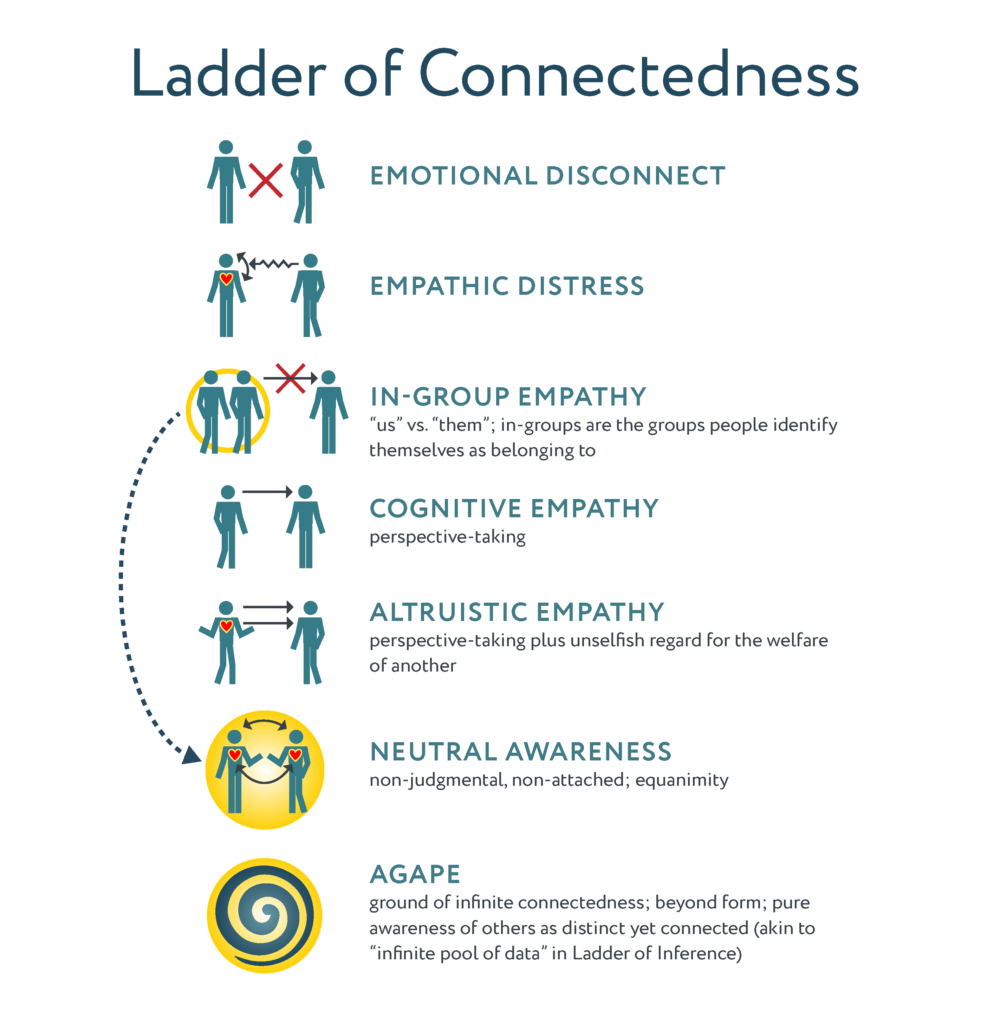
To understand this better, we can refer to the “Ladder of Connectedness1” graphic, which represents how our connections can either support or mute our ability to foster a generative social field. A space that can support all of our teammates and move the organization forward. The three empathic stances we can take – in-group empathy, cognitive empathy, and altruistic empathy – can definitely support our teammates. However, taking somebody’s side or their feelings and/or perspective doesn’t always allow us to remain neutral and see multiple perspectives, to see the entire system.

This is where neutral awareness comes in – the ability to remain non-judgmental and non-attached, in a state of equanimity and ultimate balance. By showing up with neutral awareness, we can influence the space to be more generative, and drive the system to better outcomes for students. This doesn’t require any extra professional development – just a different way of showing up that can make a big difference. So, try it out and see what you notice – how we show up really does matter.

  1. Peter Senge & Mette Boell, Compassionate Systems Framework

CCEE Connection (April 2023)

News & Announcements
Request for Proposals

Development and Delivery of Resources and Services to Support Professional Learning Activities for Local Educational Agencies

  • Review of Proposals Begins: May 1, 2023
  • Proposals Accepted Through: October 30, 2023 at 4:00pm PST

CCEE hosted a Respondent’s Conference on Thursday, April 6, 2023. Please click on this link to view the recording of the webinar.

Open Door Sessions

CCEE, in collaboration with LEAs and partner organizations, is hosting “open door” sessions to share best practices, tools/resources, and strategies to support student learning. These sessions will provide opportunities for county office and/or district staff to listen and learn from other LEAs across the state, and connect further, if interested. Those who express interest in connecting further will be invited to join a smaller, more intimate “Special Interest Group” session, in which the presenting LEA will be available to listen, share, and help participants with more specific questions.

Check out the “In Case You Missed It” section of our newsletter to view materials from past Open Door Sessions.

To stay up-to-date on upcoming Open Door sessions, make sure to check our Events Calendar or follow CCEE on Twitter and LinkedIn!

2023-24 Leadership institute

In collaboration with the Small School Districts Association (SSDA), CCEE is excited to bring to you the 2023-24 Leadership Institute, which will kick off in July 2023 during the SSDA Superintendent and High School Leaders Conference in Newport Beach. Please click on this link to register for the conference.

This year-long institute will provide high quality professional learning, partnerships with a community of other small district leaders, and seasoned leaders to help increase your network of professional and support. For more information about the institute, please click on this flyer.

In Case You Missed It

Open Door Sessions:

System of Support Updates (April 2023)

April Resources

Microlearning Modules – CCEE has partnered with content experts and experienced educators to develop short videos sharing and explaining concepts, tools, and resources for a wide range of topics to support substitute teachers, paraeducators, and other instructional staff in the classroom. All microlearning modules are accompanied by easy-to-follow instructions, downloadable handouts, and additional resources to support immediate implementation. New videos are added periodically, covering various topics, tips, and strategies.


About the I3 Center

The Innovation, Instruction, and Impact (I3) Center implements a statewide approach to improving LEA capacity by collaboratively developing, delivering, sharing, and spotlighting practices that have demonstrated the power to improve outcomes for students.

About the CCEE

The California Collaborative for Educational Excellence is a statewide leader delivering on California’s promise of a quality, equitable education for every student.

Executive Director’s Corner

By Matt J. Navo, Executive Director, CCEE

Headshot of Matt Navo

Research continues to show that when educational practitioners have time to share insights, ideas, practices, and research with one another, they learn more and improve more. The CCEE is focused on bringing educational practitioners and partners together to share and highlight evidence-based practices and research that will help them improve student outcomes. The bulk of how we do the work is by convening and gathering professional learning networks (PLNs) and Research-Practice Partnerships (RPPs). This newsletter highlights a number of opportunities for educational practitioners to engage in partnerships where they can learn from each other.


Data Research Learning Network: Data Literacy is Deep Need

By Ingrid Roberson, Assistant Director of Research Learning, CCEE

Headshot of Ingrid Roberson

The Data Research Learning Network (DRLN) consists of seven select districts and counties engaged in innovating data and assessment practices to accelerate student learning. DRLN districts and counties have discovered a deep need for data and assessment literacy across all levels in the education system, including analyzing data, discussing data, and decision-making or as the network likes to say, “Data, Discussion, and Decisions.”

As a Research and Development (R&D) network, these seven districts and counties are designing innovations to be piloted in the 2023-2024 school year.  For example, Imperial County Office of Education (ICOE) is developing a data literacy learning series for their districts with special attention to the context of small districts (i.e. districts with enrollments less than 2,000 students). Already a leader in creating data tools for the Local Control and Accountability Plan (LCAP), ICOE’s data literacy learning series will focus on data for instructional and curricular decision-making.

Another example is Rincon Valley Union School District (RVUSD) who is exploring the role of formative assessment in accelerating student learning. Informed by research from the Center for Assessment on a Balanced Assessment System, Rincon Valley USD seeks to leverage the power of curriculum-embedded, unit-based assessments that are instructionally useful to classroom teachers. RVUSD will be piloting a Math Formative Assessment, enhancing teacher assessment literacy and promoting student agency in the assessment process.

As DRLN districts and counties represent small to mid-size local educational agencies (LEAs), this emerging trend is one that CCEE’s Center for Innovation, Instruction and Impact (I3) intends to address through statewide data literacy resources in partnership with recognized experts and practitioners in the field (see current Request for Proposals).


CAAASA-CCEE Partnership to
Re-envision Black Student Success

By Sujie Shin, Deputy Executive Director, CCEE

Headshot of Sujie Shin

The partnership between CCEE and the California Association of African-American Superintendents & Administrators (CAAASA) began in 2017 with a professional learning network (PLN) that focused on identifying the inequities experienced by African American students in California K-12 schools. The original network, made up of four districts and three county offices, examined these inequities and identified systems-change approaches to addressing them within their local educational agencies (LEAs).

With the launch of CCEE’s Research-Practice Partnership (RPP) initiative, five of our original PLN partners have rejoined the network to continue their work to support Black student achievement through their LEA-specific problem of practice, focusing on progress monitoring activities to support the measurement of student outcomes in the coming year.

Our five partnership teams and their areas of focus include:

Increasing the number of African American student leaders who are UC college bound

Addressing overrepresentation of African American male students among those receiving non-passing grades in core classes

Tackling overidentification of African American students in Special Education via “Other Health Impairment” and “Emotional Disturbance”

Increasing high school completion rate for students enrolled in the County Community Schools/Program (expelled and/or on probation)

Targeting student engagement and reduction of chronic absenteeism rates for Black students in four pilot schools part of the Community Schools Program


Empowering Educators with Universal Design for Learning (UDL)

By James McKenna, Assistant Director of Professional Learning and Leadership Development, CCEE

CCEE has partnered with educators in the field to create our newest learning path, UDL for Educator Empowerment. This learning path aims to empower California educators with the needed knowledge and skills to apply Universal Design for Learning (UDL) holistically to their practices as professionals. Designed in partnership with teachers, for teachers, this path contains six modules of multimedia content, opportunities for reflection and community, and links to resources to deepen participants’ learning and practice.

This learning path was authored by a team of subject matter experts and professional learning providers: Karen Taylor, MA.Ed., Zach Smith, Ed.L.D., and CCEE’s own James McKenna, Ed.D. Together, and with the support of an advisory panel of educators from across the state, they created this learning path to honor and empower teachers, showing how the UDL framework equips them for the work of teaching in today’s modern equity-focused classroom. Through each of our six course modules, educators are invited on a path of professional self-discovery that equips them with the skills for creating inclusive and equitable lessons and learning environments. Embedded within these learning experiences is the knowledge for diagnosing learning barriers in real time.

The UDL for Educator Empowerment learning path is open to all, on-demand, at no cost, and is the latest in a series of resources created by the CCEE, in collaboration with local and national partners, in order to support the implementation of UDL in schools and districts across the state. Other UDL resources include the UDL for School and District Leaders learning path, the Why UDL video series, and the UDL Journey Guide, a comprehensive resource for district leaders and teams seeking to implement Universal Design for Learning.


LEA Spotlights: Shining a Light on Promising Practices

By Dorcas Kong, Senior Specialist of Executive Projects, CCEE

Headshot of Dorcas Kong

Over the past couple of months, the Innovation, Instruction, and Impact (I3) Center has been curating stories that “spotlight” innovative practices implemented by local educational agencies (LEAs) across the state to improve educational outcomes for students. After interviewing various district teams and learning about how they tackled challenges particular to their local contexts, we’re excited to announce that we have finally launched the Spotlights Project. Each Spotlight organizes the successes, challenges, and lessons learned in a way that calls attention to emerging practices, reproducible strategies, and applicable resources, in hopes of introducing accessible points of conversation for other LEAs looking to resolve similar issues. 

While these Spotlights may focus on different domains (i.e., student academic outcomes; student/family engagement and well-being; staff and community supports; and systems, policies, and governance), they all place an emphasis on improving practices, programs, and systems to provide each and every student in California public schools with the access, opportunities, and supports to thrive (CCEE Mission & Vision). We hope the Spotlights Project can serve as a hub of inspiration and innovation where LEAs can build off these successful models to amplify their impact in the classroom, school, district, and community. Click on the links below to learn about these LEAs’ success stories.

Anaheim UHSD took a systemic approach to support families’ needs by empowering parents, authentically engaging students, and strengthening community partnerships to address the root causes of disengagement.

Compton USD took a data-driven approach to improve college and career readiness among its African American students. By looking at key data metrics, CUSD identified strategies to provide students and families with increased access to information, resources, and supports to navigate the academic, social, and financial aspects of the college preparation process.

To tackle an intricate problem such as chronic absenteeism, Fresno USD took a multilayered and holistic approach that included strong and committed district leadership, a cross-functional team of diverse staff, strong data principles, and partnerships with community-based organizations.

Napa COE concentrated their efforts on establishing meaningful partnerships and innovative approaches to learning, practicing continuous improvement strategies, and leveraging data and improvement science to guide decision-making.

Ontario-Montclair SD worked to engage parents as authentic partners in the school community by empowering them with tools and resources that allow them to advocate for their children’s learning.

Oxnard SD utilized the California Family Engagement Framework and recommendations from research in their efforts to systematize family engagement and empower parents in shared design-making processes to impact student learning.

Stay tuned! We will be launching the Pittsburg USD Spotlight in the coming weeks.

We are continuing to develop Spotlights that shine a light on innovative educational practices in California. If you would like to share emerging practices that have improved outcomes for students in your LEA, please share it with us by submitting this Spotlight suggestion form.


Shifting Mindsets on Chronic Absenteeism

By Sujie Shin, Deputy Executive Director, CCEE

Headshot of Sujie Shin

As we head into our final quarter of the 2022-23 school year, schools are continuing to rethink how we define and address chronic absenteeism. The 2022 Dashboard results saw a huge spike in chronic absenteeism rates across the State, with almost a third of our students in California missing 10% of more of their instructional days. And while the flattening of COVID rates has improved chronic absenteeism rates somewhat, the data show that schools are still struggling with student engagement and attendance. 

Shifting our collective mindsets about chronic absenteeism requires a reenvisioning of what an absence means and therefore changes how we deal with it and who gets to decide. To date, our processes for addressing chronic absenteeism are built around mental models about “truancy” that set schools and families up as adversaries–the definition of truancy is “the act of staying away from school without a good reason.” But who judges what reason is good enough? And who is responsible for providing the remedy?

There are no ready solutions, and in the meantime, children have missed millions of instructional hours. Over the next several months, join us as we navigate some of these questions with local educational agencies and partners and highlight challenges, emerging best practices, and opportunities to learn from each other.  

CCEE is hosting a series of Open Door sessions on chronic absenteeism. On Monday, April 3, 2023, Attendance Works started off the series by sharing the findings of a new PACE report, Examining Disparities in Unexcused Absences Across California Schools. If you weren’t able to attend this session, webinar materials are available on CCEE’s website. Please see below for upcoming sessions. Additional information (e.g., date/time, registration links) will be available in the coming weeks. You can always check our Events Calendar or follow CCEE on Twitter and LinkedIn to stay updated on upcoming sessions.

  • Shifting Mindsets on Chronic Absenteeism with Salinas City Elementary School District
  • Supporting Better Attendance Practices: The Evolving Role of COEs

NEW: Learning Acceleration System Grant Resources

Just released for CA educators! High-quality professional learning resources for strong & rapid acceleration in math, literacy & language development with the Santa Clara County Office of Education, San Diego County Office of Education, and Lake County Office of Education.

To learn more, please visit the Learning Acceleration System Grant website or contact Stacey Wedin ([email protected]).

FAQs on Eligibility for Assistance under California’s Accountability System

Under California’s Local Control Funding Formula (LCFF), County Offices of Education, the California Collaborative for Educational Excellence, and the California Department of Education have specific responsibilities within the Statewide System of Support to assist local educational agencies. Along with staff from the State Board of Education, a series of frequently asked questions were identified to help ensure a consistent and responsive approach to support local educational agencies identified needs.

    CCEE Connection (January 2023)

    News & Announcements
    January Resources
    • Microlearning Modules – Designed to support substitute teachers, paraeducators, and other instructional staff, these short 5-8 minute videos share immediately applicable tips, strategies, and tools. Microlearning modules are also supplemented with downloadable handouts, instructions, and other materials and resources.
    • UDL Journey Guide – This digital travel companion guides district leaders and teams through four stages of implementing Universal Design for Learning (UDL), with connections to state and national supports along the way.
    • Dashboard Communications Toolkit – This toolkit provides materials to support LEAs with sharing the 2022 California School Dashboard data to parents, community members, and educators, along with additional resources for analyzing Dashboard data.

    About the I3 Center

    The Innovation, Instruction, and Impact (I3) Center implements a statewide approach to improving LEA capacity by collaboratively developing, delivering, sharing, and spotlighting practices that have demonstrated the power to improve outcomes for students.

    About the CCEE

    The California Collaborative for Educational Excellence is a statewide leader delivering on California’s promise of a quality, equitable education for every student.

    Executive Director’s Corner

    By Matt J. Navo, Executive Director, CCEE

    Headshot of Matt Navo

    CCEE uses data to improve and deliver its statutory and improvement obligations across the state. The Innovation, Instruction, and Impact (I3) Center is the backbone of data for CCEE. They support the agency in analyzing the organization’s effectiveness and in identifying “bright spots” in the state that other local educational agencies (LEAs) can learn from.

    Under the leadership of Deputy Executive Director Sujie Shin, the goal of the I3 Center is to support the work of the CCEE, collaborate with state lead agencies, and use data to improve. This month’s newsletter highlights ways you can work with the I3 Center and other LEAs on various improvement initiatives related to improving outcomes for students through the use of data in your organization.


    Measuring the Effectiveness of California’s Professional Learning Initiatives

    By Allan Taing, Senior Manager of Research & Impact Analysis, CCEE

    During the 2021-2022 budget cycle, the state invested $75 million across three grant programs to enhance the educator professional learning infrastructure within the Statewide System of Support. Through the Education Omnibus Trailer Bill of the 2021 State Budget Act, CCEE is working with our partners at the California Department of Education (CDE) and the State Board of Education (SBE) to support the county offices of education that have been selected as program leads for these grants to develop professional learning opportunities for learning acceleration, literacy, and open educational resources. The four-year $50 million Learning Acceleration System Grant Program will be led by Lake, San Diego, and Santa Clara County Offices of Education; the four-year $10 million Reading Instruction and Intervention Grant Program will be led by Contra Costa Office of Education; and the two-year $15 million High-Quality Online Instructional Materials Initiative will be led by Kern County Superintendent of Schools. 
    In addition, evaluation leads have also been selected to lead rigorous program evaluations to determine the effectiveness of these professional learning initiatives. Education Northwest and Social Policy Research Associates will lead the evaluation of the Learning Acceleration System Grant, while the American Institutes for Research (AIR) will evaluate the Reading Instruction and Intervention Grant Program, and WestEd will evaluate the High-Quality Online Instructional Materials Initiative. 

    An important component of these program evaluations is the connection of these professional learning initiatives to supporting system transformation, improving tiered supports, and measuring impact. To support larger statewide coherence, CCEE, CDE, and SBE are coordinating the work of these evaluation teams to develop a common set of data metrics across evaluations and to support alignment not only across these evaluations and other related programs, but also within the System of Support. These evaluation teams are convening on a recurring basis with the CCEE, CDE, SBE, representatives of the Statewide System of Support, designated county offices of education, and other selected partners in support of this coherence effort.

    The first gathering was a “data boot camp” in July to support the evaluation teams with the data and resources available to them as they launched their evaluation projects. The second gathering in August brought in program evaluation teams conducting ongoing statewide system evaluations to share their lessons learned to the new evaluation teams. Moving forward, these convenings will occur on a bi-annual basis and the objective of these convenings will be to discuss data collection, analyses, interim results, and implications for ongoing development. The goal of this work on coherence and alignment is to uncover the evidence-based practices that promote educator professional development and ultimately support transforming education for all students in California. 


    Balancing Data and Assessment Systems to Accelerate Learning

    By Ingrid Roberson, Assistant Director of Research Learning, CCEE

    Headshot of Ingrid Roberson

    The Center for Innovation, Instruction, and Impact (I3) is excited to announce the I3 Data Research Learning Network (DRLN). The I3 DRLN brings together select districts and counties to innovate around data and assessments, focusing on one of two areas: Balanced Assessment Systems or Balanced Data Systems. To promote deeper learning, districts conduct a Balanced Assessment System review, ensuring that supportive policies, programs and practices are in place for formative assessment practices that promote student agency in the classroom. For more Balanced Data Systems, districts assess their current data systems through an equity lens, identifying opportunities for innovation. Districts can also capitalize on the latest data visualization technology for continuous improvement and community engagement.   

    The I3 DRLN is a timely opportunity, especially for small to mid-size districts and counties, to leverage their data and assessment systems (and investments) to accelerate learning. According to Hilary Kjaer, Director of Teaching and Learning at one of the selected districts, “Rincon Valley Union School District is excited to embark on this journey with the I3 DRLN team! As we strive to develop a strategic plan for accelerating student learning, we know this is the perfect collaborative partnership.” The DRLN is a three-phase initiative with the Planning Phase starting in January 2023 and running through June 2023. To learn more about this innovative initiative, please see the I3 DRLN website which will be updated throughout the year.


    Why Universal Design for Learning?

    By James McKenna, Assistant Director of Professional Learning and Leadership Development, CCEE

    Headshot of James McKenna

    Universal Design for Learning (UDL) is the bedrock of best first instruction; it’s in every state curriculum framework and is the only framework required by the Every Student Succeeds Act. However, that’s not necessarily a compelling argument to engage educators to begin their implementation of UDL. They’re working hard as it is, and no one has time for “one more thing”. 

    Except UDL isn’t one more thing. It’s a way to better achieve the things educators are already working hard to do — support language acquisition, engage students socially and emotionally, implement multi-tiered systems of support, and more. 

    That’s why CCEE has partnered to develop the “Why UDL?” series of videos — to connect UDL to the work that people are already doing and to show how UDL can help them in those efforts. Working with our friends at TextHelp, we’ve recruited state and national experts to engage in conversations and presentations to better communicate how UDL connects to a variety of key initiatives. Housed on the Why UDL page of the UDL Journey Guide, these videos serve as learning opportunities for leaders and teams seeking to implement UDL who can then leverage them as part of their communications and stakeholder engagement efforts. 

    CCEE is tremendously grateful for the collaboration provided by TextHelp and our speakers, all of whom volunteered their time and contributions to be able to offer these resources to educators across the state at no cost. 

    UDL and…Speaker(s)
    Blended LearningDr. Catlin Tucker, author, educator, and expert in blended learning
    CA MTSSRhonda Marriot-Spencer, CA SUMS and Orange County Department of Education
    Equity and AntiracismAndratesha Fritzgerald, author, educator, and expert in UDL, equity, and antiracism;
    David Toston, Senior Advisor of Equity and Innovation, CCEE
    Expert LearningDr. James McKenna, Assistant Director, CCEE and expert in Universal Design for Learning 
    Language LearnersDr. Soomin Chao, Multilingual Academic Support;
    Elise Yerkey, Inclusive Design, from the Los Angeles County Office of Education
    Social Emotional Learning (SEL)Lisa Bosio, expert and consultant at Novak Education
    Special EducationHeather Calomese, Director of Special Education, CA Dept of Education;
    Kevin Schaefer, Director of Equity and Inclusive Practices, Supporting Inclusive Practices;
    Mindy Fattig, Senior Advisor of System of Support, CCEE

    Amplifying Innovative Practices Through District Spotlights

    By Dorcas Kong, Senior Specialist of Executive Projects, CCEE

    Headshot of Dorcas Kong

    The Innovation, Instruction, and Impact (I3) Center is excited to soon be launching what we’re calling the Spotlights Project. Aligned with the goal of the I3 Center, the Spotlights aim to curate stories that identify and amplify emerging practices from school and district teams to collaboratively provide students in California with what they need to thrive. 

    In the coming weeks, the I3 Center will be publishing Spotlights on different local educational agencies (LEAs) that have implemented innovative and inclusive practices to improve 1) student academic outcomes; 2) student/family engagement and well-being; 3) staff and community supports; or 4) systems, policies, and governance. The Spotlights will shine a light on not only the successes, but also the challenges, pitfalls, and lessons learned to serve as blueprints for other LEAs facing similar issues. Although LEAs across California vary in size and demographics, we hope these documented success stories can pave a way for LEAs to become learning organizations — absorbing the lessons learned, leveraging those perspectives to create accessible points of conversation, and generating ideas around other innovative pathways to replicate some of these successes across the state.

    A Reflection by CCEE Executive Director, Matt J. Navo

    CCEE Major Impact Projects

    DESCRIPTION

    As I reflect on the end of my first year with the CCEE, I am reminded of just how much education has been impacted over the last 3 years. How CCEE best supports Local Educational Agencies (LEAs) (inclusive of charter schools) has often been a challenge for our organization given the magnitude of already developed resources, tools, services and supports. However, with the work of integral partners there are three CCEE resources and tools that standout as helpful to LEAs as we execute our role in the Statewide System of Support for advice and assisting LEAs in accomplishing their Local Control Accountability Plan (LCAP).

    The Community Engagement Initiative (CEI) website developed with the CEI Agency partners has provided incredible resources to the field for engaging with the community to form authentic relationships between districts and the community.

    In the 2022 Legislative Budget Act, CEI was provided with 100 million dollars to leverage the their work for transformational school investments and authentic pupil, family, community, and educator engagement. This includes, but is not limited to, Local Control and Accountability Plans, Expanded Learning Opportunity Programs, and California Community School Partnership Act grants. CEI has a network of over 40 LEAs (including charters) who with the collaboration of Lead Agency Partners, regularly engage one another in identifying effective models of community engagement, developing metrics, having challenging conversations, and building trusting relationships.

    Our Innovation, Instruction and Impact (I3) Center developed the Playbook for Accelerated Learning (PAL). This tool was developed in collaboration with State Board and expert partners to provide guidance to LEAs for how to think about and provide professional development to accelerate student learning.

    The CCEE also developed the Basic Levers Tool 1.0 (2.0 is in progress now) that will help LEAs think about and design systems for improving outcomes for Students with Disabilities (SWD).
    We continue to evolve and expand our resources and tools that LEAs can utilize to help accomplish the goals within their Local Control Accountability Plans. Visit our CCEE website here (https://ccee-ca.org/).

    RESOURCES

    CCEE Connection (November 2022)

    News & Announcements

    Project CLEAR (California Literacy Elevation by Accelerating Reading)

    Project CLEAR is a Learning Acceleration System grantee funded through the CCEE to build capacity within districts across California to implement and support literacy development. These evidence-based approaches to accelerated learning enable students to make strong and rapid progress in reading and writing.

    Project CLEAR is looking for schools, districts, and educators interested in benefiting from this grant-funded professional learning opportunity to launch a new cohort of Teacher Leaders in January! Through this two-year program, participants will become Teacher Leaders who can train and coach teachers to implement comprehensive literacy strategies in schools and K-12 interventions for students who have reading, writing, and language-based needs. These Teacher Leaders can expand availability and access to literacy acceleration, prevention, and intervention for diverse students in their district or school, including students who are English learners, students in dual language programs, and students with disabilities, including those with dyslexia and/or phonological processing issues. Learn more on Project CLEAR’s website.

    Project CLEAR Flyer (English) 

    Resumen de Proyecto CLEAR  (Spanish/Español ) 


    The 21st Century California School Leadership Academy (21CSLA)

    21CSLA provides high quality, equity-centered professional learning for educational leaders of schools and districts in California that receive Title II funds. Programs are no-cost to participants and include leadership coaching, as well as an emphasis on improving instruction and achievement outcomes (including through distance learning) for English Learners, students with disabilities, low income students, and other historically marginalized students.


    Looking Ahead

    California Dyslexia Initiative Expert Webinar Series

    Do you want to better understand how to support struggling readers and students with dyslexia in your school?

    Join Sacramento COE and Glean Education to earn more about identifying risk factors, setting up effective MTSS/RTI school systems to prevent reading difficulties, and delivering research-based instruction to support and remediate struggling learners and students with dyslexia.


    Independent Study Professional Learning Network (ISPLN)

    CCEE facilitates monthly sessions where Independent Study Professional Learning Network (ISPLN) participants learn strategies, structures, practices, policies, and procedures that districts have adopted to effectively engage their local communities in support of improving student outcomes. Our next meeting on February 6th will cover assigning quality and rigorous coursework in Independent Study. Please contact Gonzalo Avila at [email protected] for more information. 

    • Register for our next meeting on February 6, 2023. 

    California Collaborative for Learning Acceleration

    Through the California Collaborative for Learning Acceleration (CCLA), one of three CCEE Learning Acceleration System grantees, the SCCOE and its partners are building an evidence-based professional learning model for educators that can support learning acceleration, particularly in mathematics, literacy, and language development. Accelerated learning strategies are those designated to meet pupils where they are in their learning which will enable them to make strong rapid progress in their mastery of knowledge and skills. These strategies may include individual or small group tutoring or whole class instruction using well-grounded methods with scaffolds and differentiation that meet pupils’ specific needs. This year, CCLA aims to put asynchronous content and resources in the hands of educators across the state, as well as offer opportunities to work in-person in schools and/or districts. Coming soon in January 2023, FREE asynchronous courses for learning acceleration in targeted math, literacy and language development areas that infuse critical elements of Universal Design for Learning, Culturally Sustaining Pedagogy, and Social-Emotional Learning will be available to all educators.


    In Case You Missed It

    System of Support Updates (November 2022)


    November Resources

    November – Native American Heritage Month

    November 8 – National STEM/STEAM Day

    November 12-20 – National Hunger & Homeless Awareness Week

    November 13 – World Kindness Day

    November 16 – International Day for Tolerance

    Executive Director’s Corner
    Why Continuous Improvement is so Vital for School Transformation

    By Matt J. Navo, Executive Director, CCEE

    Headshot of Matt Navo

    Educators use many acronyms to describe their work. The field of acronyms is long and at times educators can seemingly sound like they are speaking another language to those not so familiar.  However, when it comes to Continuous Improvement (CI), this is one “buzzword” that everyone needs to understand.

    CI is the basic act of “getting better at getting better” with whatever endeavor you are trying to improve. It is about looking at results compared to what you hoped to achieve, reflecting on those results, and making adjustments. The act of CI leads to school transformation because it puts those closest to the work impacting the direction. When you have those closest to the work doing the work of CI, the chances of improved outcomes and school transformation greatly improve.

    This newsletter put together by our Teaching, Learning, and Leading Center (TLLC) will share the importance of CI when it comes to improving outcomes for students and transforming schools.

    The Art of Practicing Gratitude within Continuous Improvement

    By Dr. Stephanie Gregson, Deputy Executive Director of the Teaching, Learning, and Leading Center

    Headshot of Dr. Stephanie Gregson

    As our Executive Director pointed out in his article, the foundation of continuous improvement is the act of “getting better at getting better,” and for schools, this is directly related to school transformation and compassionate systems change.  One element I would like to remind us all of is how we are practicing gratitude within the continuous improvement work. We know from our learned and lived experiences that school transformation happens when those closest to the work are engaging in the act of continuous improvement, but how often are we practicing gratitude for all our colleagues engaged in this work? How does practicing gratitude positively impact our work?  

    The research on gratitude spans over centuries, and even the definition of gratitude has morphed over time based on the research. Gratitude is a multilayered concept but is a fundamental attribute of human beings and a potential key to human flourishing.  As we participate in authentic continuous improvement, practicing gratitude with each other contributes to the shaping of our collective being and helps us all get better (Emmons & McCullough, 2004).

    Reflecting on your actions, behaviors, decisions, and presence within the work is not easy, in fact, it is exhausting. However, it is the work we all need to engage in if we are to truly approach school transformation in a compassionate way.

    I would like to share our gratitude and appreciation for colleagues across the state serving students who are looking within themselves, reflecting on their actions, behaviors, and presence to be able to show up as their most authentic selves for students. When we, as adults, model gratitude and compassion, our students benefit from an environment that helps them thrive, to be their best selves.  

    As you engage in the act of continuous improvement, take the opportunity to also practice gratitude by acknowledging the hard work you and your team are participating in on behalf of yourself and our students. 

    References:

    Emmons, Robert A., and Michael E. McCullough, eds. The psychology of gratitude. Oxford University Press, 2004.

    The What and Whys of CI

    By Dr. Jennie Wright, Senior Manager of the Teaching, Learning, and Leading Center

    Headshot of Dr. Jennie Wright

    Continuous improvement (CI) has been around for a while and is an ingrained practice in fields such as healthcare, manufacturing, and technology (Best & Dunlap, 2014). It is a relatively new approach in the field of education. The term continuous improvement has been building steam in education circles over the last decade, however the robust implementation of improvement practices across the field has lagged (Park, et.al., 2013). Continuous improvement is a process that uses quantitative and qualitative evidence through disciplined inquiry to improve systems’ efficacy and outcomes for the end user, in the case of the field of education, that is students. 

    While continuous improvement continues to be a buzz word across the field of education, it’s important to highlight why that is and why engaging in continuous improvement is an integral practice. Improvement has long been a goal for educators and the focus of those conversations is largely focused on improving the end product, student outcomes. However, how we achieve those outcomes and the collective work done to improve the system for long-term success is equally as important. Continuous improvement provides a process that breaks down improvement into smaller, more manageable pieces as we deconstruct the system and consider change ideas in shorter, smaller increments. On the heels of a global pandemic, and mounting evidence of an even greater need for improvement, now is the time to adopt continuous improvement practices that provide educators with a framework and roadmap for providing better learning experiences and outcomes for the students across the system.

    References:

    Park, S., Hironaka, S., Carver, P., & Nordstrum, L. (2013). Continuous improvement in education. Carnegie Foundation for the Advancement of Teaching. https://www.carnegiefoundation.org/wp-content/uploads/2014/09/carnegie-foundation_continuous-improvement_2013.05.pdf.

    Best, J. and Dunlap, A. (2014). Continuous improvement in schools and districts: Policy considerations. McRel International. https://files.eric.ed.gov/fulltext/ED557599.pdf.

    Using Continuous Improvement Cycles to Support Coherence

    By Dr. Susan Tandberg, CCEE Professional Expert

    Headshot of Dr. Susan Tandberg

    Coherence is defined by Fullan and Quinn (2016) as the “shared depth of understanding about the purpose and nature of the work” (p 1). The purpose and nature of the work is outlined in the four components or “right drivers”: focusing direction, cultivating collaborative cultures, deepening learning, and securing accountability. In service of these drivers is the work of continuous improvement cycles of inquiry.

    “Continuous improvement is a disciplined and ongoing approach to improving processes and systems that produce positive outcomes for students. It provides a structure for educators to identify problems; design interventions specific to those problems; test interventions in context; and evaluate effectiveness before scaling up the intervention.” (Myung, et al. 2020). 

    Given this definition, we can see how the process of continuous improvement is one tool to support the acquisition of coherence in a system. Both are ongoing processes with a results orientation. Additionally, they are both grounded in the identification of a small number of clear targeted goals and strategies for attainment of those goals. The process for establishing learning goals and gaining agreement on pedagogical practices are grounded in intentional collaborative work resulting in increased collective efficacy. Finally, accountability is secured through the establishment of benchmark progress and relentless reflection on process and results. Achieving coherence in a system requires ongoing implementation and monitoring of the “right drivers.” Using the cycle of continuous improvement is a process for helping schools keep focused on the “right drivers” resulting in increased student outcomes. 

    References:

    Fullan, M., & Quinn, J. (2016). Coherence: The right drivers in action for schools, districts, and systems. Corwin Press, Thousand Oaks, Ca. 

    Myung, J., Krausen, K., Kimner, H. Donahue, C. (2020). Continuous Improvement in Schools in the Covid-19 Context. Policy Analysis for California Education. https://edpolicyinca.org/publications/continuous-improvement-schools-covid-19-context.

    Continuous Improvement Resources:

    Developing Aim Statements Worksheet: As teams begin to engage in continuous improvement they must answer what are they trying to accomplish. This work can help the teams write a statement that answers this question and creates clear and specific plans for the improvement work ahead.

    PDSA in Everyday: This video explains the Plan, Do, Study, Act cycle (PDSA) and how we implement PDSA cycles in our day to day.

    PDSA Cycle Form: This form can be utilized for PDSA in everyday life by teams to plan their Plan, Do, Study, Act cycles.


    About the Teaching, Learning & Leading Center (TLLC)

    Our TLLC team works in alliance with educators to improve teaching, learning, and leadership so every student is inspired and prepared to thrive as their best self.

    Meet our TLLC Team Members!

    Jennie is a valued member on our TLLC team! Read more on her below.

    Headshot of Dr. Jennie Wright
    Jennie Wright, Ed.D.
    Senior Manager
    Teaching, Learning & Leading Center

    Jennie partners with and supports district and county office teams using quality improvement practices to positively impact instructional practices and educational outcomes and experiences for students. Internally, she collaborates with members of the TLLC team to engage in continuous improvement around the Direct Technical Assistance process. She also collaborates across CCEE on projects such as chronic absenteeism.

    Fun Fact: Fun Fact: Jennie is an avid hockey fan and has aspirations to visit every NHL stadium across North America (10 down, 22 to go)!

    Click here to meet the rest of the TLLC team

    About the CCEE

    The California Collaborative for Educational Excellence is a statewide leader delivering on California’s promise of a quality, equitable education for every student.

    CCEE Connection (August 2022)

    News & Announcements
    Call to Participate in Professional Learning Opportunity through Project CLEAR

    Project CLEAR, one of three CCEE Learning Acceleration System Grantees, is recruiting educators from across the state interested in becoming a teacher leader with expertise in reading intervention. This grant-funded professional learning opportunity will cover the cost of participation in graduate coursework, including tuition and materials. Please see the fliers linked below for more information about how Project CLEAR can support students in your district.

    Project CLEAR Overview (English) 

    Resumen de Proyecto CLEAR (Spanish/Español)

    Looking Ahead

    2022-2023 Independent Study Professional Learning Network (ISPLN)

    Join CCEE and participating districts for solution-oriented discussions focused on a problem of practice around independent study. The ISPLN meetings will occur at 10:00 am on the first Monday of every month. Please email Gonzalo Avila at [email protected] if you have any questions or would like further information.

    In Case You Missed It

    CCEE’s Playbook for Accelerating Learning (updated!)

    August Resources

    Balloons to Heaven Day – August 6 is Balloons to Heaven Day when we remember the countless lives lost to gun violence.

    International Youth Day – August 12 is International Youth Day, a United Nations holiday to raise awareness to the issues that many children and teenagers around the world, especially those affected by poverty, who can’t get access to an appropriate education.

    Women’s Equality Day – August 26 is Women’s Equality Day in the United States, a day to commemorate the 19th amendment of the Constitution which, in 1920, gave women the right to vote.


    About the CCEE

    The California Collaborative for Educational Excellence is a statewide leader delivering on California’s promise of a quality, equitable education for every student.

    Executive Director’s Corner
    Continuous Improvement is Essential to Building Capacity

    By Matt J. Navo, Executive Director, CCEE

    Headshot of Matt Navo

    All educators have something in common: we all want to improve educational outcomes for students. The tools and approaches we use to do that vary amongst educators. However, the one thing we can all agree on is that if we don’t re-evaluate our practices, self-reflect on what is and is not working, and redirect our work, we will never truly improve.  

    The Teaching, Learning, and Leading Center (TLLC) has been doing just that. The Systemic Instructional Review (SIR) is an essential tool used by the CCEE for providing assistance to Local Education Agencies (LEAs) for school improvement actions.  

    The TLLC team has been on a quest to assess the impact of the SIR tool, reflect on its effectiveness, and redesign the approach, resources, and design to enhance the tool’s ability to improve educational outcomes for students.

    The TLLC team in this newsletter will be sharing their continuous improvement journey.

    Seizing the Moment
    Redesigning the Direct Technical Assistance Approach

    By Dr. Stephanie Gregson, Deputy Executive Director of the Teaching, Learning, and Leading Center

    Headshot of Dr. Stephanie Gregson

    The past few years have been difficult in many ways and has provided the opportunity to reflect on what is important in our personal and professional lives. We have experienced those moments that have allowed us to pause, reflect and see something from a different perspective. Sometimes what we see is not always easy to look at but is necessary to help us move forward and grow. Over the past 10 months, the CCEE Teaching, Learning, and Leading Center (TLLC) team has experienced many reflective and learning moments in our Direct Technical Assistance work. The TLLC team has engaged in learning and understanding different school improvement frameworks, hearing from our partners about their experiences, and became certified quality improvement coaches through International Health Institute (IHI) Quality Improvement Coaching Certification Program.

    Over the summer, the TLLC Team engaged in a redesign process of the Systemic Instructional Review (SIR) and the Direct Technical Assistance approach grounded in Michael Fullan & Joann Quinn’s Coherence Framework and the IHI quality improvement tools and practices. We will be presenting our redesign to the CCEE Board on September 29th and invite you to tune in and learn more about our journey.

    Our team is here to support and is ready to show up in a way that honors, respects, and values all that a district team has done. We look forward to learning from the district team’s application of their work and amplifying their successes.

    Mt. Diablo Unified School District 

    Dr. Adam Clark, Superintendent, Mt. Diablo Unified School District 

    Jennifer Sachs, Chief of Educational Services, Mt. Diablo Unified School District

    Headshot of Dr. Adam Clarke
    Headshot of Jennifer Sachs

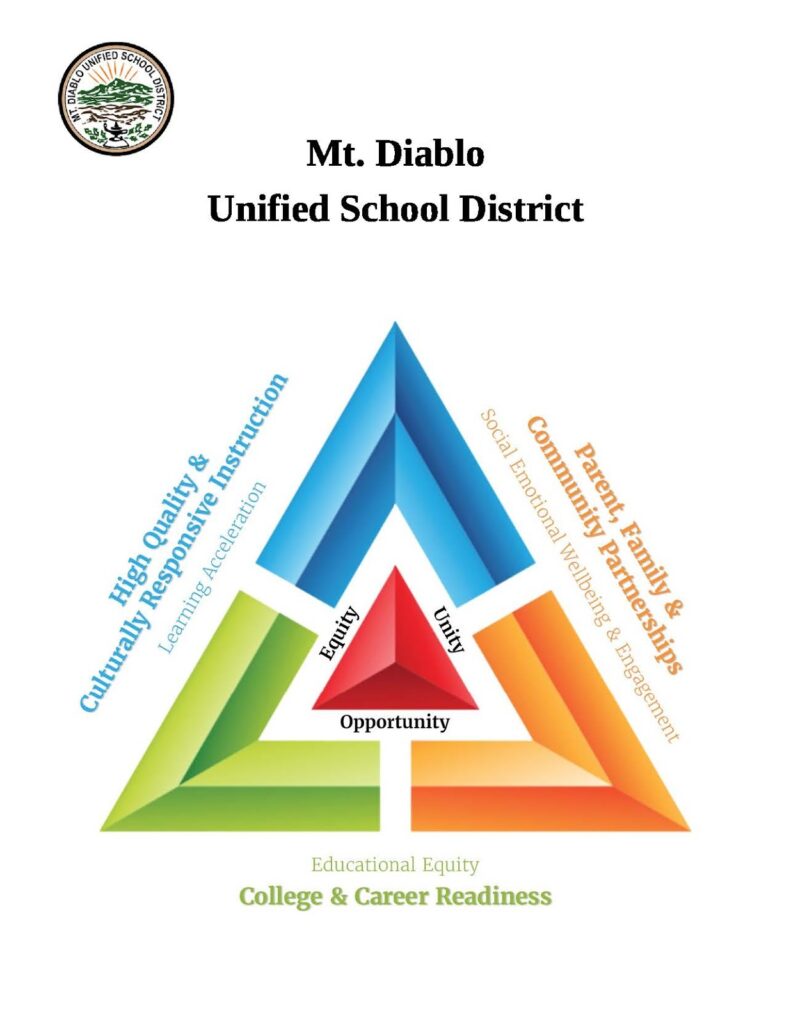
    In 2020, at the very beginning of the pandemic, the Mt. Diablo Unified School District (MDUSD) began its close relationship with CCEE. With a focus on capacity building for sustainability as a base, the Systemic Instructional Review (SIR) process helped us create a laser-like focus on instruction and continuous improvement. In collaboration with our Contra Costa County Office of Education, and other partner agencies, an action plan was developed focusing on increasing the quality of instruction and improving student outcomes, most specifically for historically underserved student groups. 

    This intense need for coherence and alignment in Mt. Diablo Unified led to the creation of an instructional framework focusing on “simplexity”- to make the District’s instructional initiatives digestible for staff and the community to understand. 

    Mt Diablo’s and CCEE’s work has focused on the capacity building of district and site leaders, instructional equity, increased student improvement, restorative practices, and building relationships with families and community partners. Mt. Diablo Unified is currently partnering with The New Teacher Project (TNTP) to enhance our focus on standards-based instruction with an emphasis on learning acceleration and instructional rigor. This partnership includes monthly professional development for site leaders and classroom teachers with educational equity at its core and classroom walk-throughs, strengthening our professional learning networks across our district. The work with CCEE has helped strengthen outreach and collaboration, address inequities across our system – specifically for African American students, students experiencing homelessness, and foster youth – and has built the capacity of district educators at all levels to improve student outcomes.

    Contact MDUSD at:

    Inglewood Unified School District

    Bernadette C. Lucas, Chief Academic Officer, Inglewood Unified School District

    The SIR and CCEE’s support have been vital as Inglewood Unified School District (IUSD) implements our Instructional Plan and monitors the goals for student outcomes, experiences, and growth. The SIR and CCEE have supported the IUSD team in narrowing our focus on the teaching and leadership levers that will directly impact our vision for our students. This sounds like a simple concept. When working with a team of dedicated adults who are working to move an organization, this is a complex endeavor. 

    The intensely collaborative work between IUSD and CCEE has led to significant shifts in nurturing a culture of continuous improvement based on specific goals and outcomes. This culture is grounded in internal and external accountability as evidenced in the SIR process. The SIR has translated to our everyday practice. And, that has made all the difference.   

    IUSD has evolved because of the SIR and CCEE. The cycle of continuous improvement and the systematic support are not only embedded in the SIR, but also in the manner in which Educational Services thinks about and conducts its work. These are cultural shifts that have directly translated to our school sites and classrooms.  Critical to this cultural shift is the constant, relentless centering of student data and student work as the clear pathway to advancing student growth and achievement. The centering of data is causing the observable transition from external accountability to internal accountability.  

    Two critical changes (of many) that have resulted directly from our work with CCEE are: 

    1. a documented IUSD Instructional Plan with year-long aligned professional development and,
    1. a collaborative three-five MTSS Plan that is being developed and implemented in alignment with our Strategic Plan and Instructional Plan.  

    Words cannot express the impact of the relationship between IUSD and CCEE on our brilliant students. CCEE has been a vital partner in our pursuit of equity and liberation for our students as we deliver on our promise to them. 

    Contact Bernadette Lucas at:


    About the Teaching, Learning, & Leading Center (TLLC)

    Our TLLC team works in alliance with educators to improve teaching, learning, and leadership so every student is inspired and prepared to thrive as their best self.

    Meet our TLLC Team Members!

    Franchesca and Sandra are valued members on our TLLC team! Read more on them below.

    Headshot of Franchesca Sonoyama
    Franchesca Sonoyama
    Program Specialist
    Teaching, Learning & Leading Center

    Franchesca provides programmatic and team support including process improvement, material development, and project management within TLLC. Franchesca supports the implementation of the Systemic Instructional Review (SIR).

    Fun Fact: Franchesca is a legit soprano, and cheese and chocolate connoisseur! Favorites: Black truffle cheddar and a 72% dark chocolate from Ecuador.

    Headshot of Sandra Brandt
    Sandra Brandt
    Administrative Assistant II
    Teaching, Learning & Leading Center

    Sandra recently joined the CCEE team as Administrative Assistant II in the Teaching, Learning, and Leading Center. She supports Deputy Executive Director Stephanie Gregson and works closely with the LAS Grant team assisting with administrative support.

    Fun Fact: Sandra loves to travel and is saving up for another trip to Spain. 

    Click here to meet the rest of the TLLC team